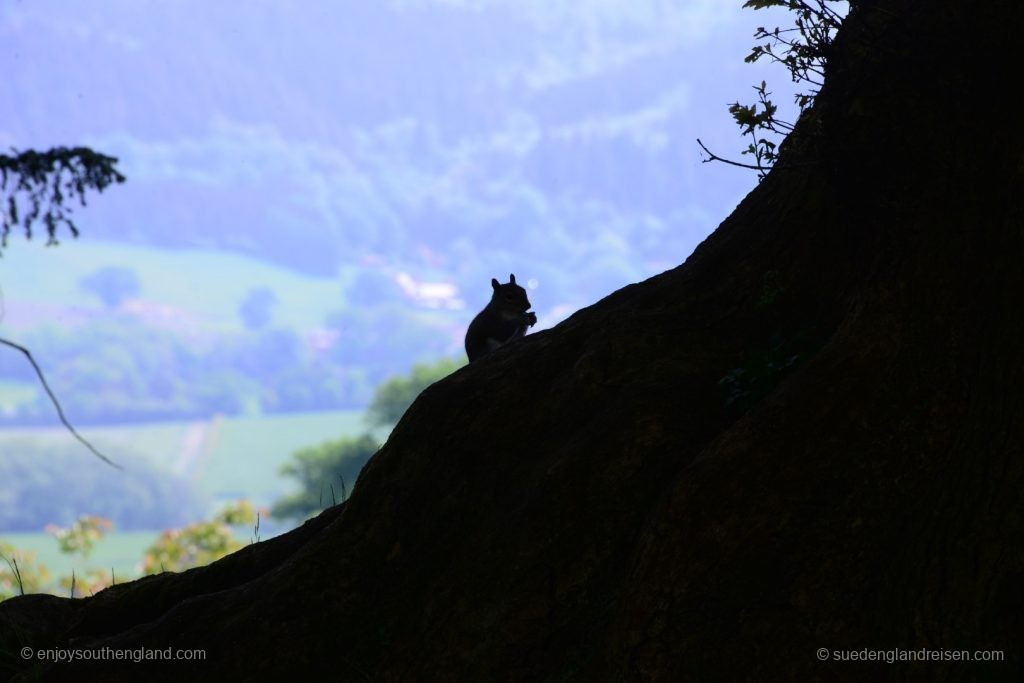
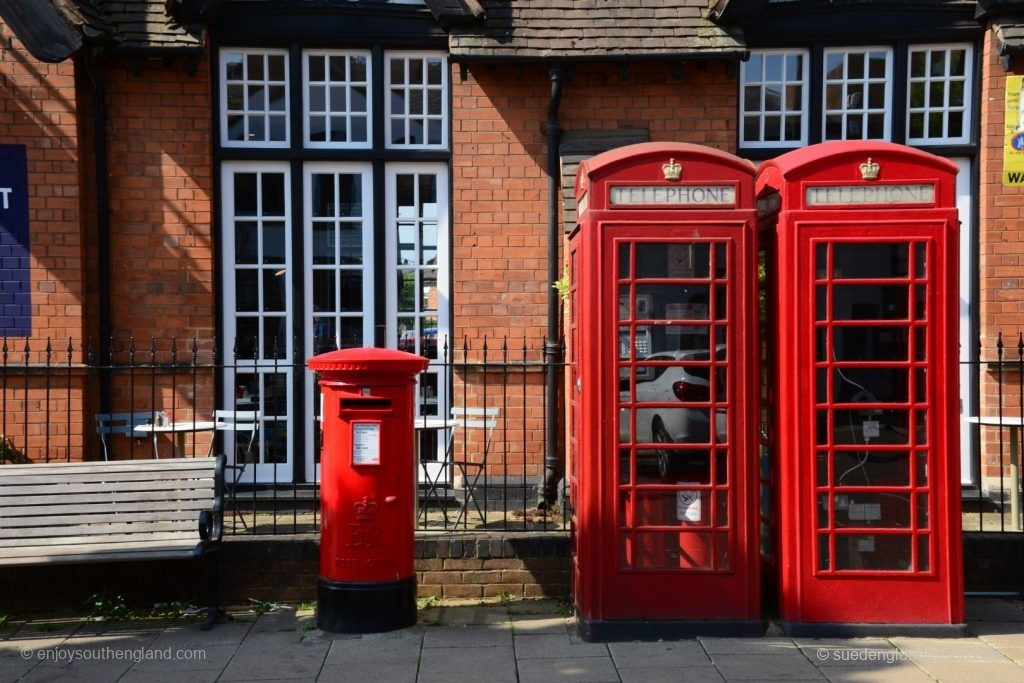
The creators of enjoysouthengland.com seize every opportunity to discover different corners of Great Britain. Besides Ireland and Scotland, this time it’s Wales’s turn. While Ireland and Scotland are undoubtedly well-known and popular travel destinations for continental Europeans, Wales is certainly still a hidden gem. Because – to put it simply – it combines the impressive Highlands of Scotland with the charming, deep green landscapes of southern England. Furthermore, the pub culture is distinctly southern English, a real advantage over most regions of Scotland.

The flag of Wales: The Welsh lion on a white and green background
As always, we took two weeks and planned a route that would allow us to discover as much as possible:
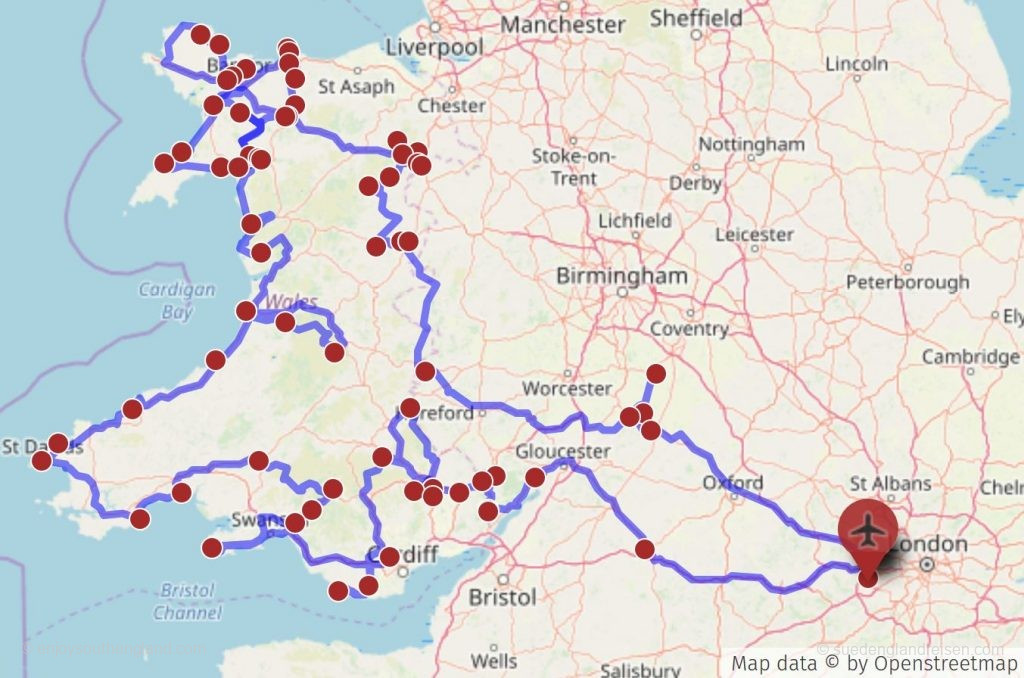
Here is the whole thing also as an interactive map with all the details:
You are currently viewing a placeholder content from Google Maps. To access the actual content, click the button below. Please note that doing so will share data with third-party providers.
We started our journey in London, where Heathrow Airport is known for offering excellent and, due to strong competition among airlines, quite affordable flight connections. Unfortunately, picking up the rental car at the slightly more remote rental locations isn’t as quick as at other airports, but you’re immediately on the motorway.
The Magic Roundabout in Swindon
After so many trips, we finally wanted to take the opportunity to visit every tourist’s nightmare: the “Magic Roundabout” in Swindon, a roundabout that is absolutely bewildering at first glance. Five roundabouts are arranged around a central roundabout, creating the famous Magic Roundabout.
You are currently viewing a placeholder content from Google Maps. To access the actual content, click the button below. Please note that doing so will share data with third-party providers.
The whole thing is as British as you can imagine – at first it seems completely incomprehensible, and then you’re amazed by its first-class functionality. Let’s take a look at it together:
You are currently viewing a placeholder content from YouTube. To access the actual content, click the button below. Please note that doing so will share data with third-party providers.
The start in Gloucestershire
After that, our route takes us north, past Gloucester, to visit the Westbury Court Garden, which belongs to the National Trust. It’s a rather formal garden, and on this exceptionally hot day for early May, it offers very little shade.
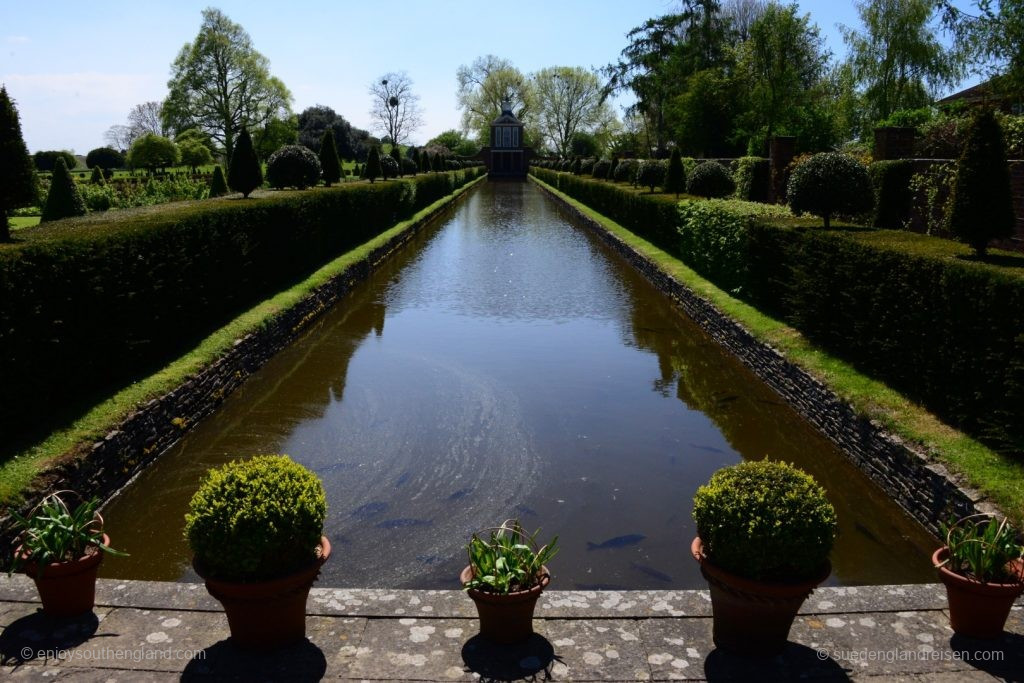
Westbury Court Garden
We continue westwards, first passing through Newnham on Severn and then through a beautiful landscape.
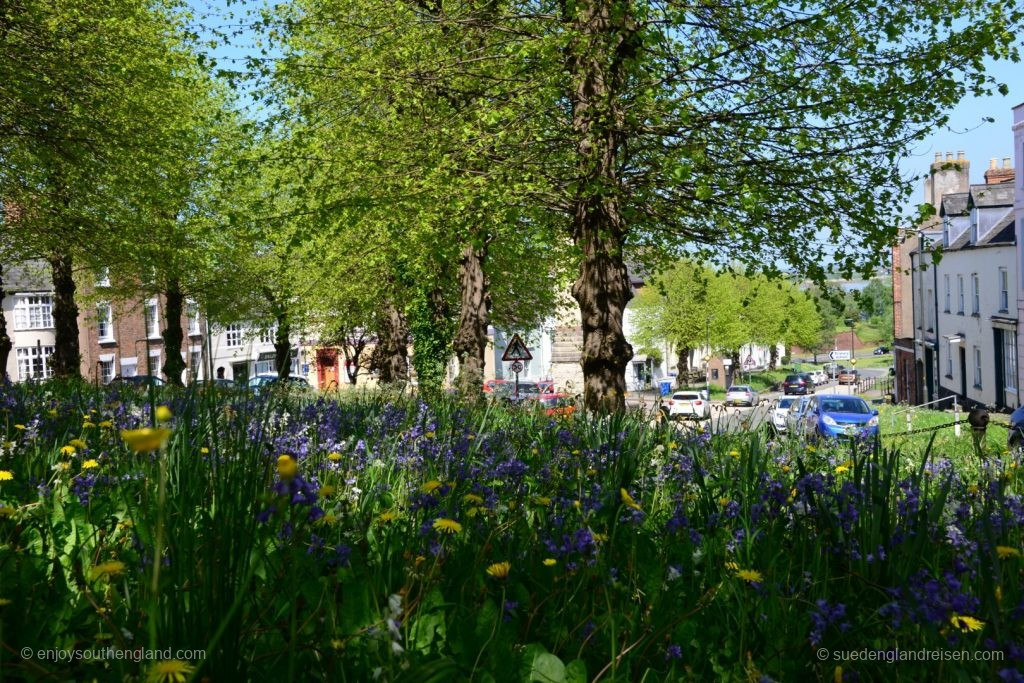
Newnham on Severn
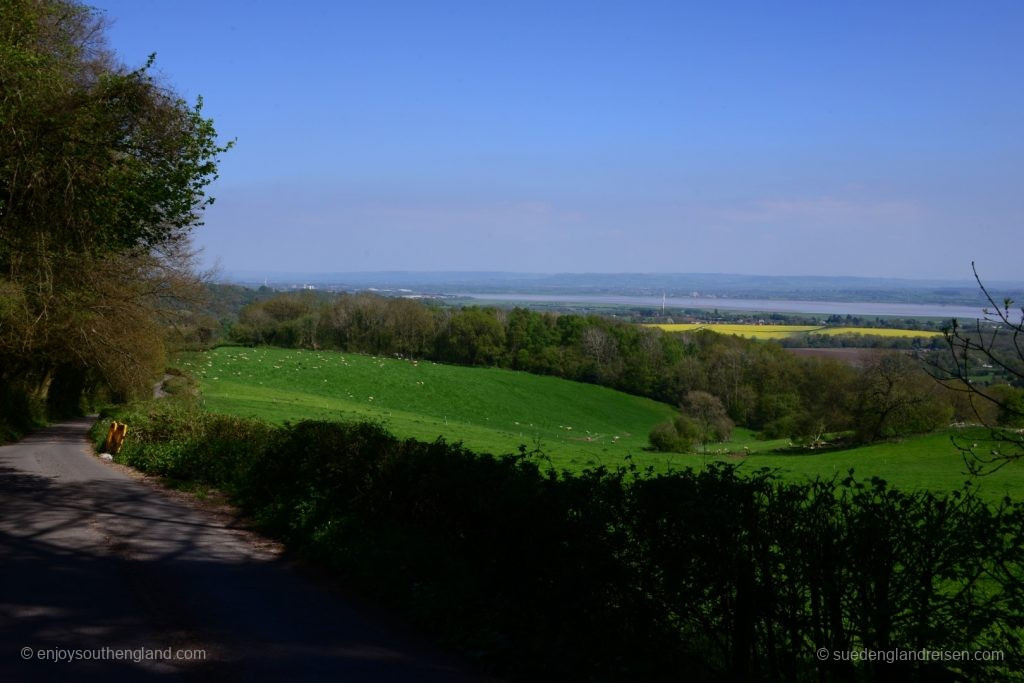
on small roads, the river Servern in the background Severn
Arriving in Wales
Now we cross the border into Wales. And yes, there really are borders with country signs. Wales – like Scotland – is bilingual: English and Welsh. This goes so far that almost all schools teach only in Welsh, and businesses based in Wales must always have their websites in Welsh as well.
A little tip for visitors: The popular double “l,” as in Llangollen, is pronounced like “ch,” a sort of croaky sound. And the “w” is a “u”—this is especially helpful when pronouncing city names. With that in mind:
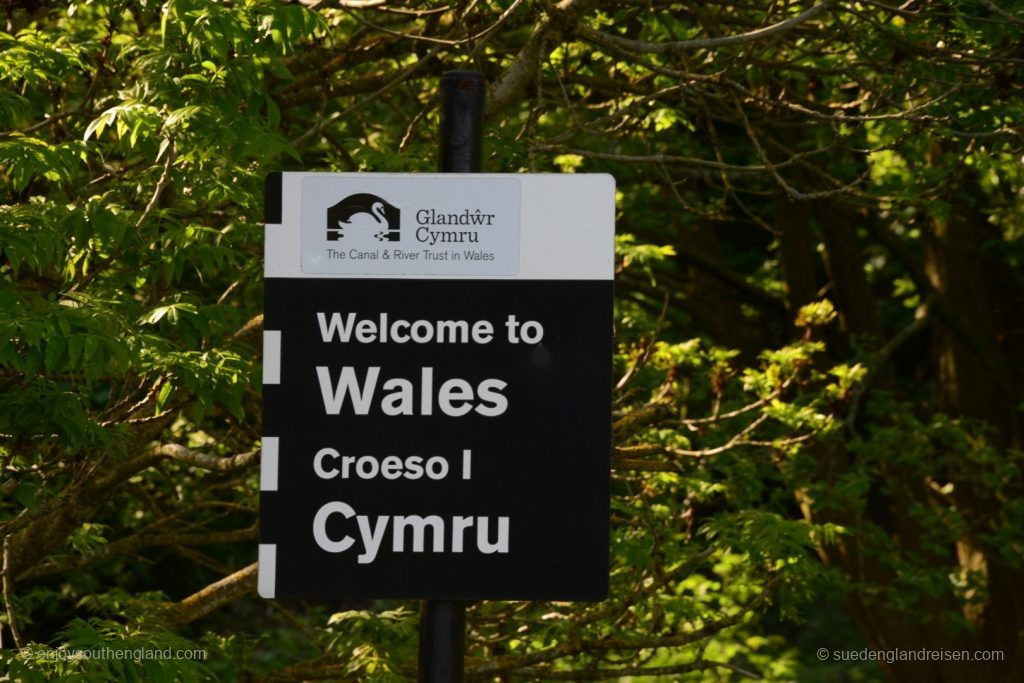
Our first destination is Tintern, with the ruins of its once mighty abbey in the beautiful valley of the River Wye. On the way, we stop at a Welsh vineyard – Parva Farm Vineyard – lured by little lambs just begging to be cuddled. It’s an incredibly hot day, and the walk through the vineyard is, without exaggeration, sweat-inducing.
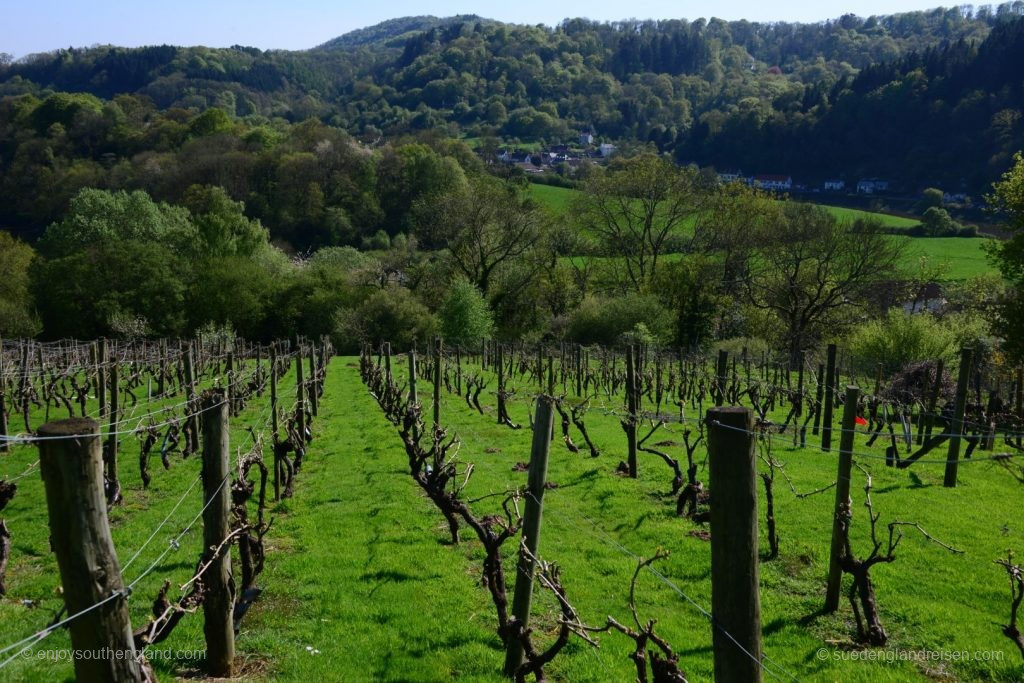
View from the vineyards of Pava Farm with Tintern in the background
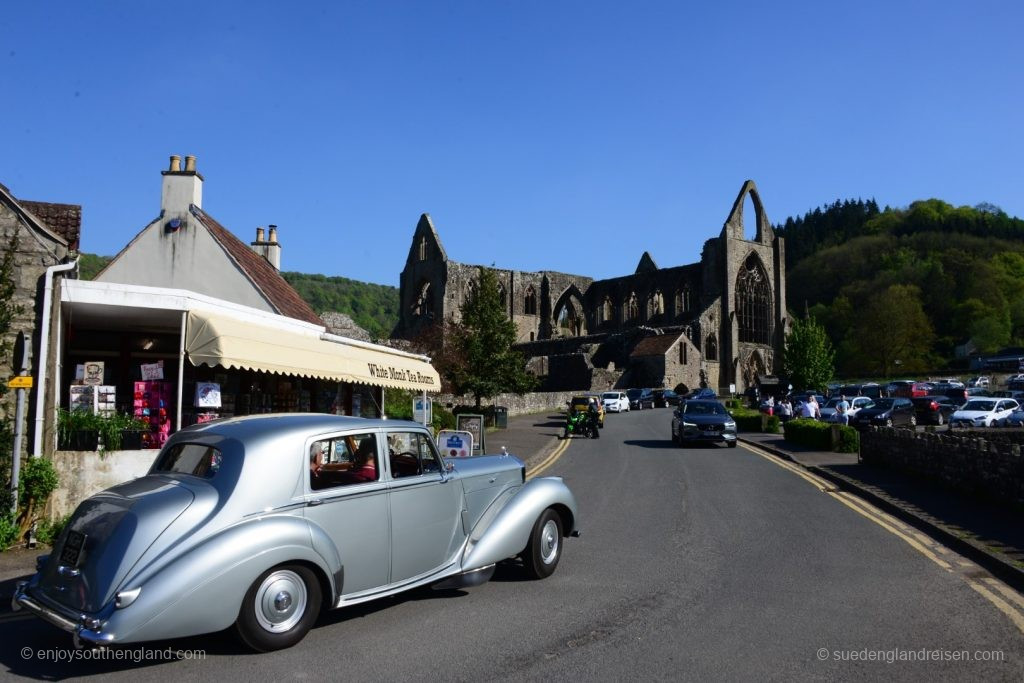
Tintern Abbey with British luxury limousine
Tintern Abbey has unfortunately closed. No matter, it’s impressive even from the outside. In fact, the whole valley is simply gorgeous and perfect for long walks between Wales (this side of the river) and England (the other side).
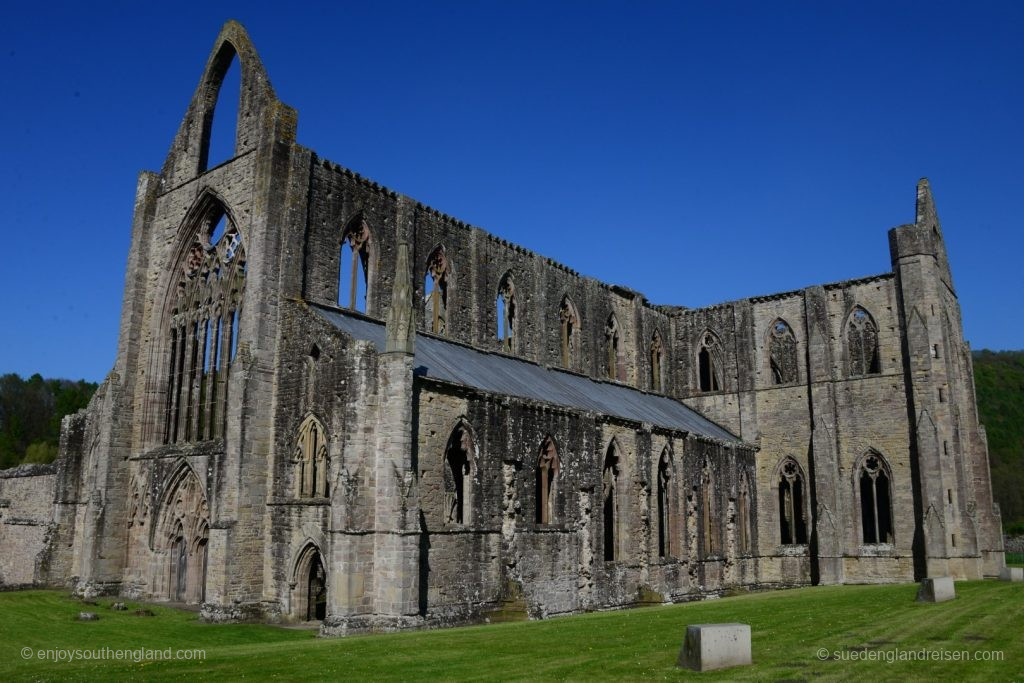
Tintern Abbey
The next day we take a closer look at the town of Monmouth, where we also spent the night.
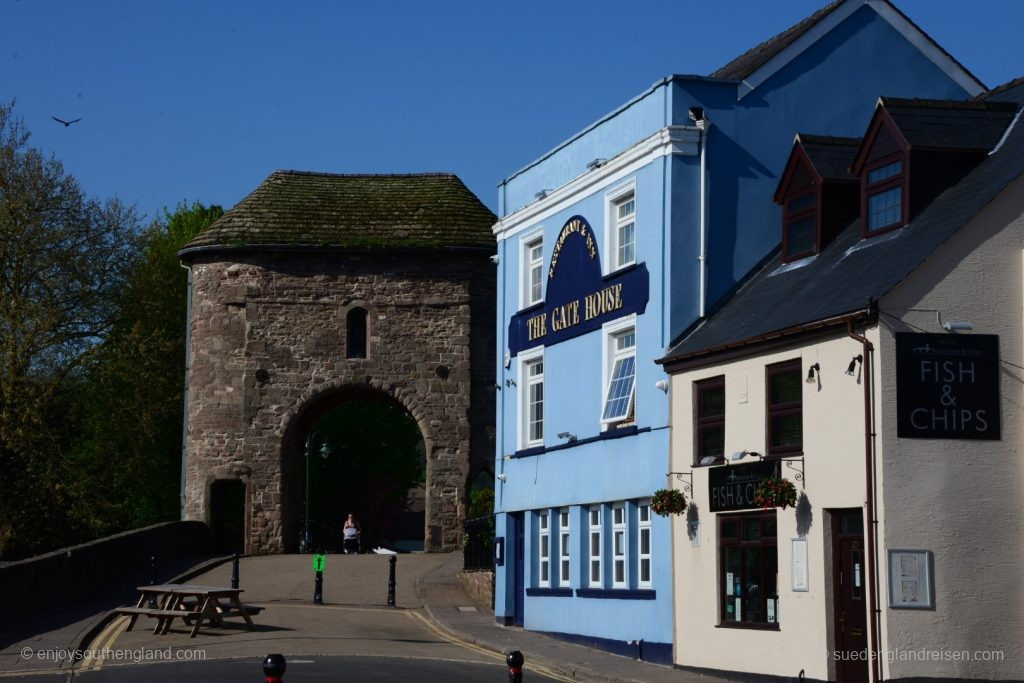
Monmouth
Then head out to Symonds Yat Rock (which is just a short distance back into England) for a fantastic view of the meandering River Wye. The light is eerie and perfect for photography in this otherwise lovely setting. It couldn’t be more inviting or peaceful.
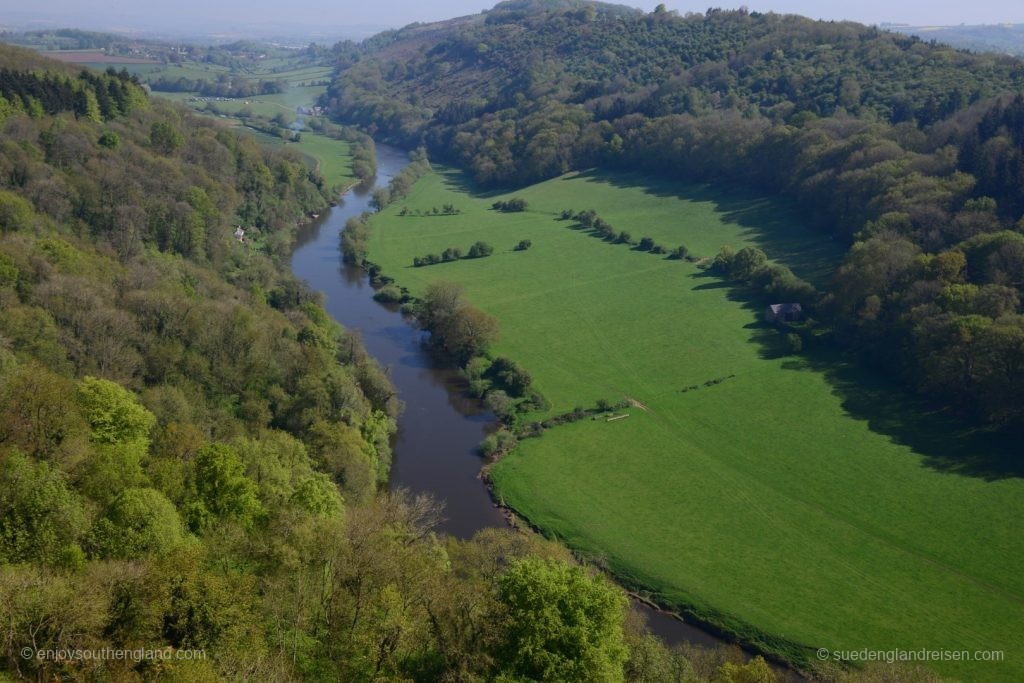
View from Symonds-Yat-Rock
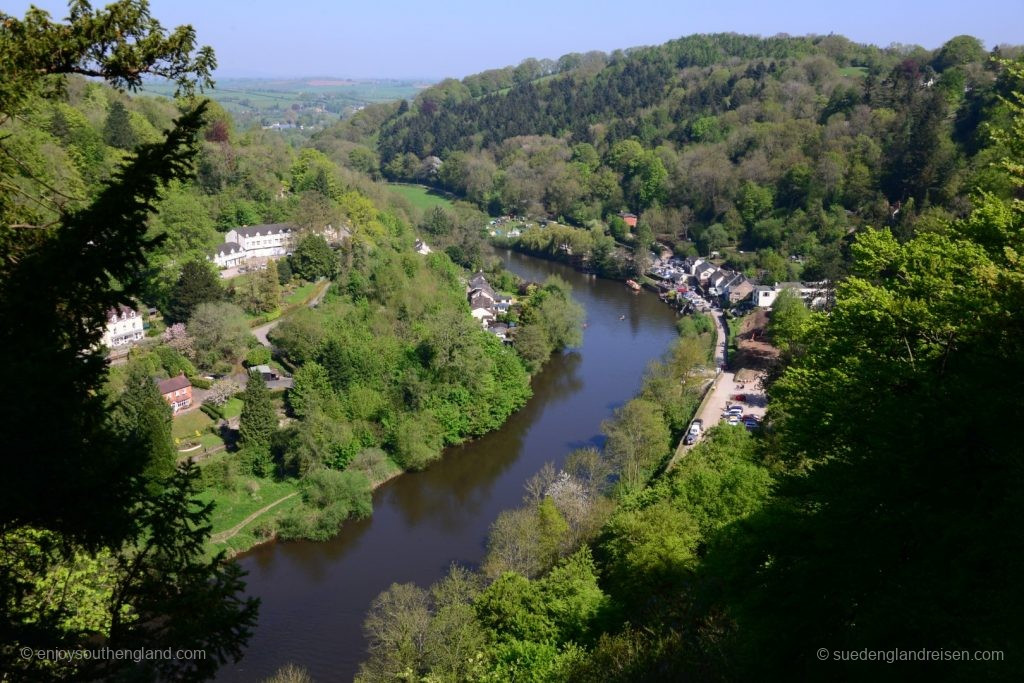
At Symonds-Yat-Rock
Next stop is Raglan Castle, a great castle with fantastic views.
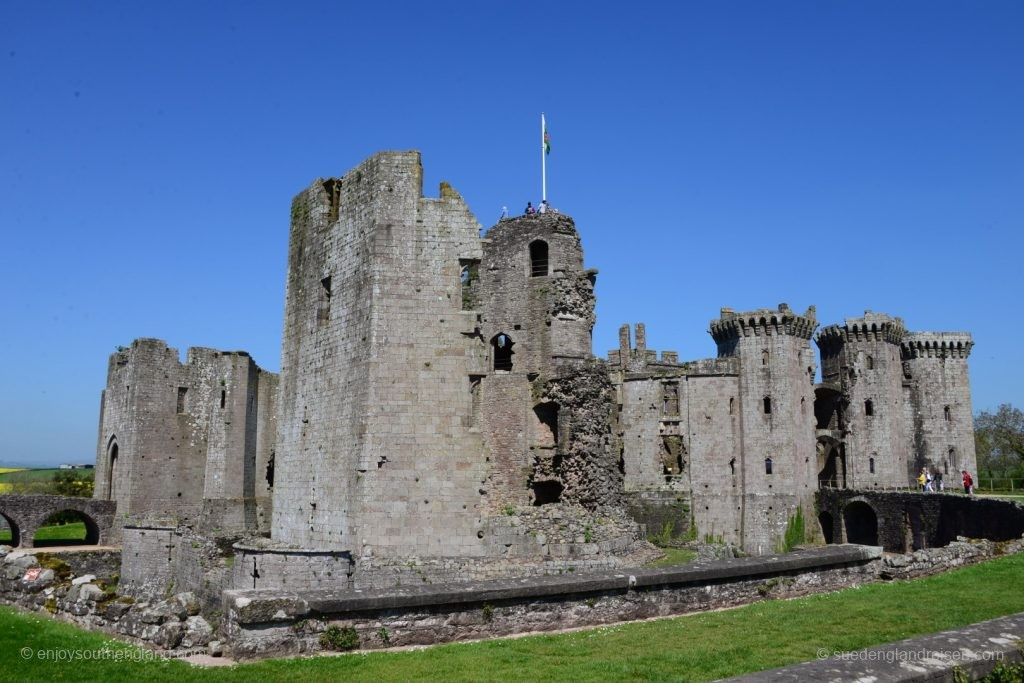
Raglan Castle
The route to Blaenavon now takes us almost cross-country. The journey itself is an experience: very narrow and sometimes steep roads, magnificent giant trees lining the road, and charming stone bridges over the Monmouthshire and Brecon Canal with its narrowboats.
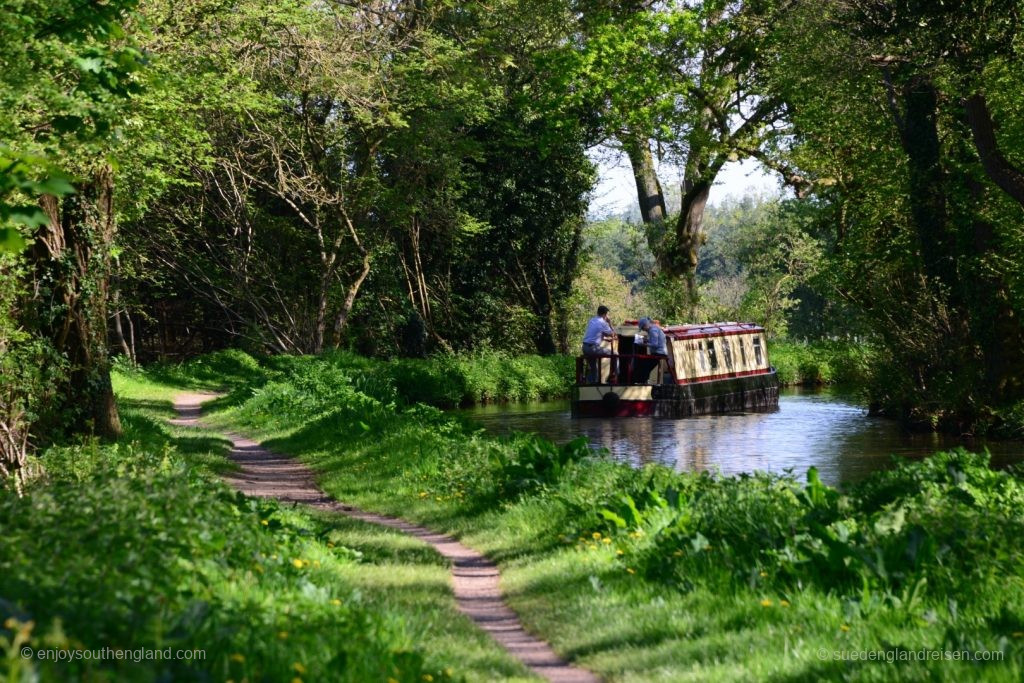
Narrowboat on the way to Blaenavon
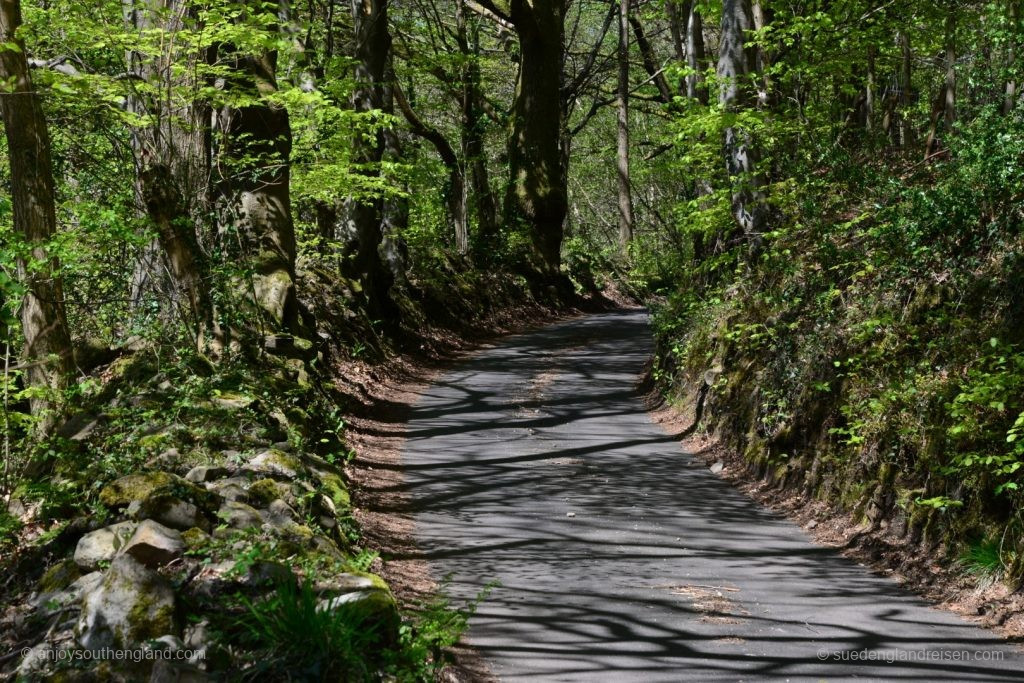
Small Road on the way to Blaenafon
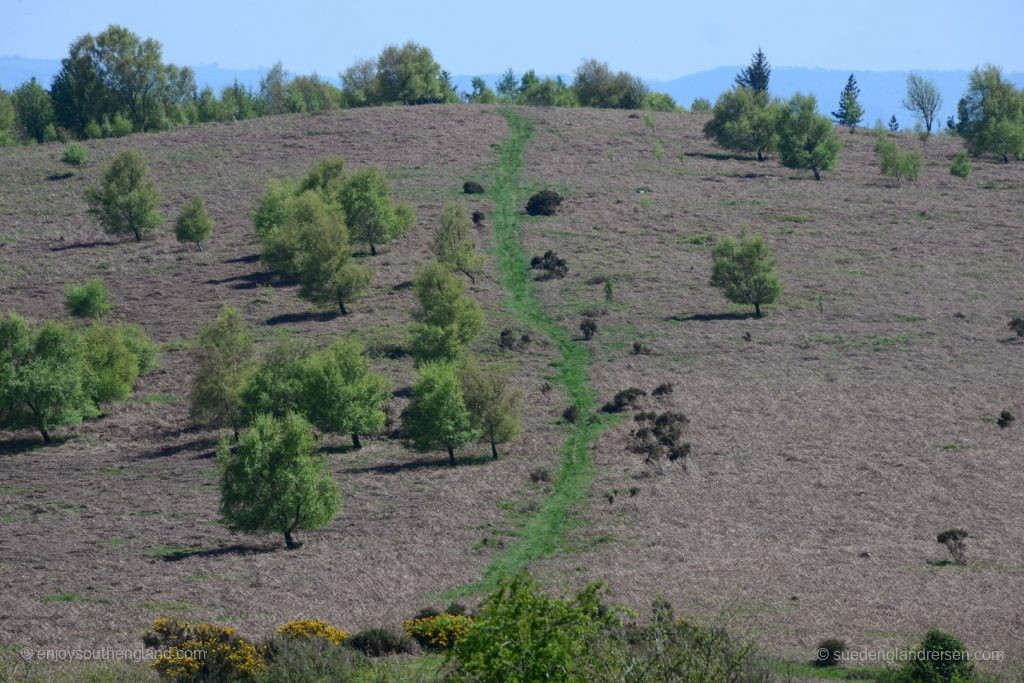
British Trail
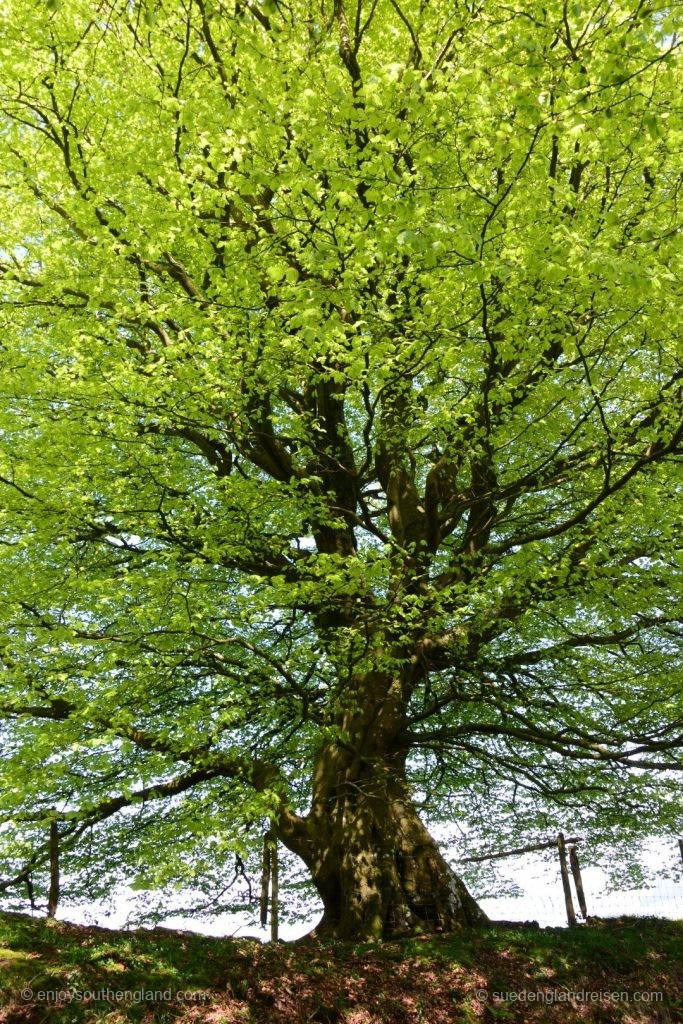
One of almost countless mighty trees
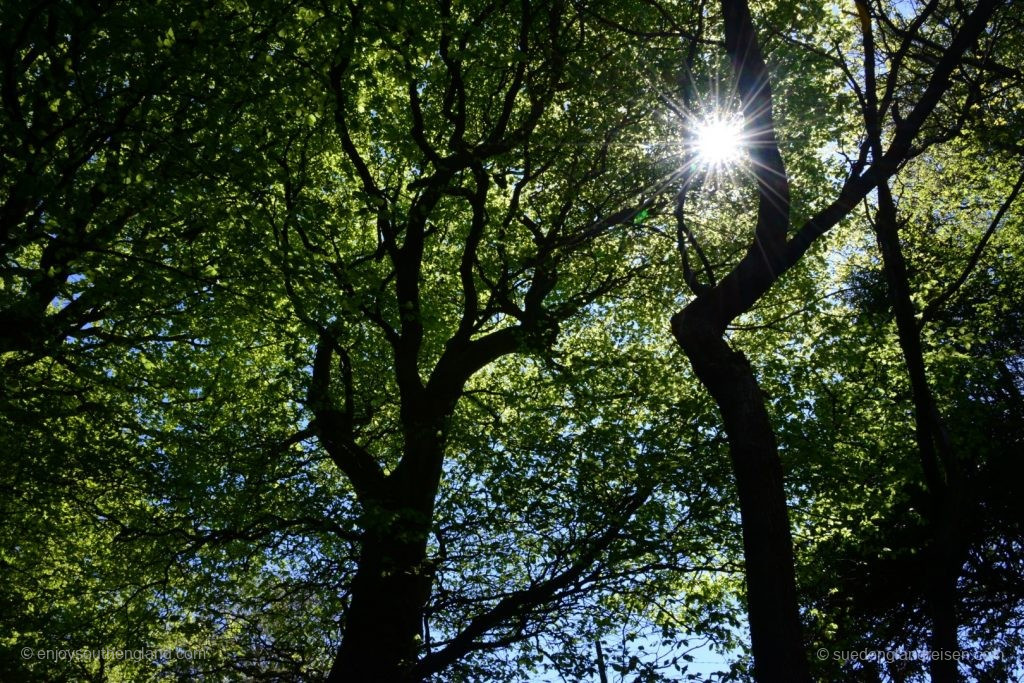
Who says the weather in Great Britain is bad?
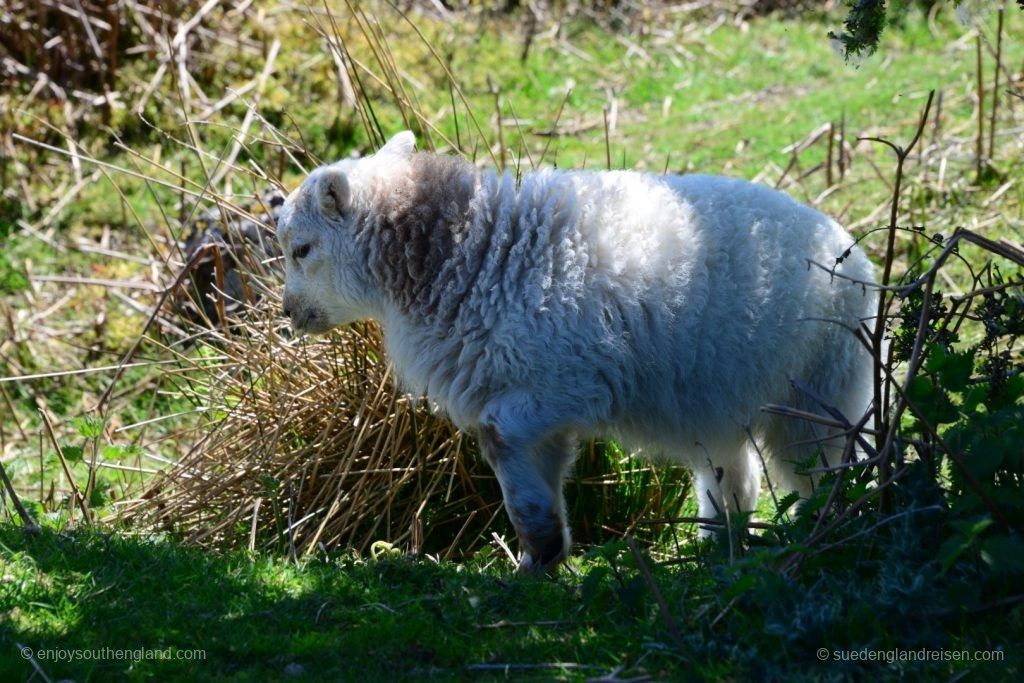
Nice companions at the side of the road
Wales was once a centre of heavy industry.
In Blaenavon, you’ll find the remains of the once dominant ironworks with their impressive blast furnaces. With free admission and a friendly guided tour by a volunteer, we get a vivid impression of a time when things were considerably less peaceful than they are today.
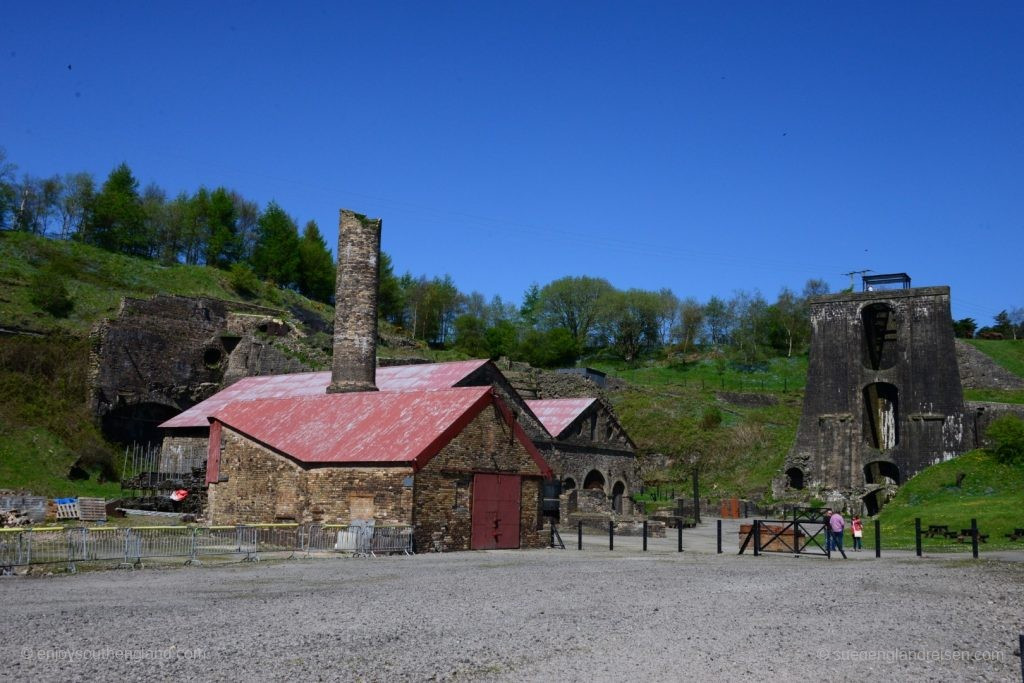
Blaenavon Ironworks
Gospel Pass
One last look at the Big Pit Mine and into the town, then it’s off to a special highlight of what has already been a very eventful day. We drive north past Llanthony Priory, up the magnificent Gospel Pass road to Hay Bluff, and then back down to Hay-on-Wye. We’d love to drive that road again in the other direction tomorrow morning – it’s that beautiful.
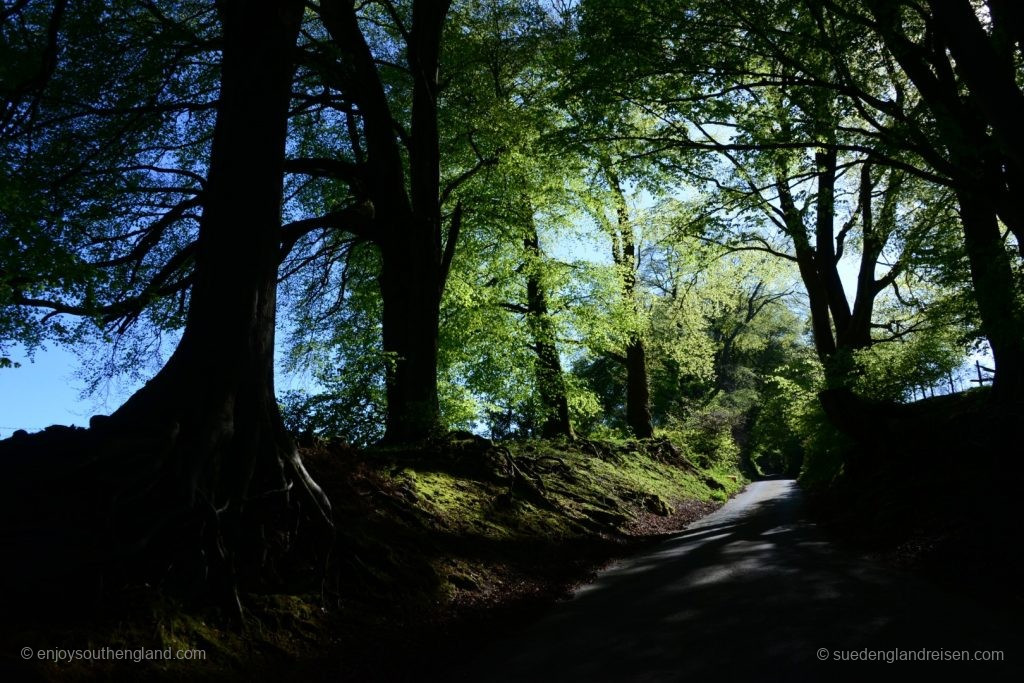
en route
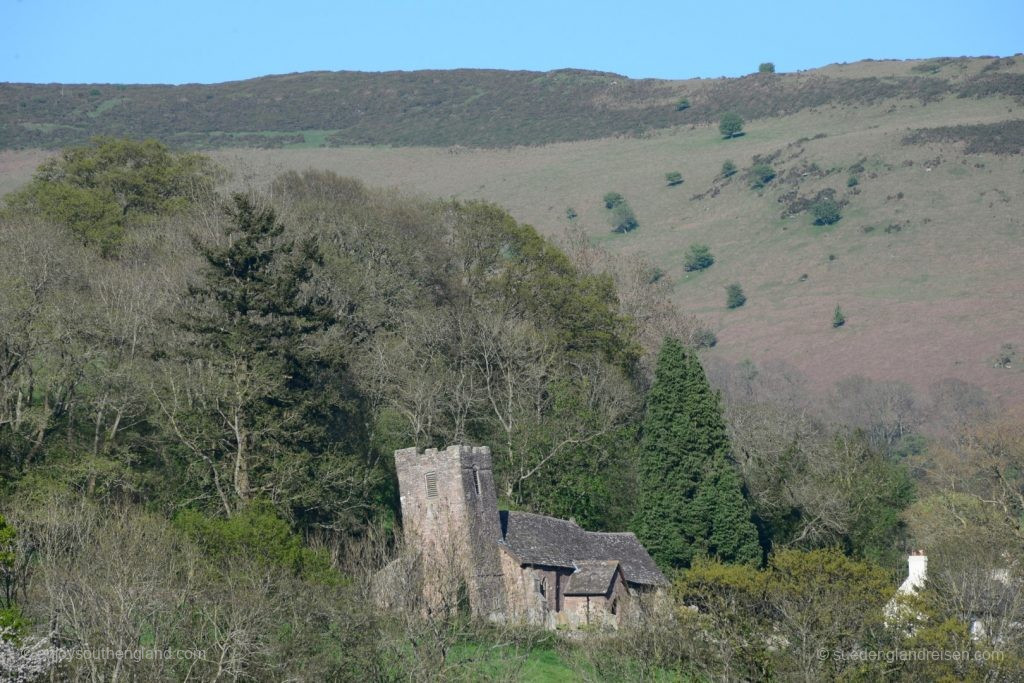
The church of Cwmyoy – quite quirky!
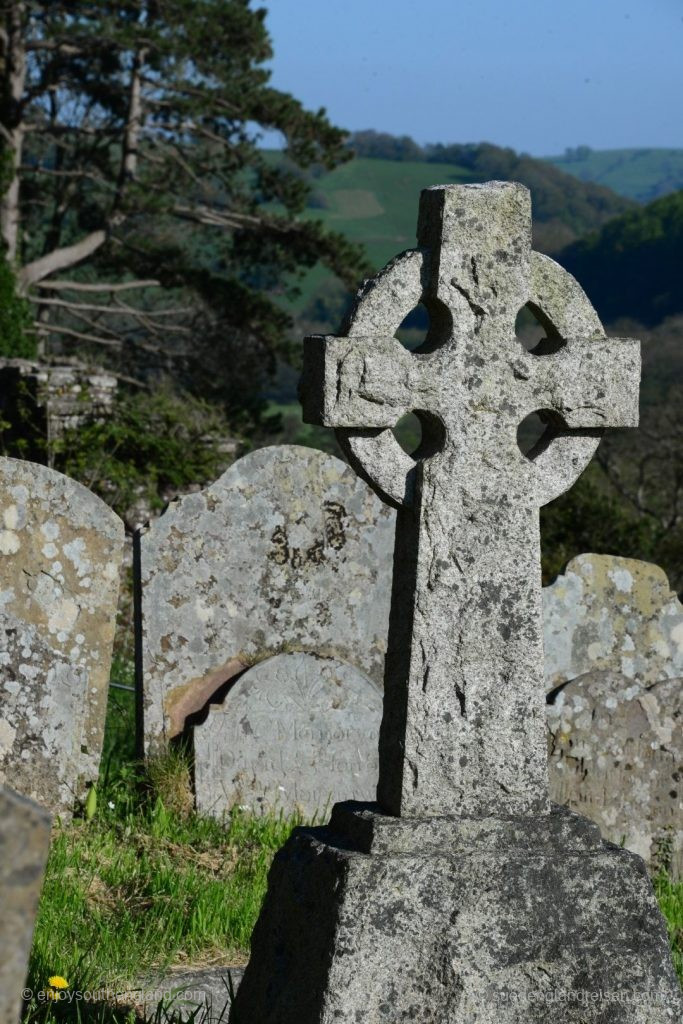
In the cemetery of Cwmyoy
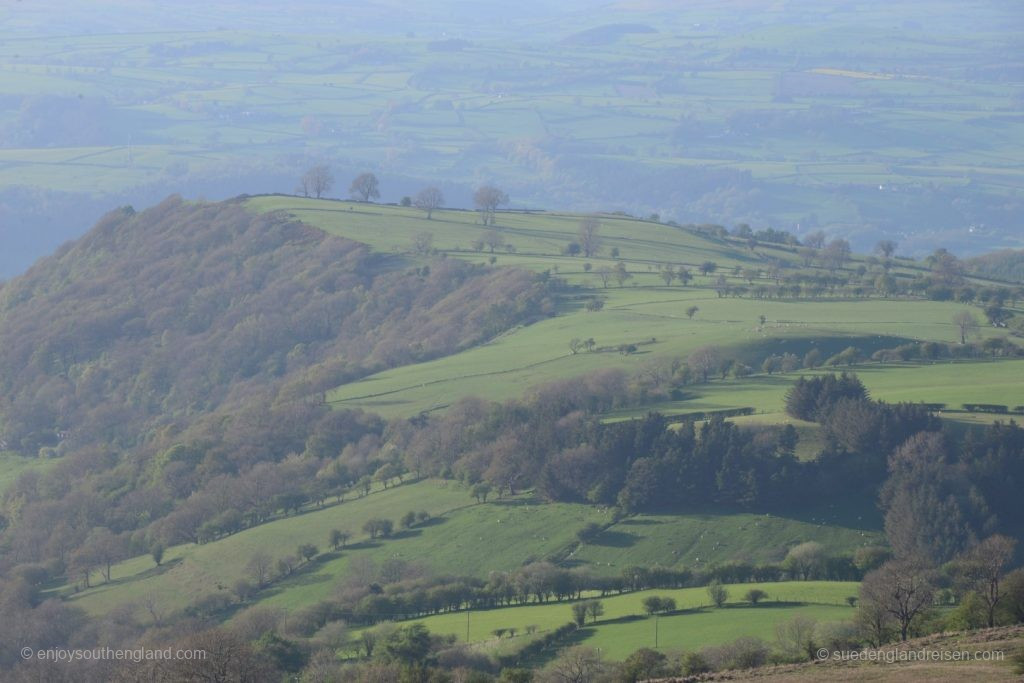
wide, beautiful country (in terrible backlight)…
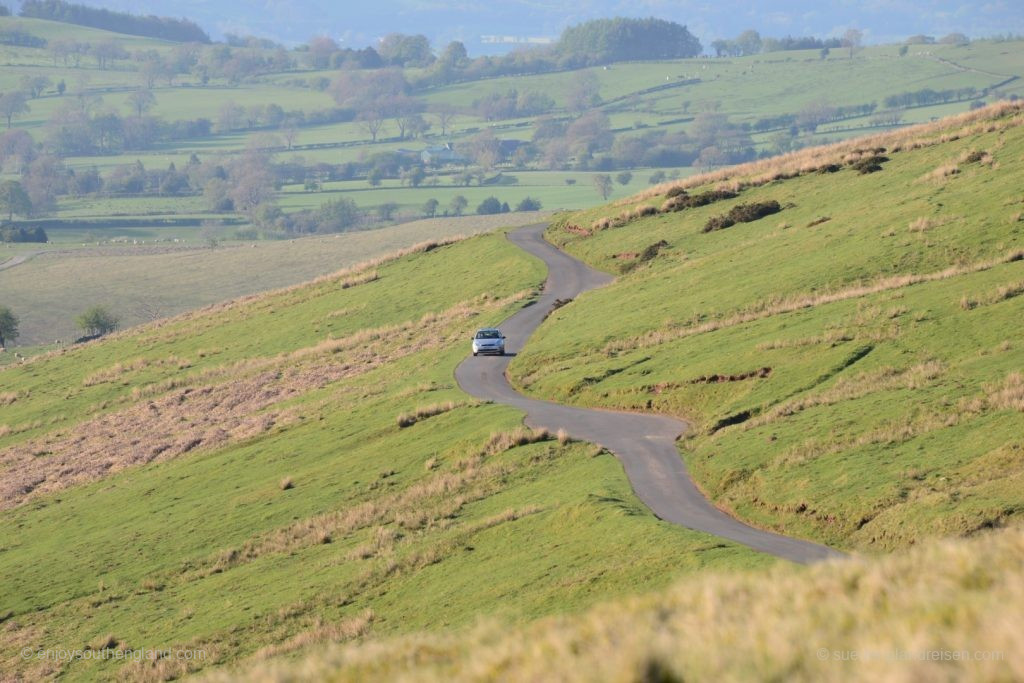
… and suitable roads to go with it
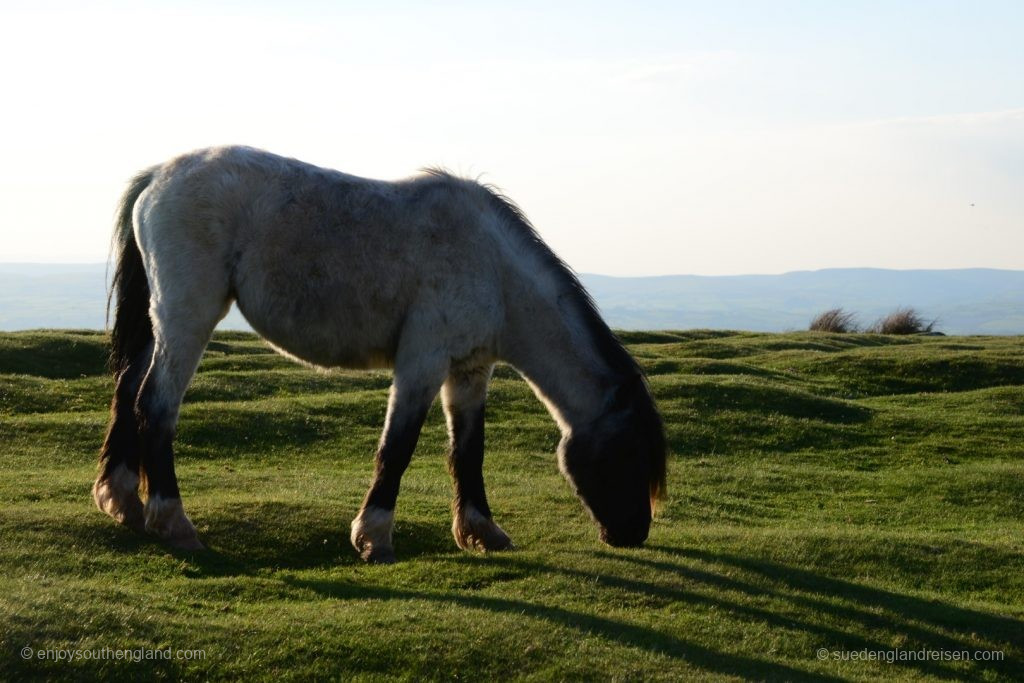
Stress is unknown here.
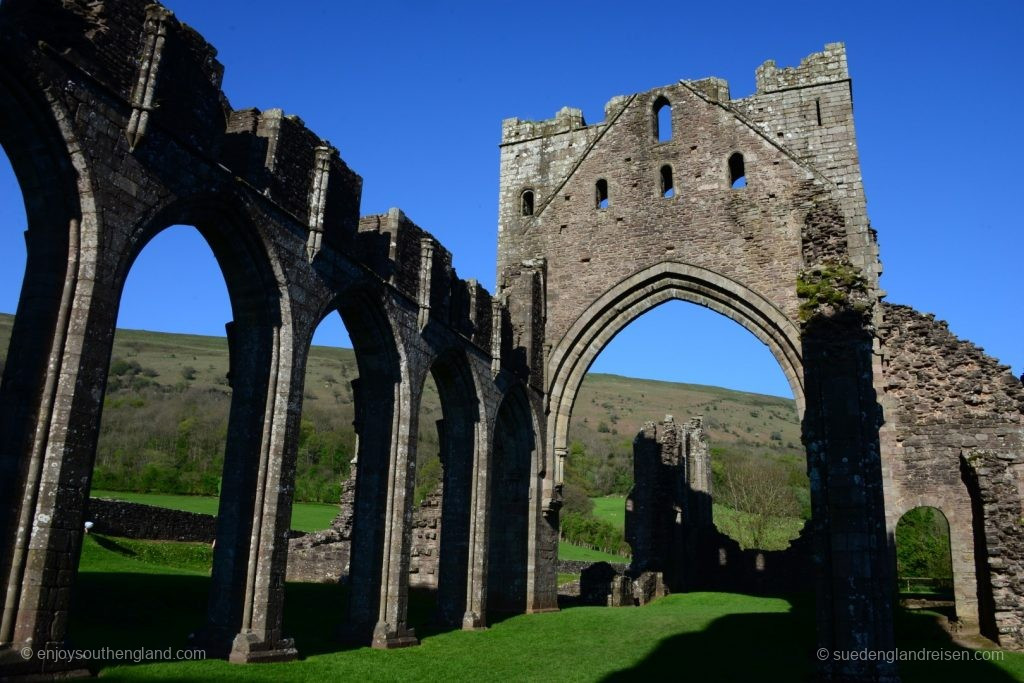
Some things can take a few centuries (here the ruins of Llanthony Priory)
And nature itself becomes a work of art. The town of Hay-on-Wye is considered the book town – and indeed, there are an incredible number of bookshops and open bookshelves. Now in the evening, the place was pleasant, but practically deserted.
On Monmouthshire & Brecon Canal
The still-hot weather is perfect for exploring the shady Monmouthshire & Brecon Canal. So we head to Goytrewharf hoping to rent a boat at the last minute. Unfortunately, that doesn’t work out, but we do meet Ben. He emigrated from London to beautiful Wales and takes us on a relaxing 20-minute boat trip along the canal. Simply idyllic!
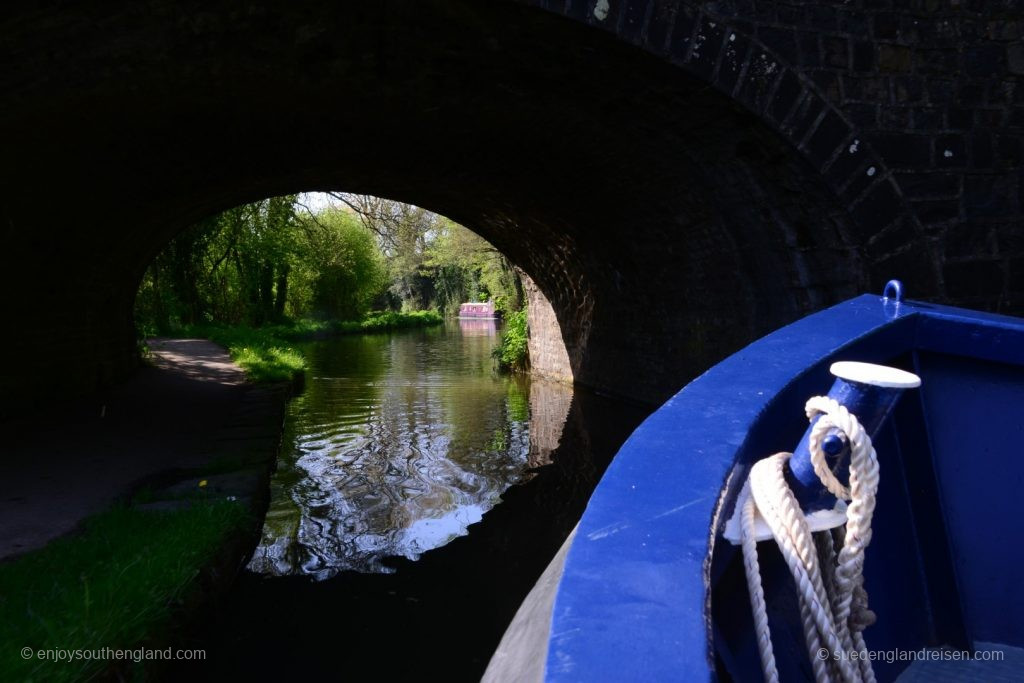
A short boat trip on the canal with Ben
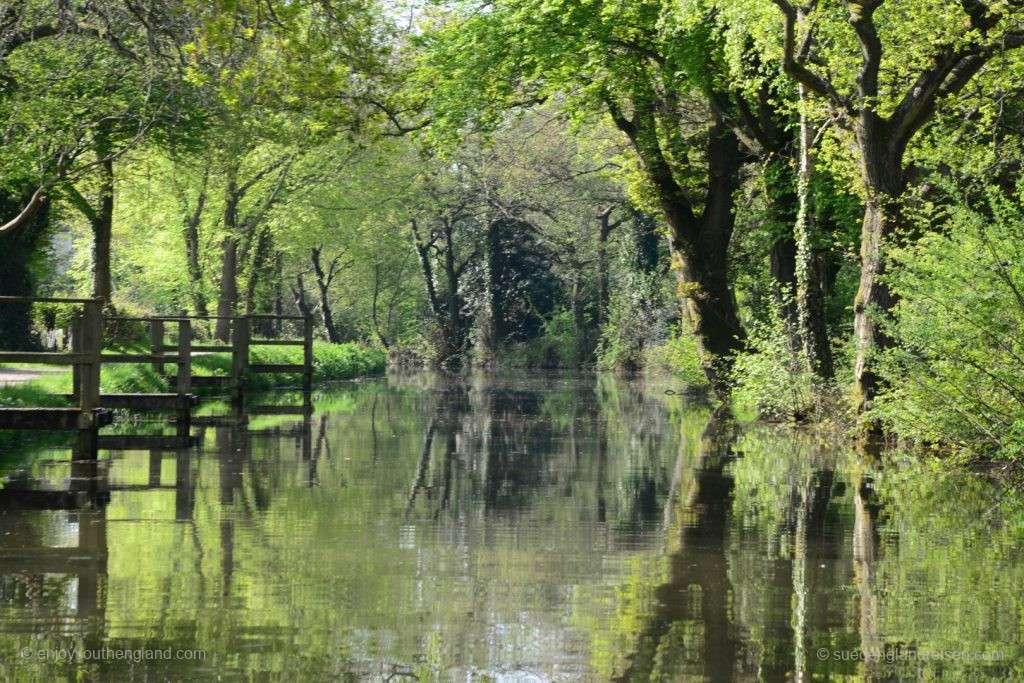
idyllic atmosphere on the Brecon Canal
Even after that, now back in the car, we continued along the canal. We stopped frequently for short walks. Near Talybont-on-Usk, we passed the reservoir and descended another mountain pass into the Cardiff area, where Dyffryn Garden (National Trust) awaits us.
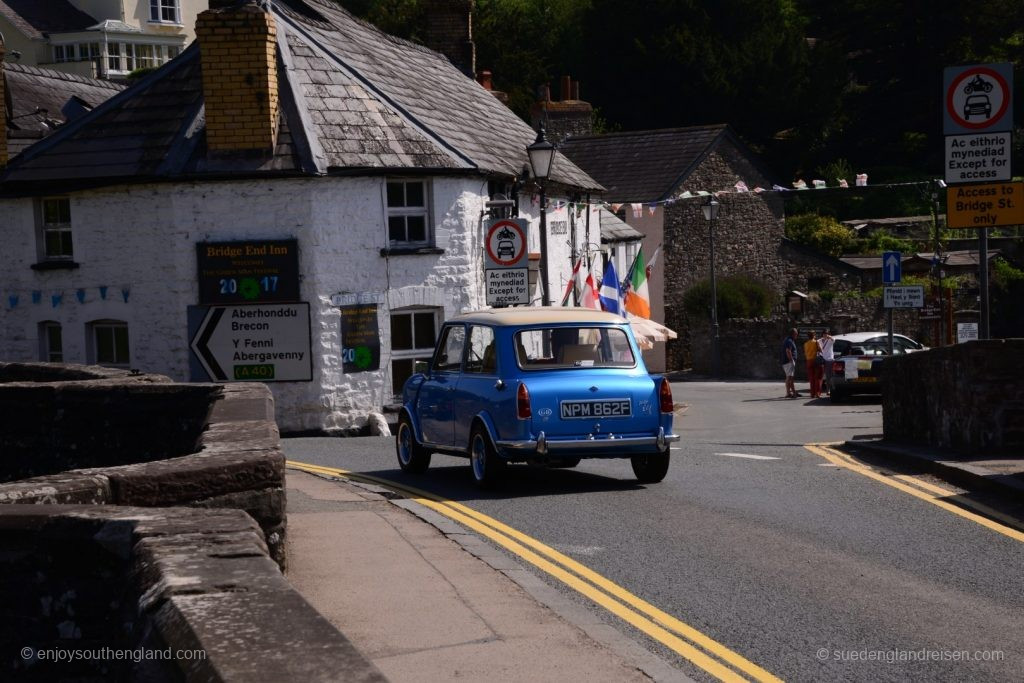
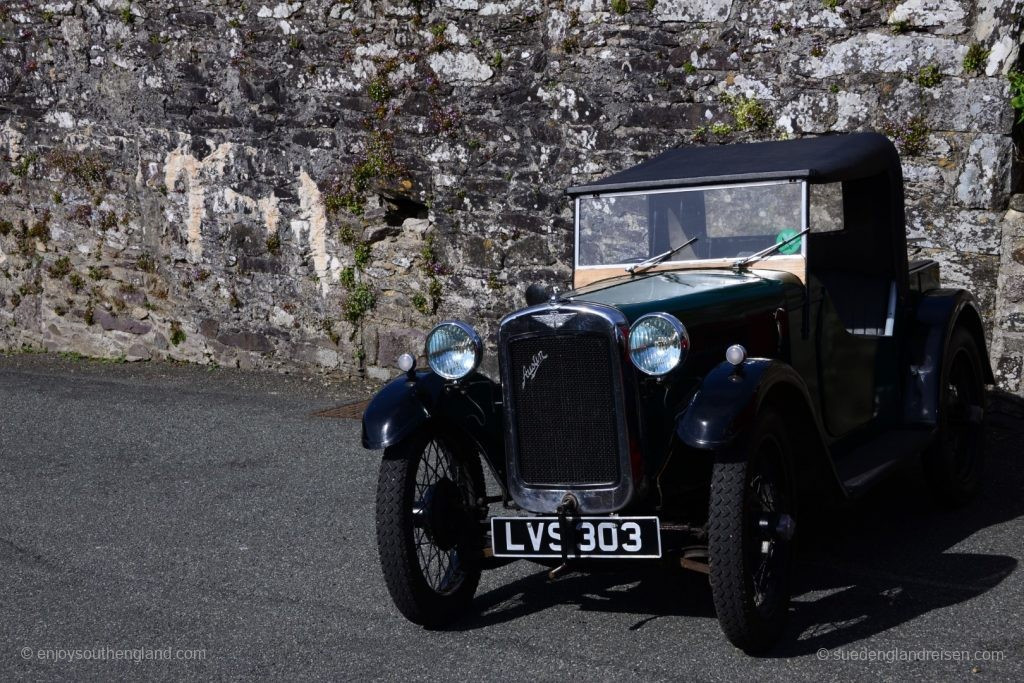
Classic small car, ideal size for Welsh roads
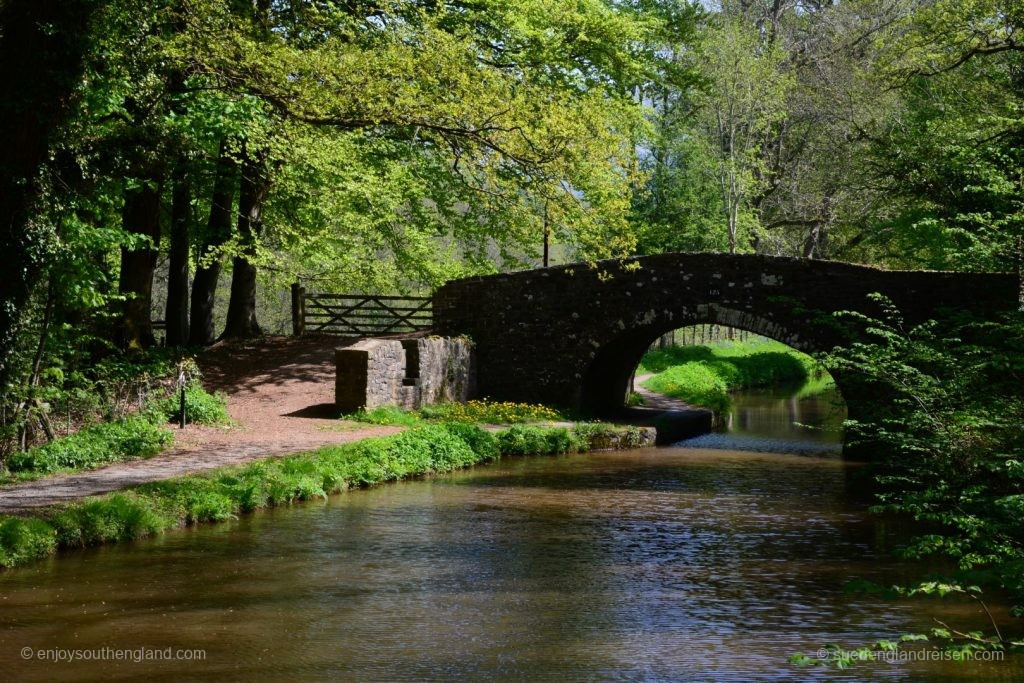
At the Monmouthshire & Brecon Canal
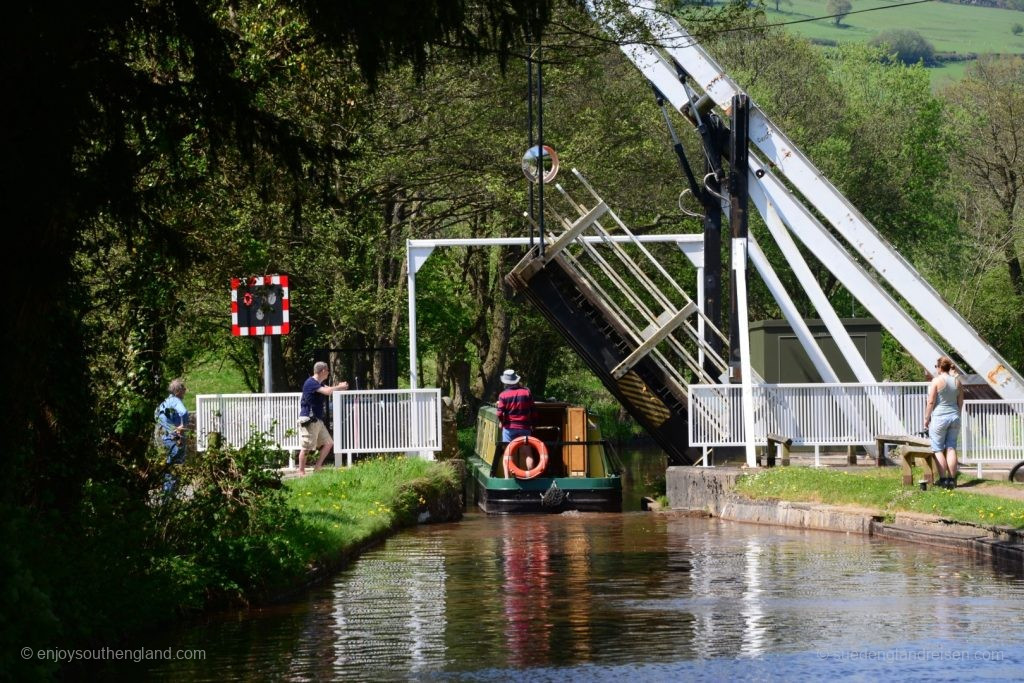
Canal bridge in Talybont-on-Usk
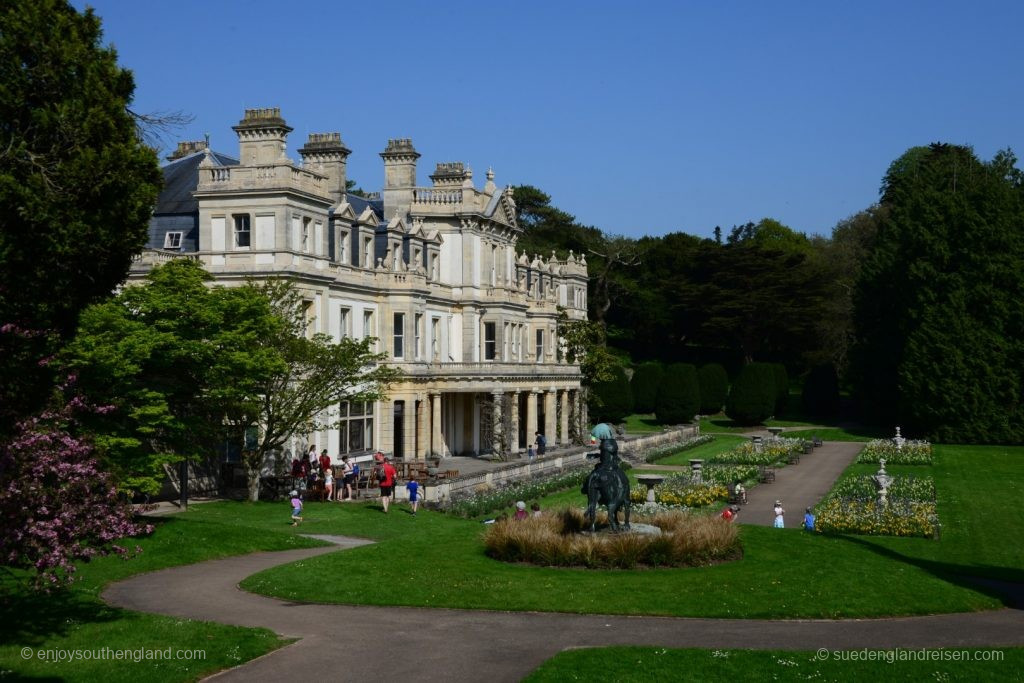
Mansion in Dyffryn-Gardens
Deep in South Wales
And in the evening we went to the beach: Llantwit Major and Nashpoint in Marcross were very nice – the Indian dinner afterwards was also very good.

Llantwit-Major
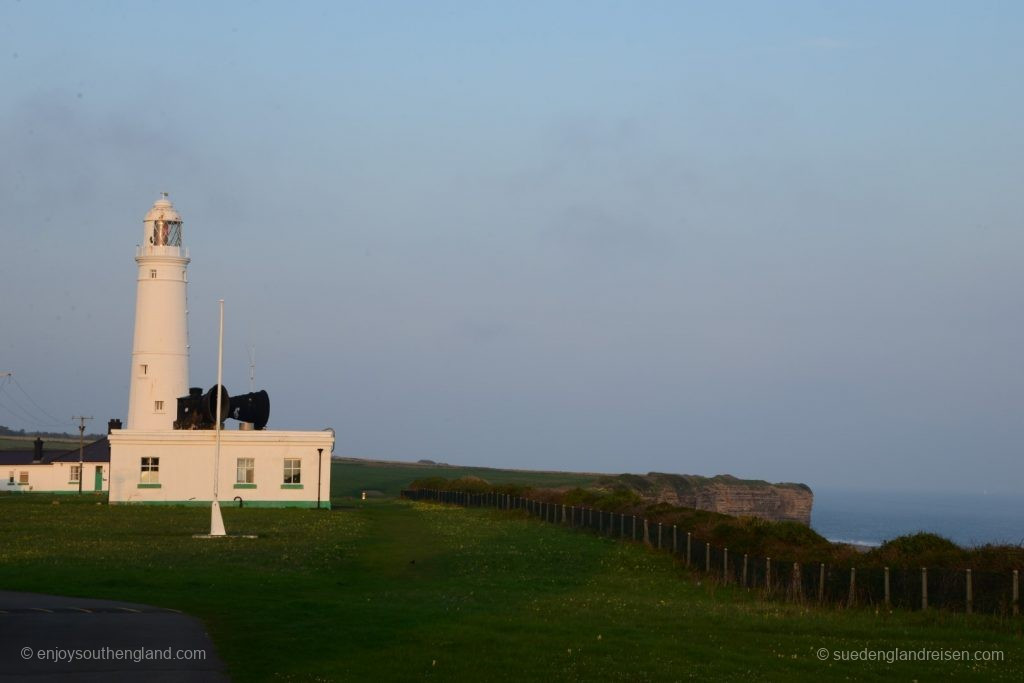
Nash Point Lighthouse with its powerful foghorn

Seaside atmosphere
Near Swansea
What a change in the weather! After days of glorious sunshine and heat, the sky is overcast. Arriving at Castell Coch, the sky briefly clears, and we take a short walk in the woods before visiting the castle – it has clouded over again. We wander almost alone through the incredibly ornate rooms. One could easily spend hours here, taking in every little detail.
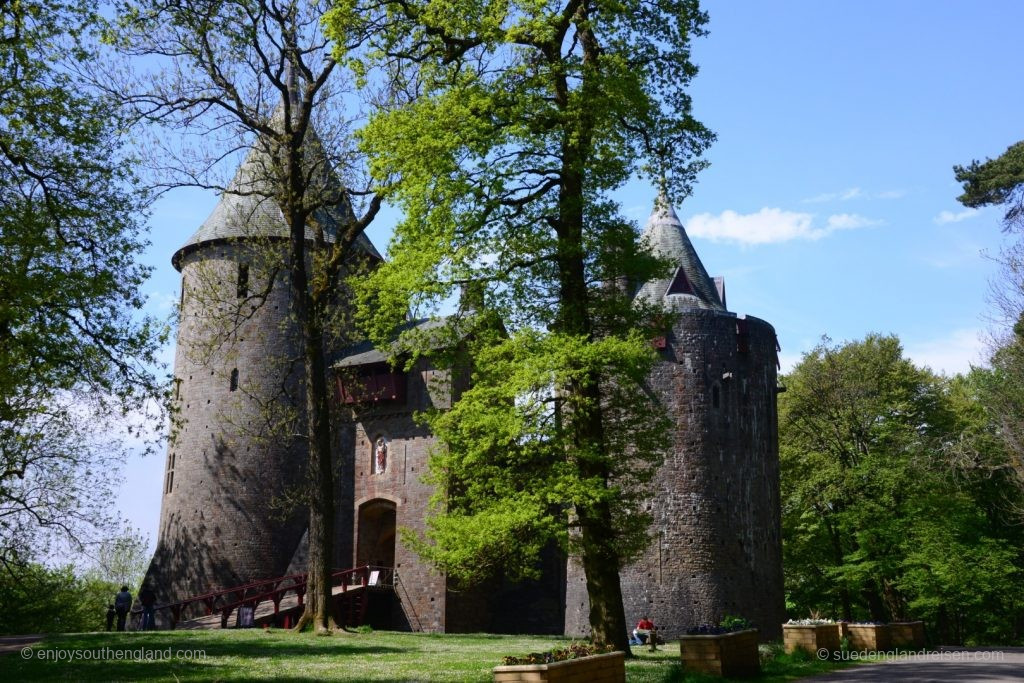
Castle Coch
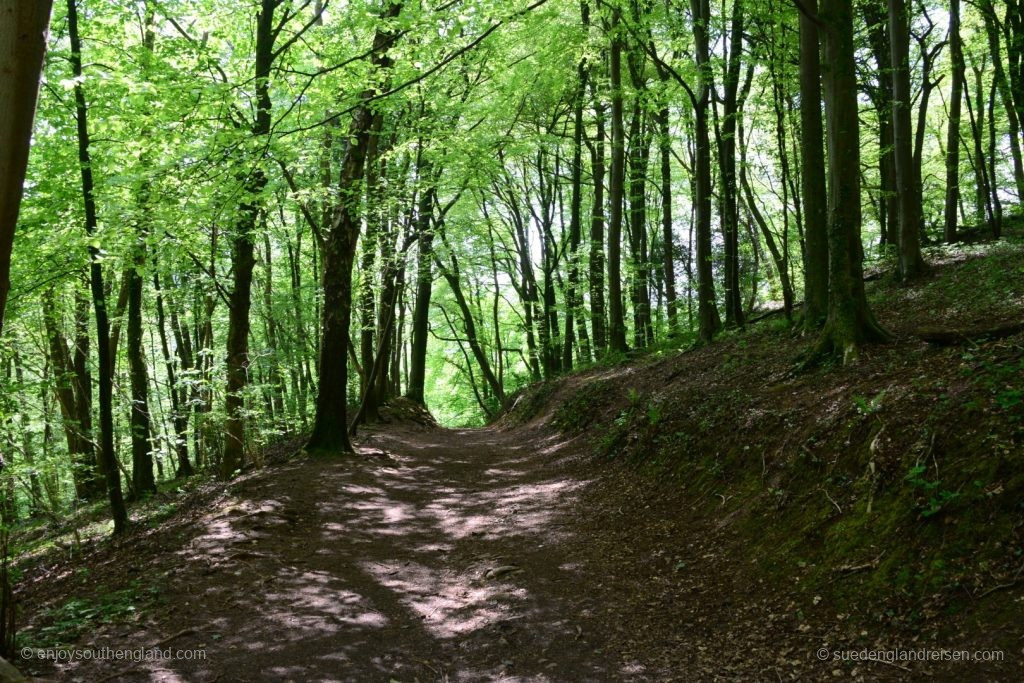
In the woods around Castle Coch
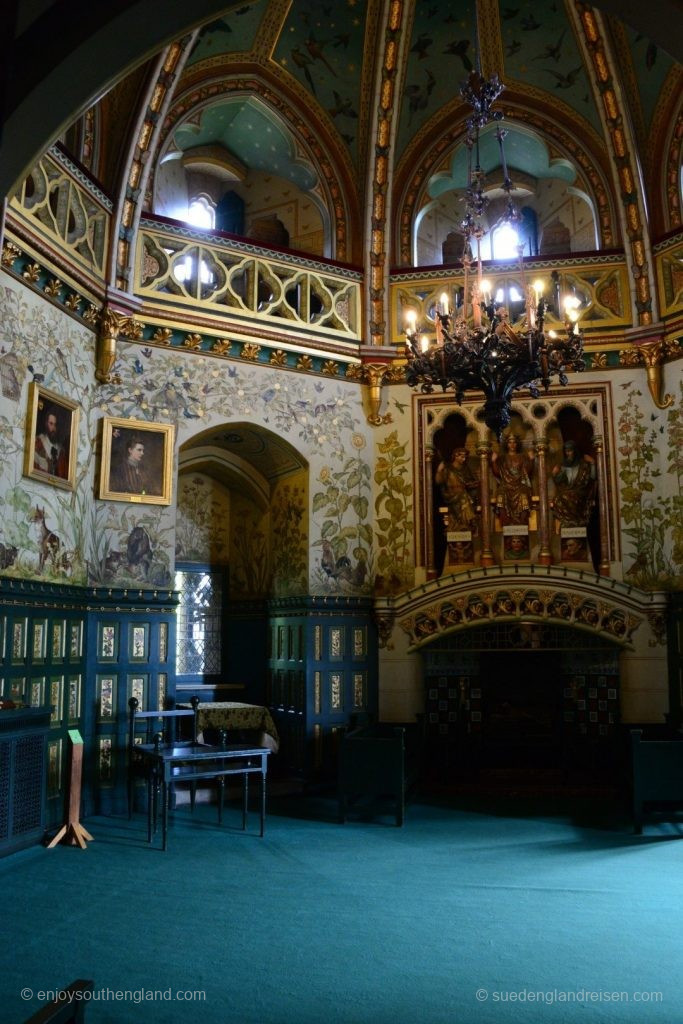
Inside Castle Coch
To finish, we’ll have our first tea for two with Welsh cakes.
Driving through the city of Swansea, it takes a while to reach our destination, the Gower Peninsula. We take photos in Mumbles and Caswell Bay, but unfortunately, there’s no time left for Three Cliffs Bay. Along the way, we drive through a beautiful stretch of forest, its floor carpeted with flowering wild garlic. Rhossili Bay lies vast and deserted before us. Yesterday, on the Bank Holiday, it must have been absolutely packed. Sadly, we don’t have time to visit Northern Gower – but never mind!
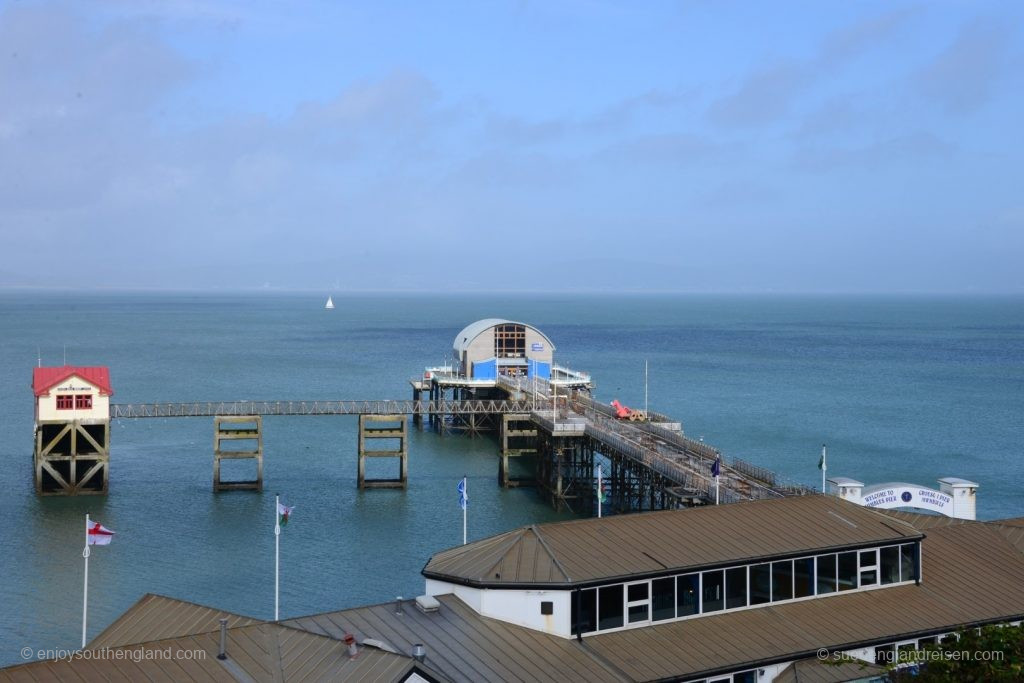
Mumbles Pier
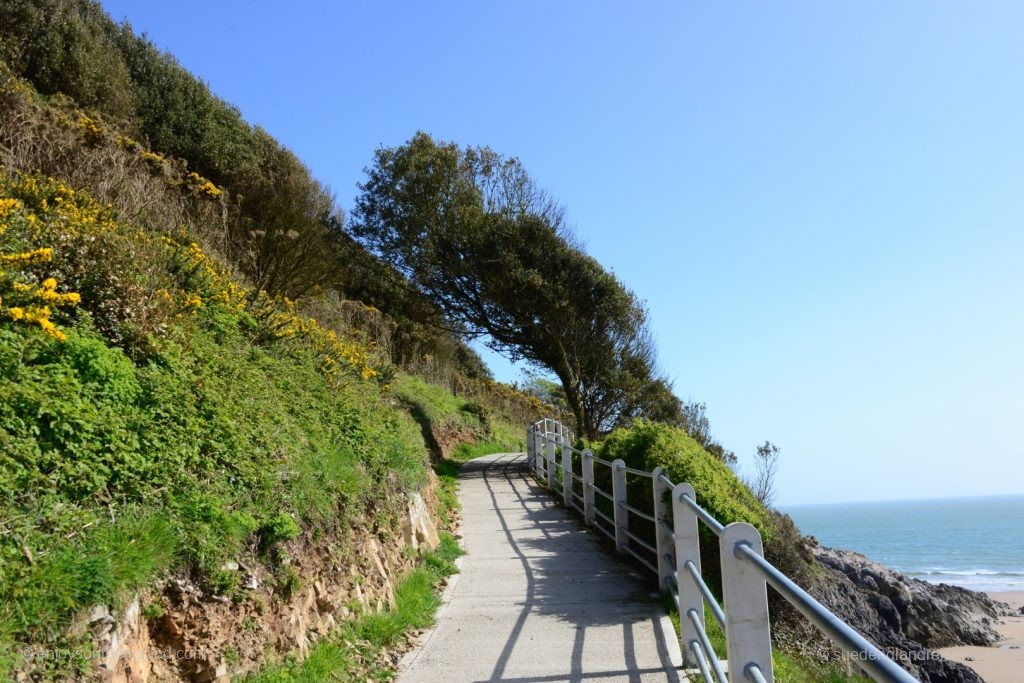
Caswell Bay
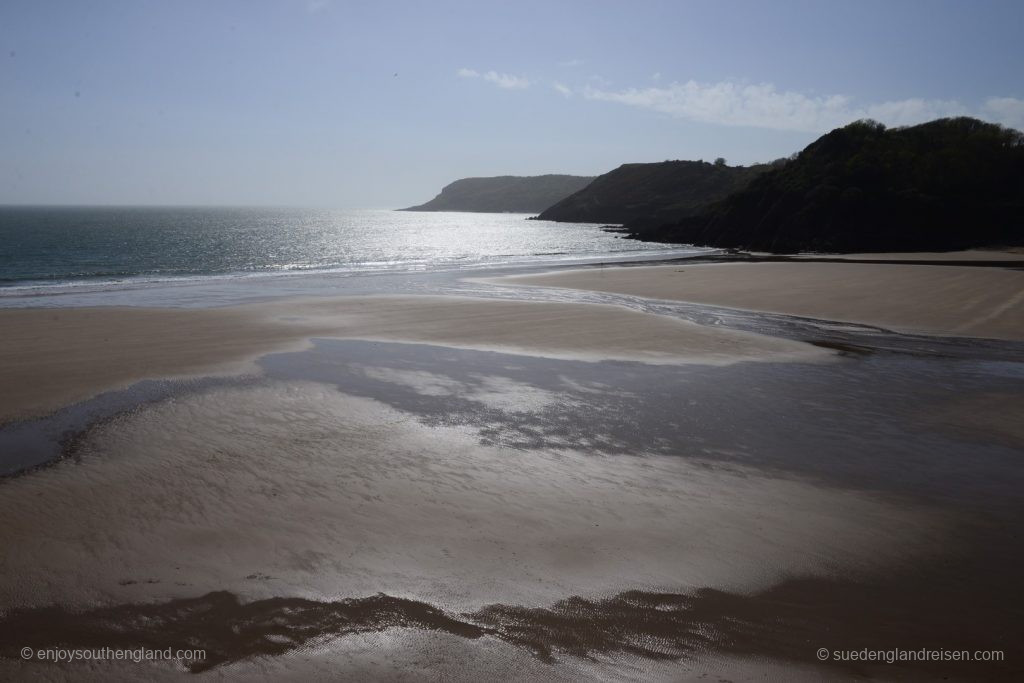
Caswell Bay
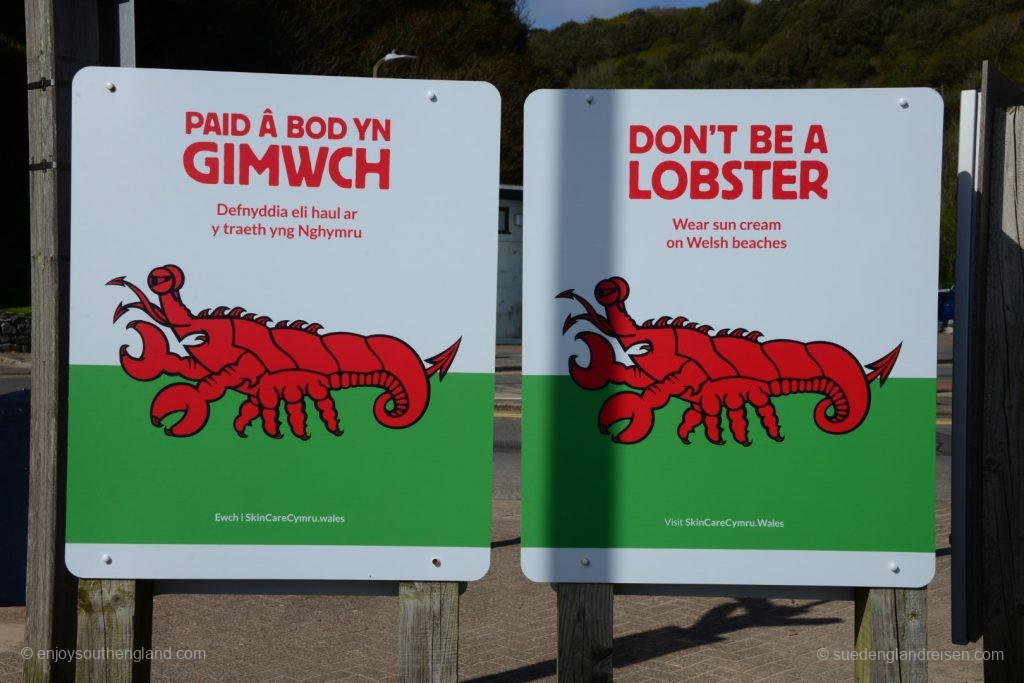
Warning about UV damage at Caswell Bay beach
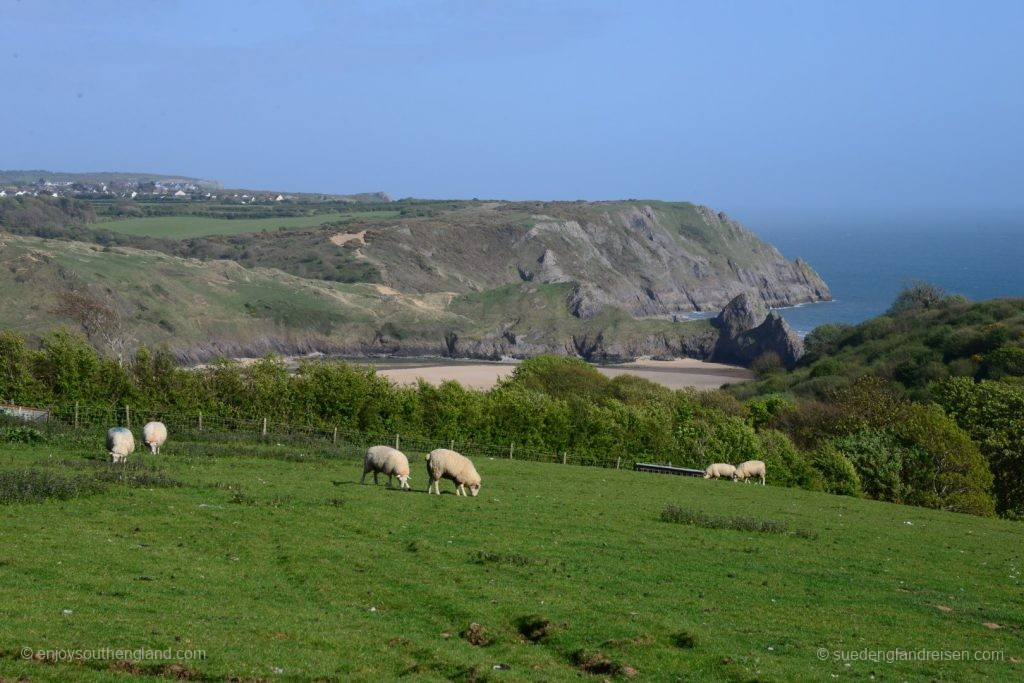
Three Cliffs Bay
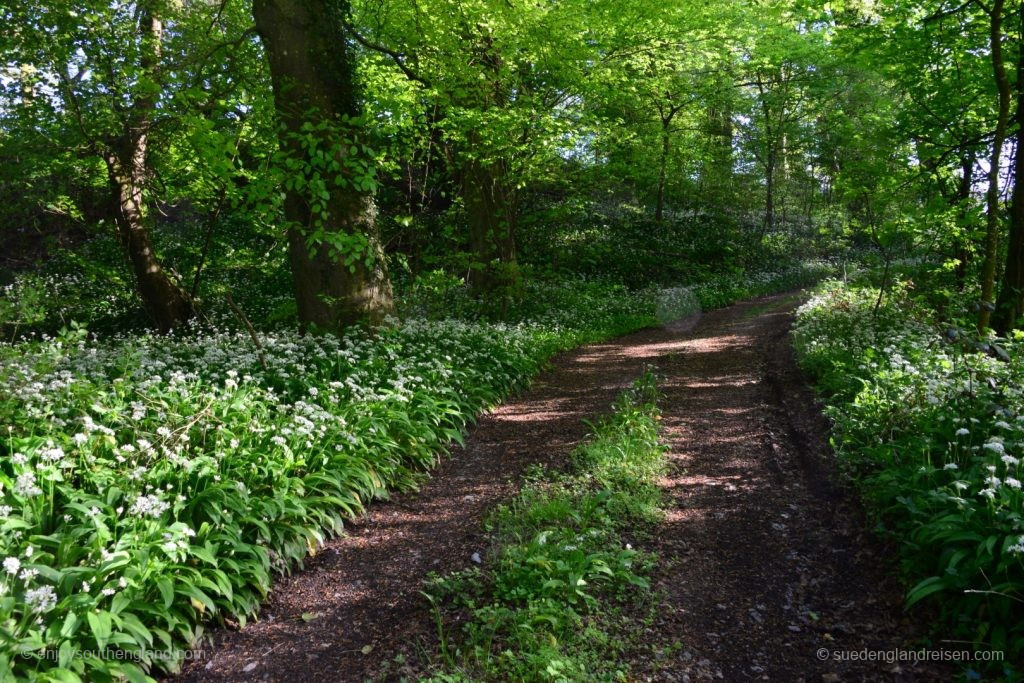
Blooming wild garlic in the coastal forests
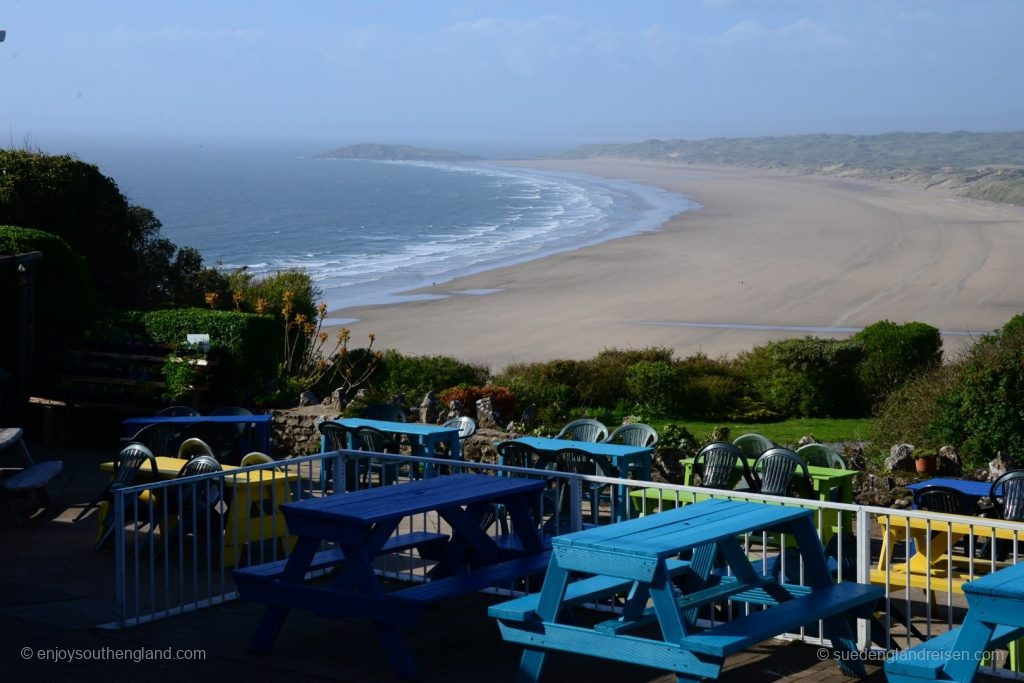
Rhossili Bay – seemingly endless sandy beaches!
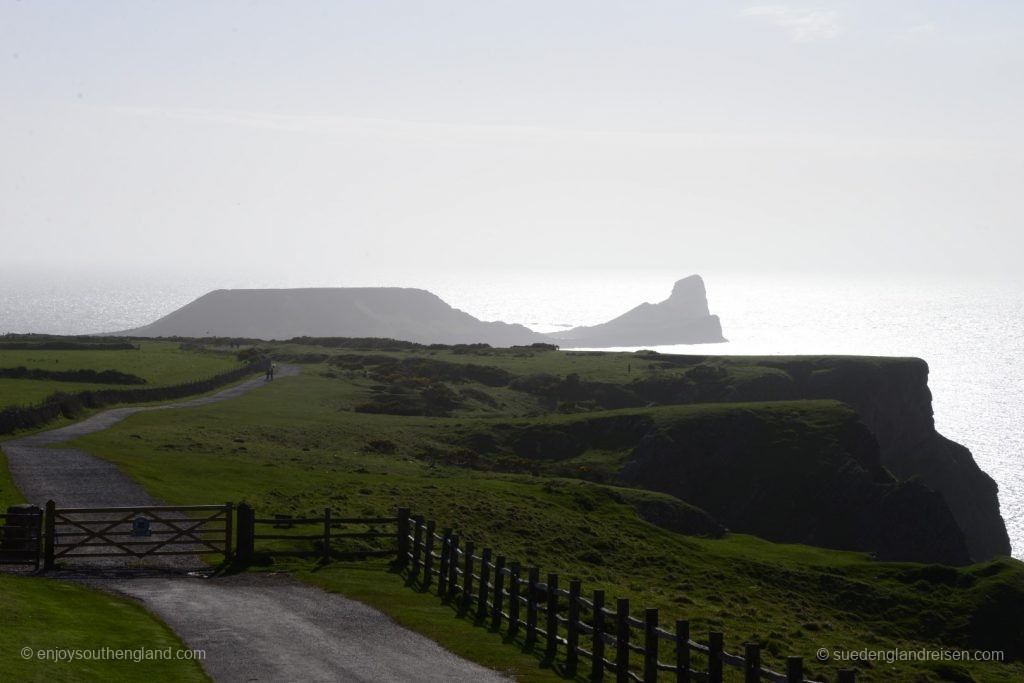
Rhossili Bay
Winterfall County
Another overcast day greets us, and we decide on – water! We’re heading to Waterfall Country. It’s incredible how many waterfalls this region has to offer, in all shapes, sizes, and styles. We start with Melincourt Falls, just north of Neath near Resolven. A short hiking trail through the woods leads to the waterfall.
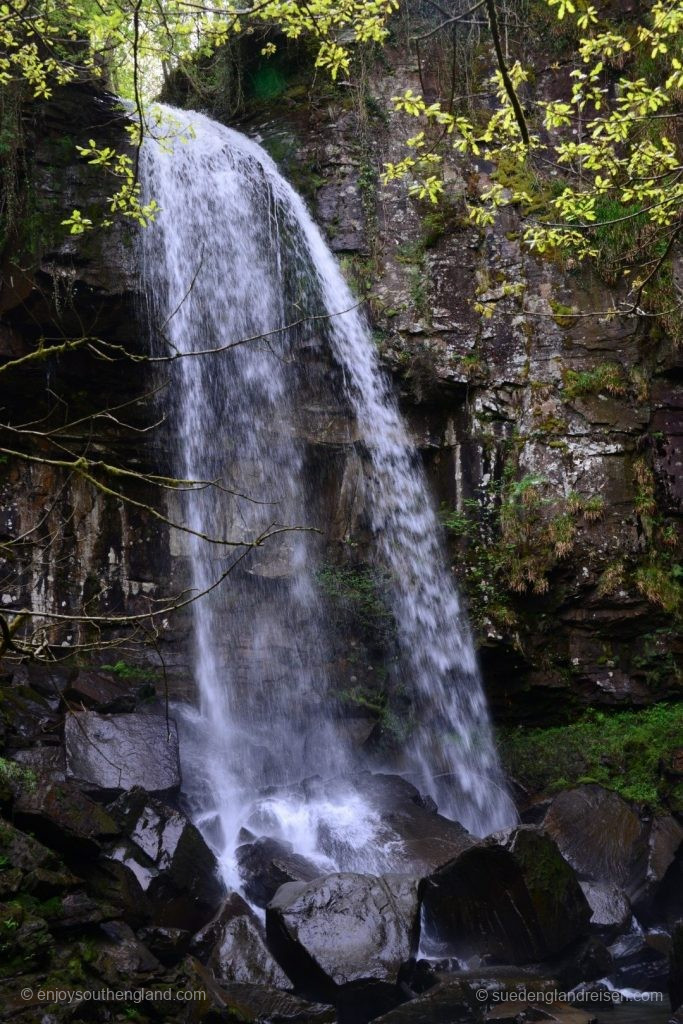
Melincourt Waterfall
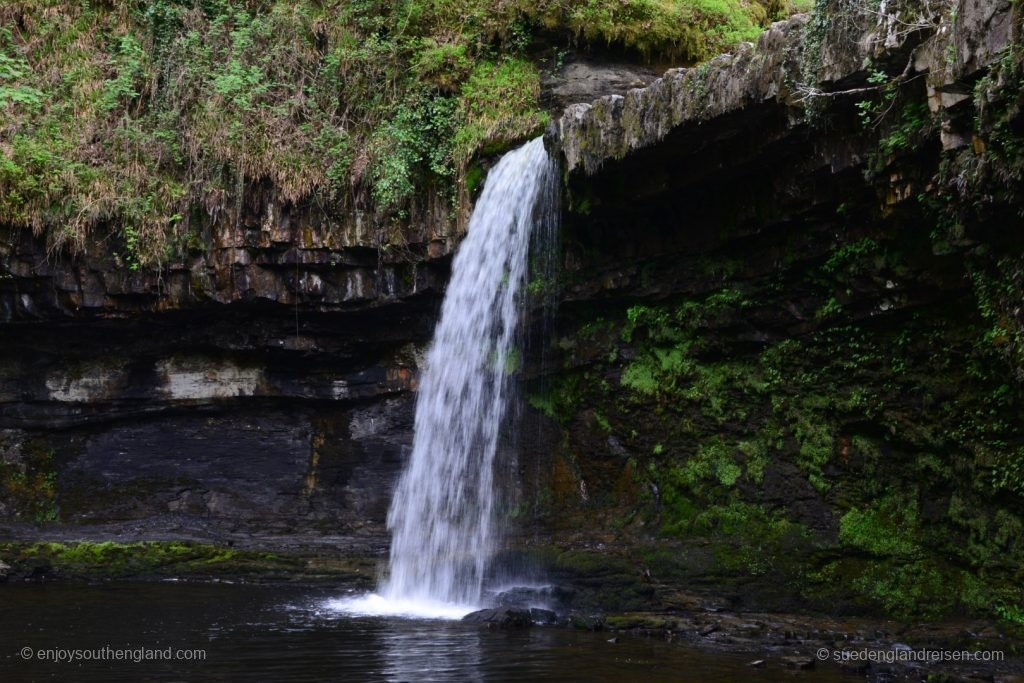
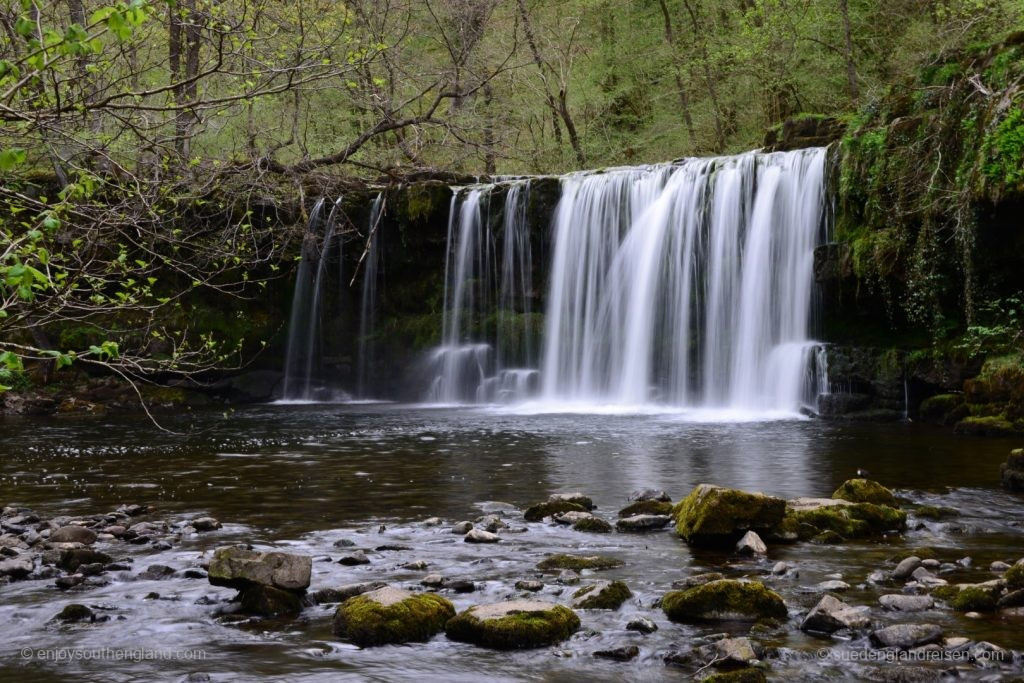
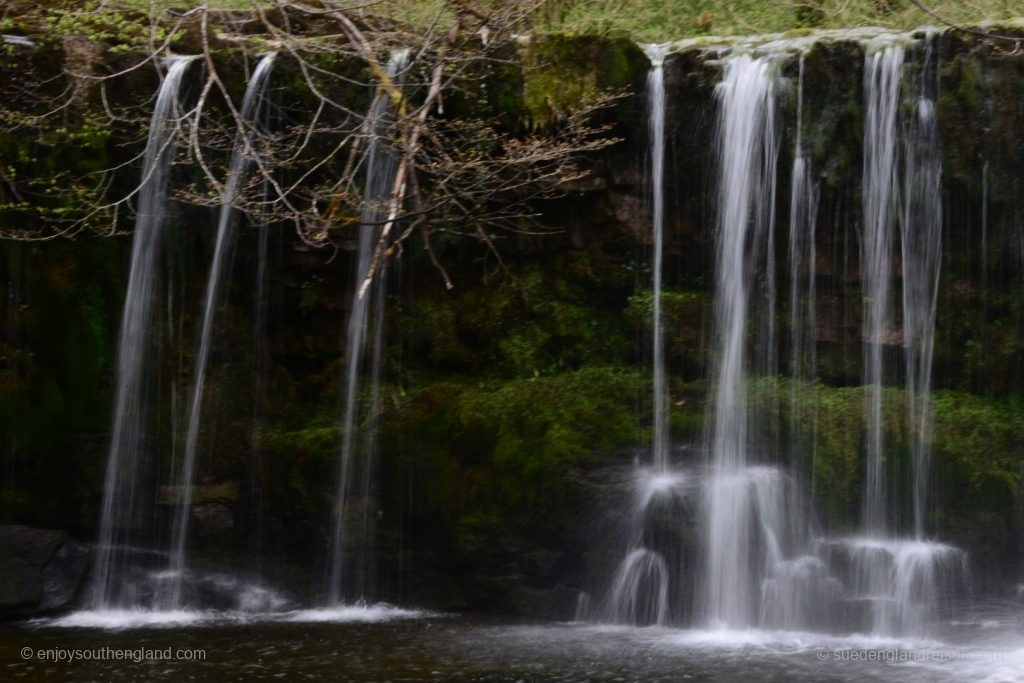
Admittedly, that was just the warm-up. Things get really spectacular again a little further north – we’re back in Brecon Beacons National Park, by the way. From the village of Pontneddfechan, a small road leads towards Ystradfellte, and after a while, another small, scenic road branches off to the left. This leads to the Pont Melin-Fach car park, where several hiking trails begin. We opt for the trail south along the River Neath and pass five or six different waterfalls. The trail itself, the forest, simply everything: so beautiful.
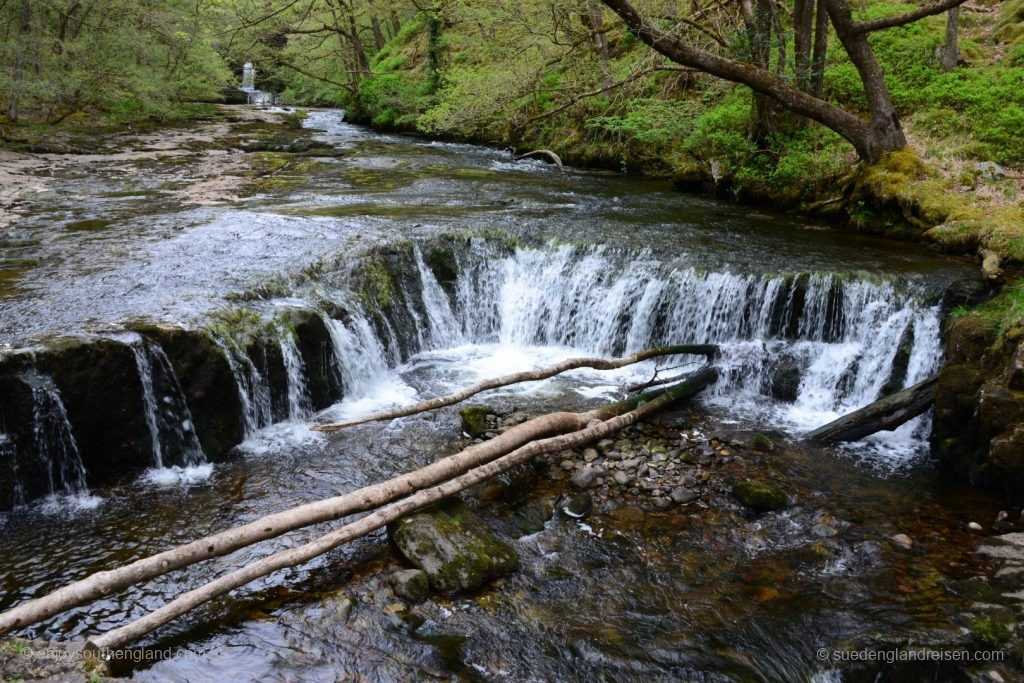
Alongside River Neath
Alongside River Neath
Alongside River Neath
Alongside River Neath
But we want to continue, this time to the Black Mountains: barren mountain terrain with practically no plants except grass. If it weren’t raining, stormy, and shrouded in fog, the view from the pass would be boundless and breathtaking!
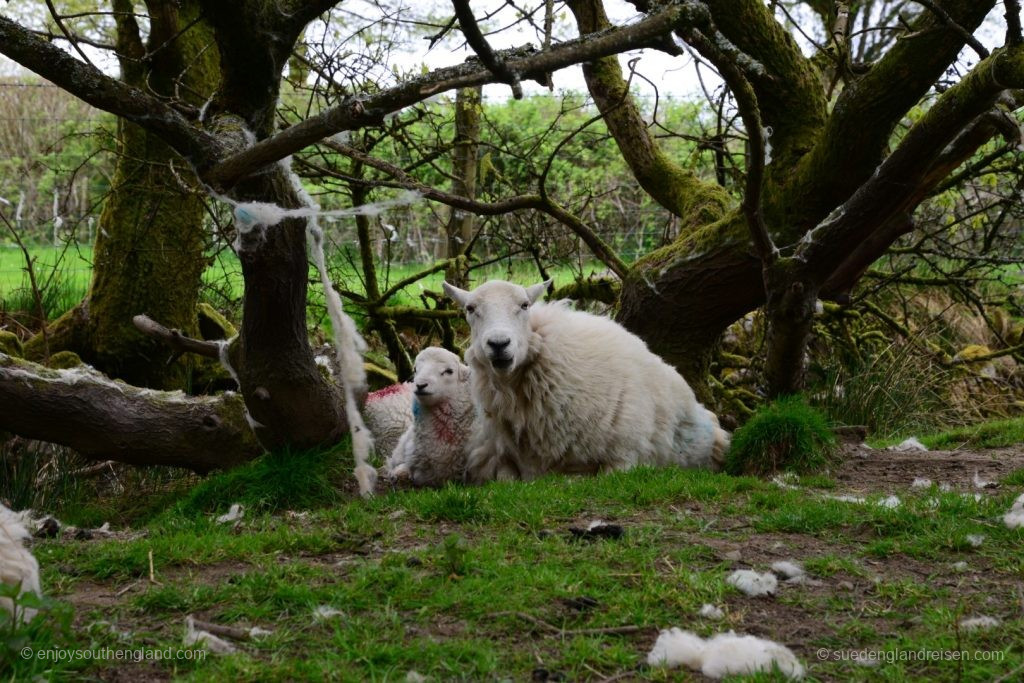
Constant companions along the way
We took small country roads towards Carreg Cennan Castle and finally Llandeilo, a small, lively town. Dinefwr Park and Newton House still awaited us. We only had time for a quick tour of the house, but it was raining and windy anyway. So what? A cozy pub was the perfect place to end the day.
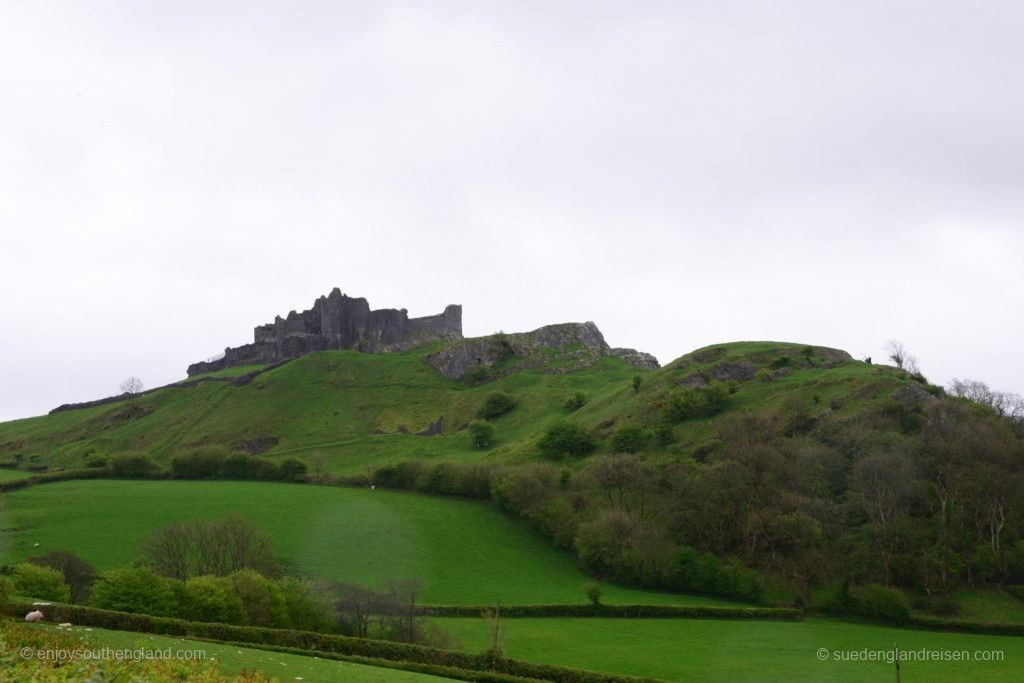
Carreg Cennan Castle
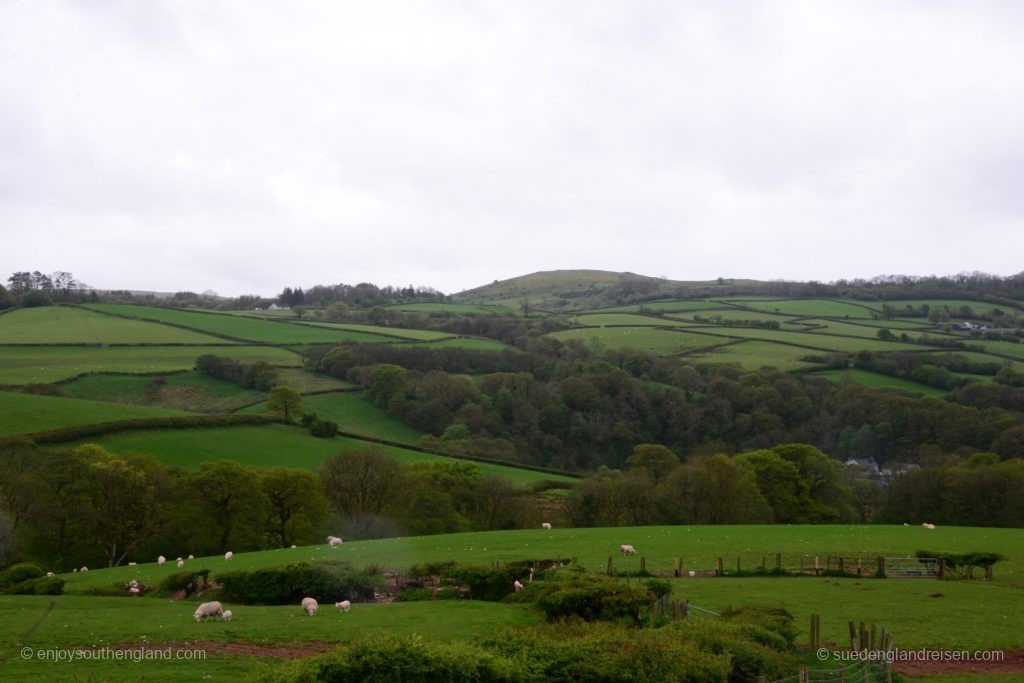
around Carreg Cennan Castle
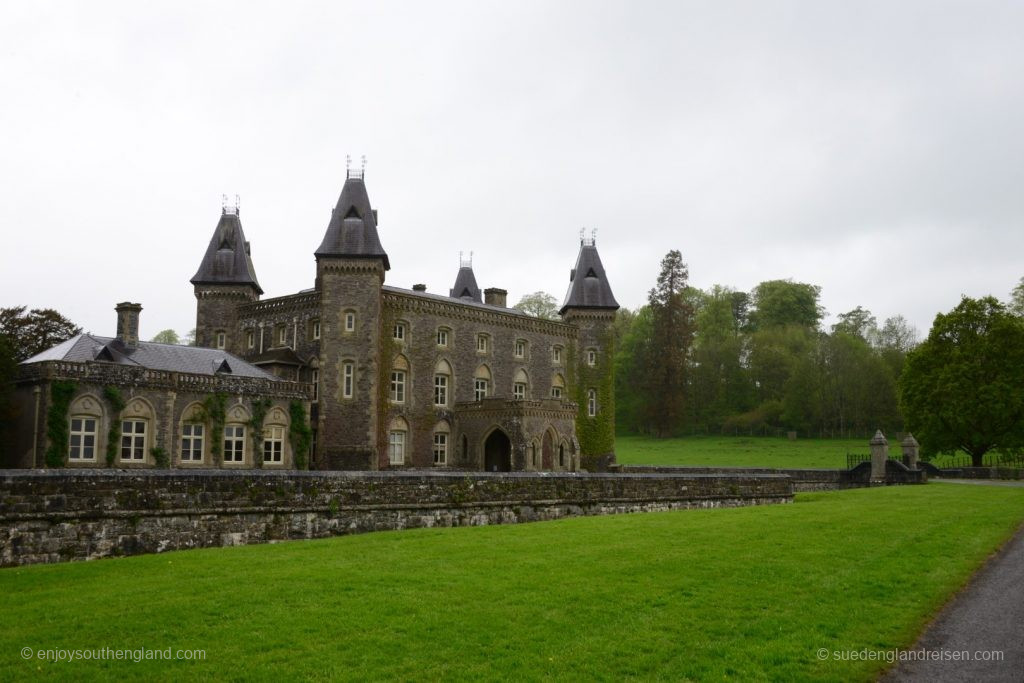
Dinefwr
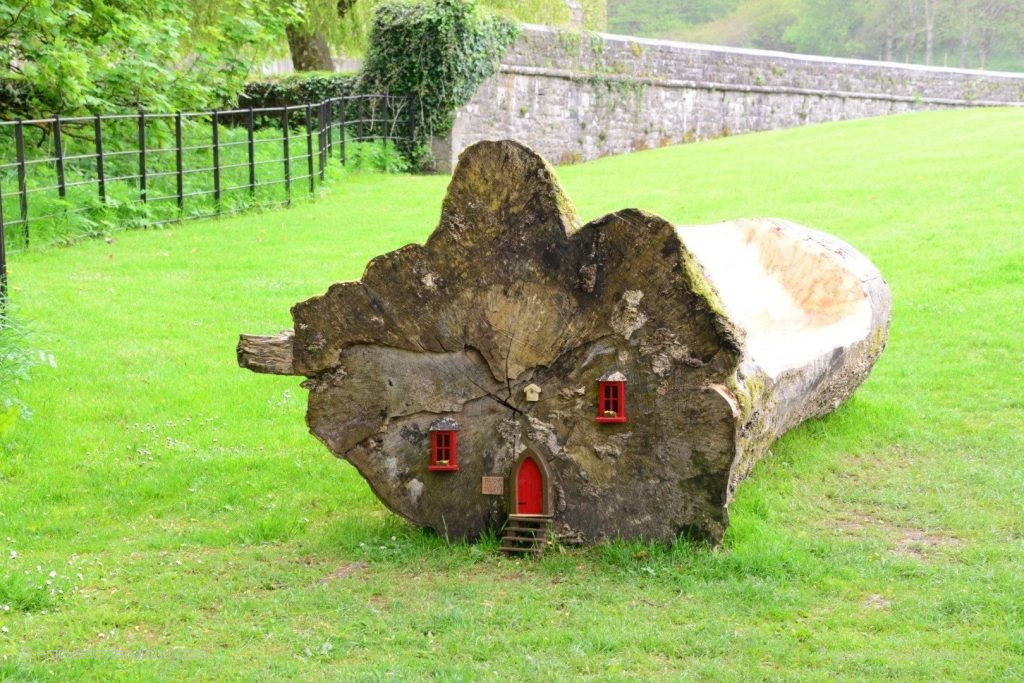
It doesn’t get much more British than Dinefwr’s garden
Along the coast to Tenby
Unbelievable! We wake up to sunny weather and take the opportunity to explore the town of Laugharne with its castle ruins and the Dylan Thomas Boathouse.

Laugharne

Laugharne
Then we continue along the coast via Amroth to Tenby. A truly charming harbor town with stunning views and a beach. You also notice, especially here in Pembrokeshire, that the houses are painted in vibrant colors. In general, the towns here seem much nicer than those we’ve encountered so far on our trip through southern Wales.

Coastal vibes
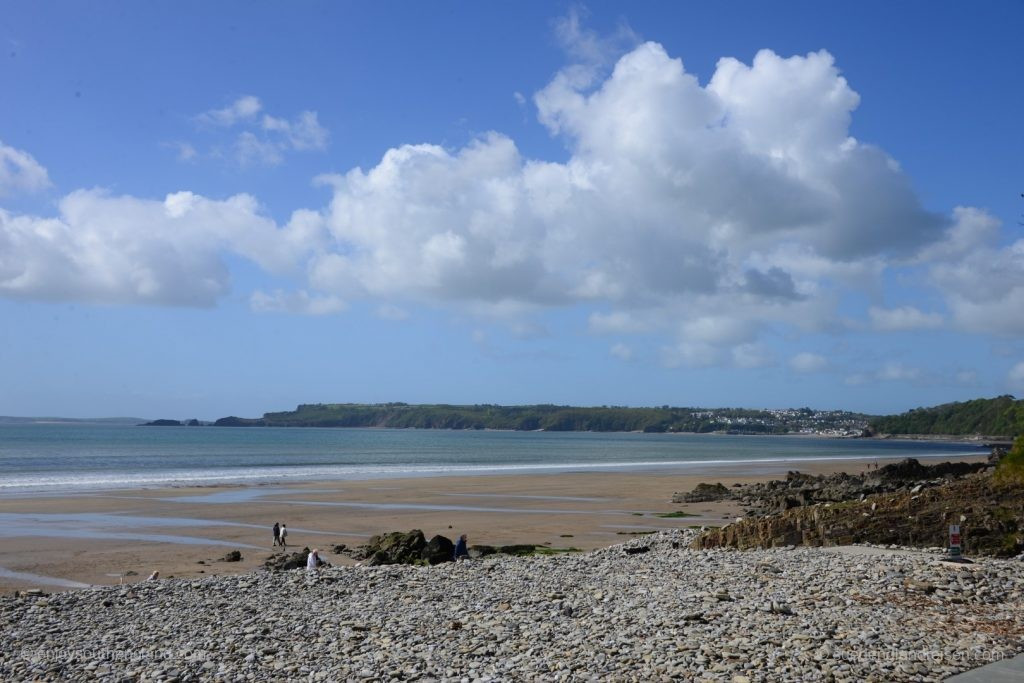
near Amroth
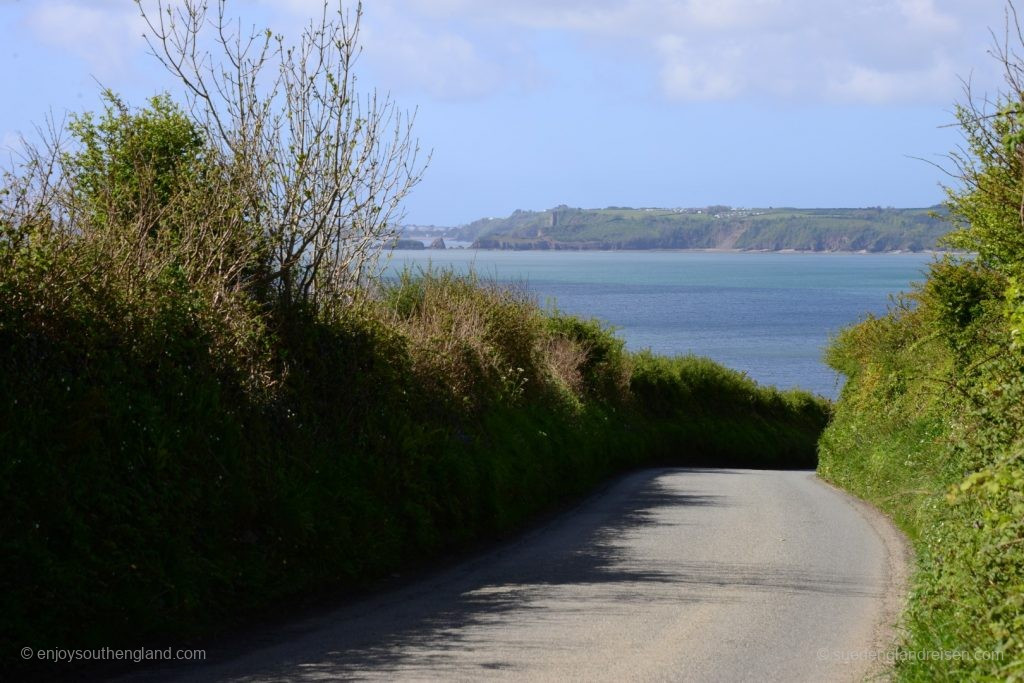
traveling along the coast
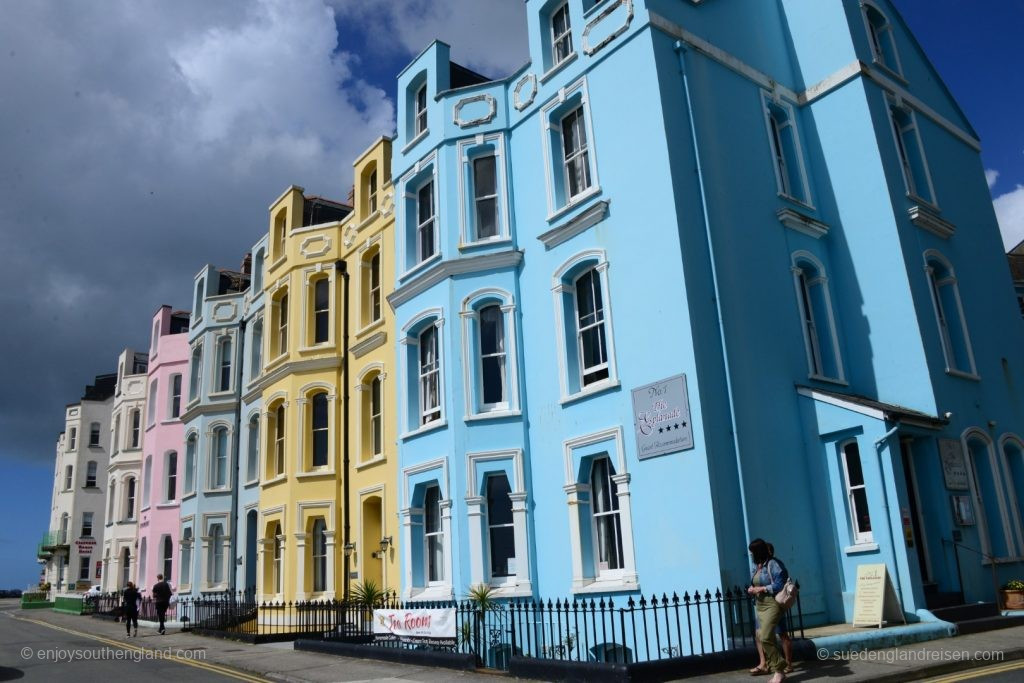
Tenby welcomes us with wonderful houses.
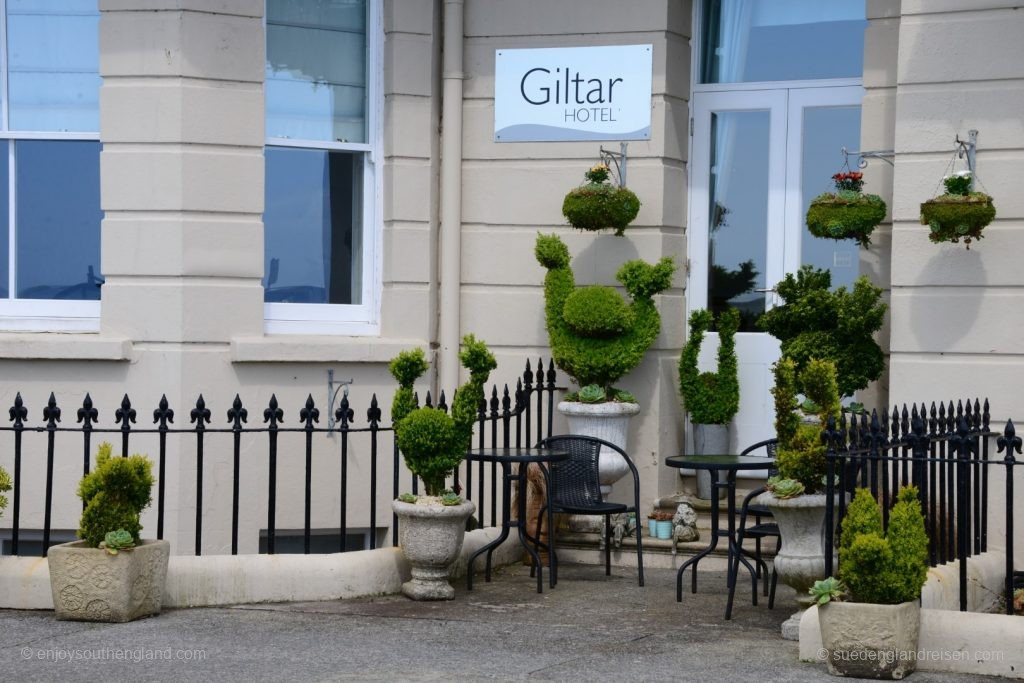
and many details
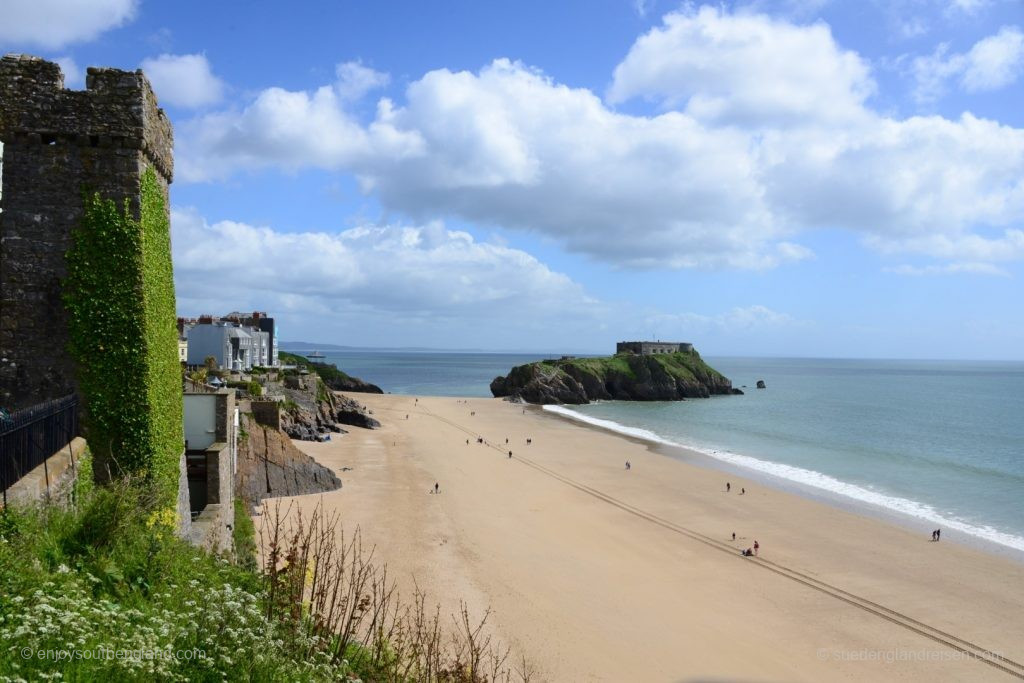
But now into Tenby with its city walls and magnificent clifftop location
A huge cathedral in the middle of nowhere
After thoroughly exploring the coastal area, we continued to Pembroke with its castle ruins, then on via Haverfordwest to Newgale with its fantastic beach, and finally to St. Davids. The Cathedral is truly the highlight of the day!
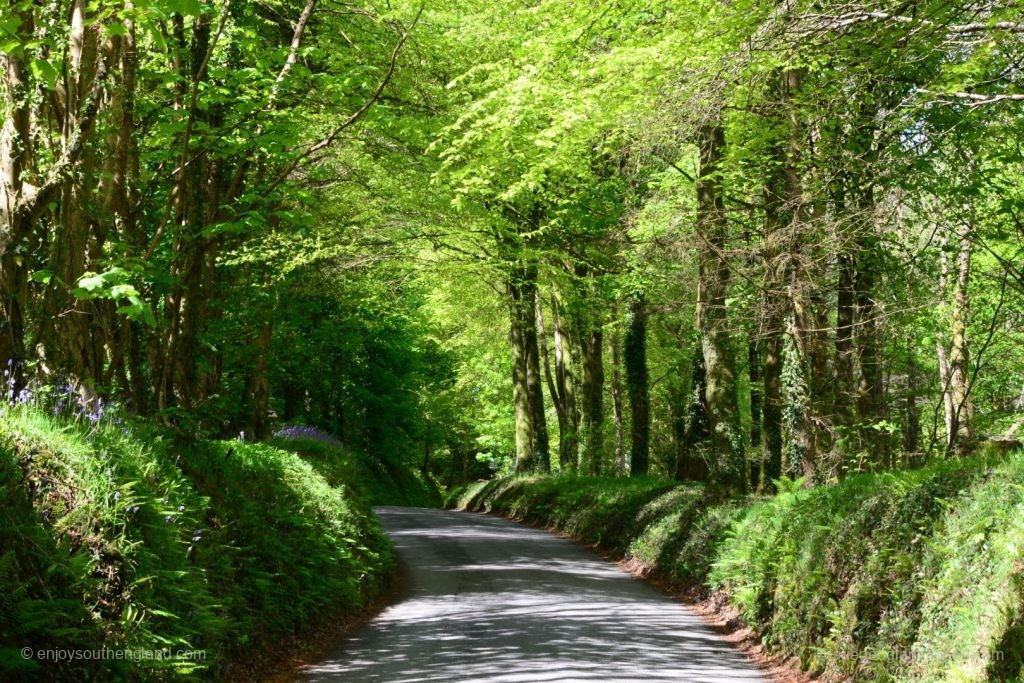
traveling in Pembrokeshire
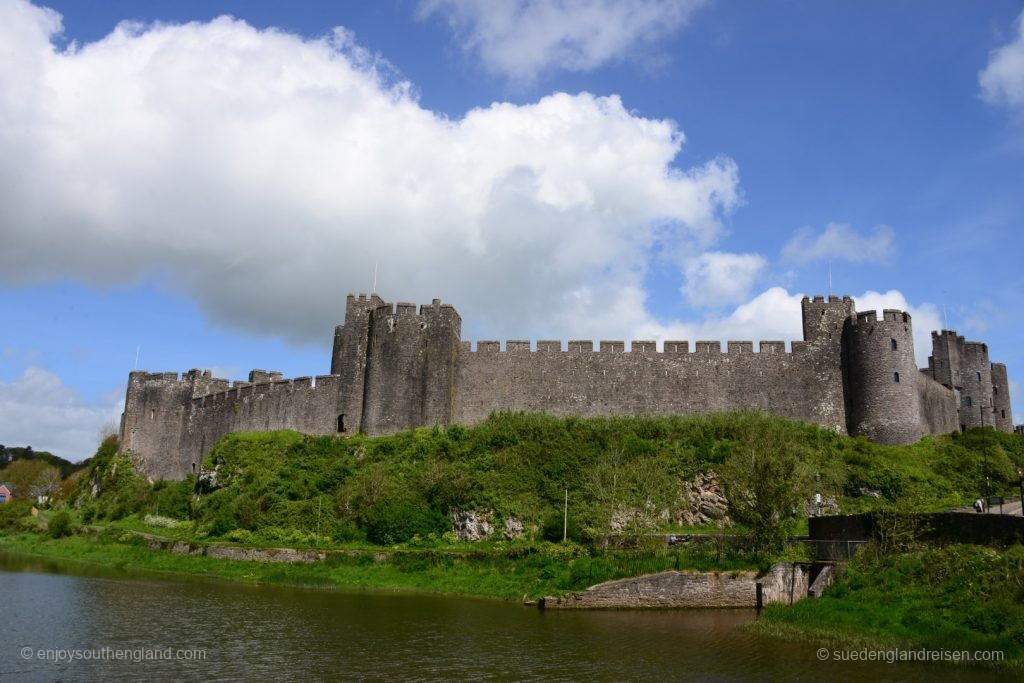
Pembroke Castle
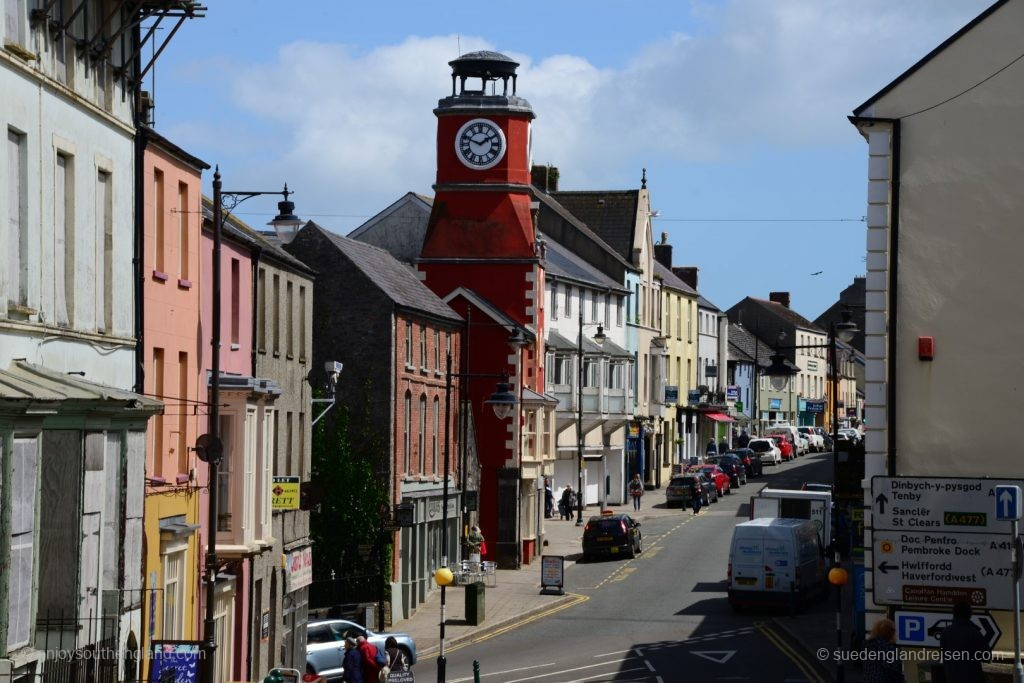
Pembroke
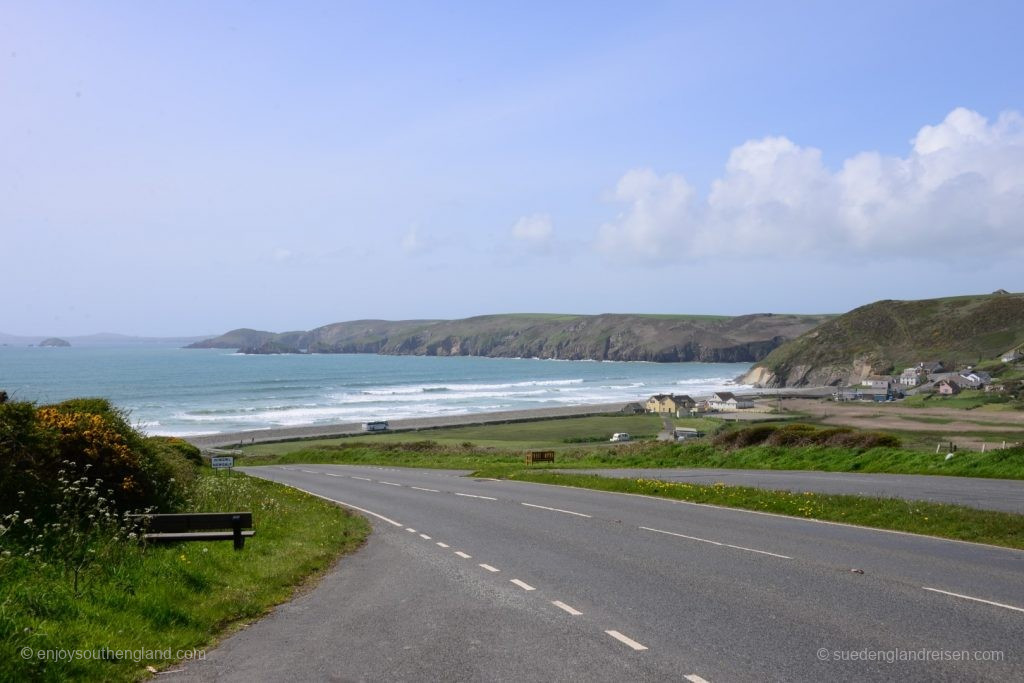
Newgale
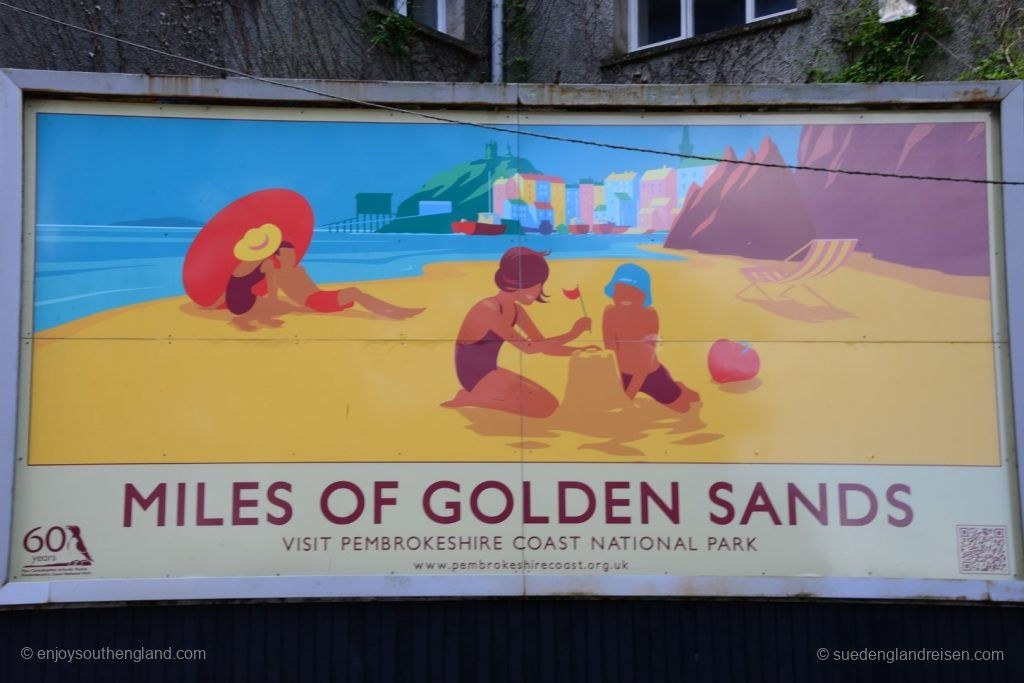
vintage advertising posters for holidays on the Pembrokeshire Coast
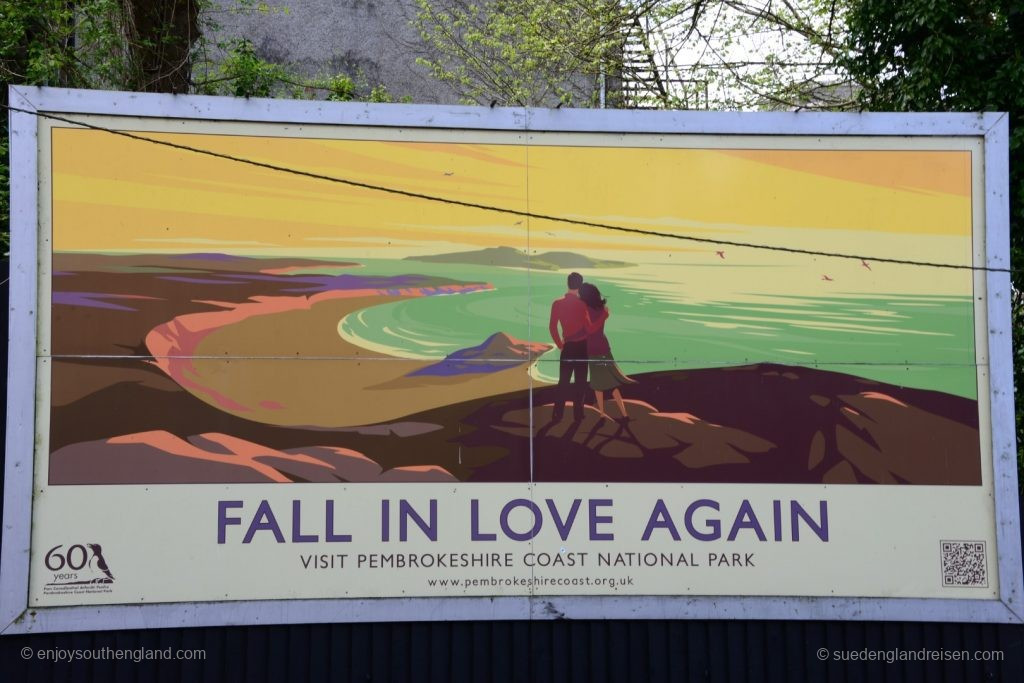
vintage advertising posters for holidays on the Pembrokeshire Coast
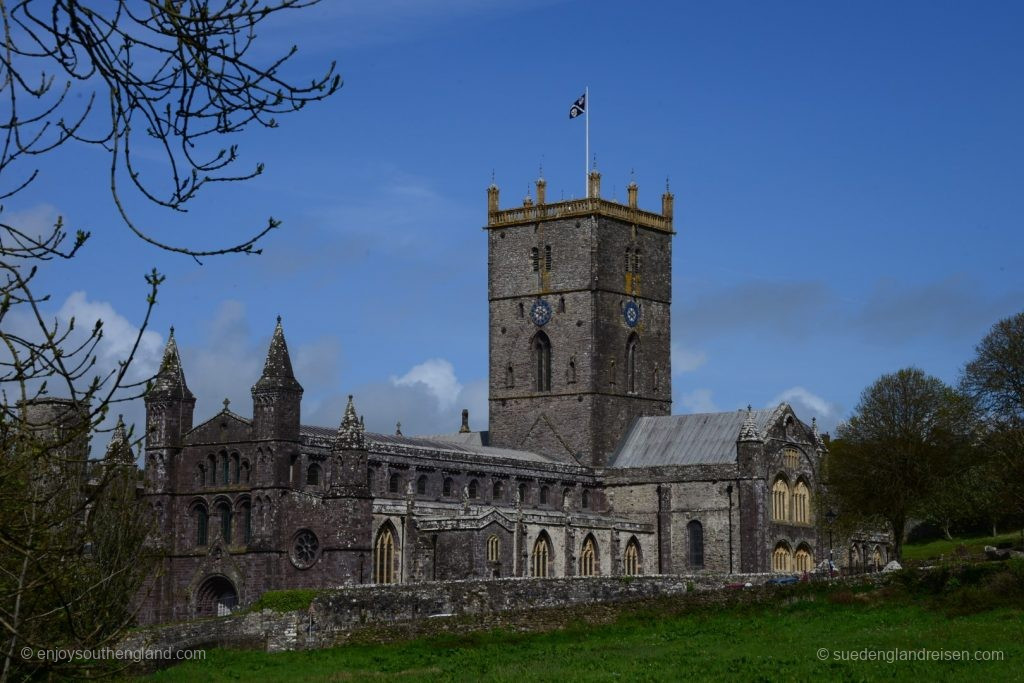
St. Davids
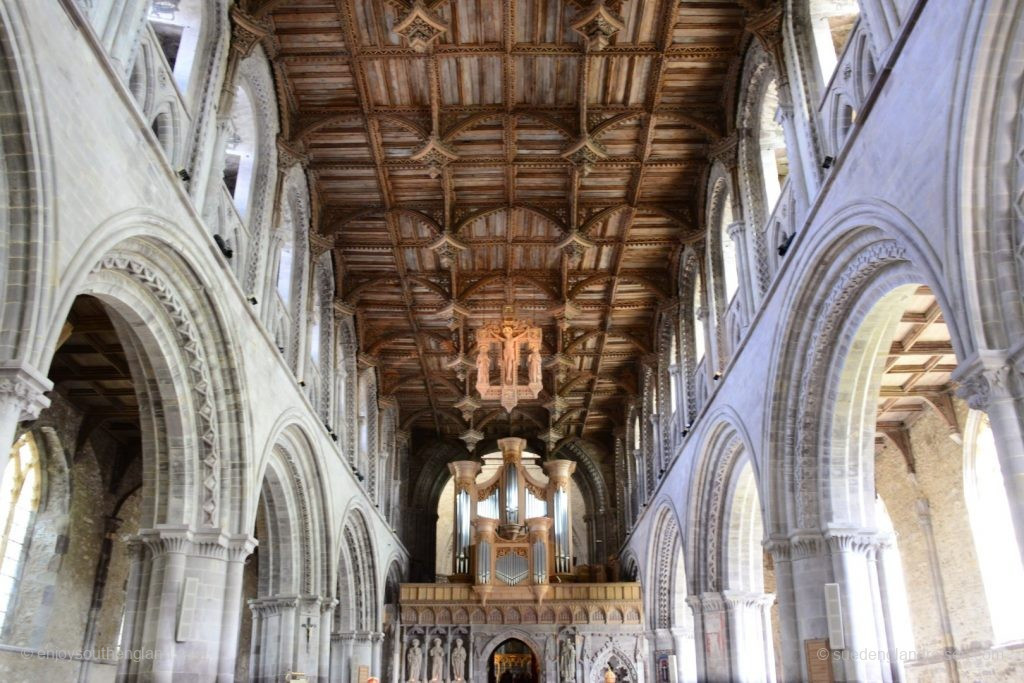
St. David’s from the inside
Pembrokeshire
The journey continues with a short detour to Porthgain and its stunning coastal scenery, best appreciated from the Pembrokeshire Coast Path. We then drive through Lowertown near Fishguard to Newton, another delightful place, and finally to St. Brynach’s Church in Nevern with its Celtic cross and Bleeding Yew Tree.
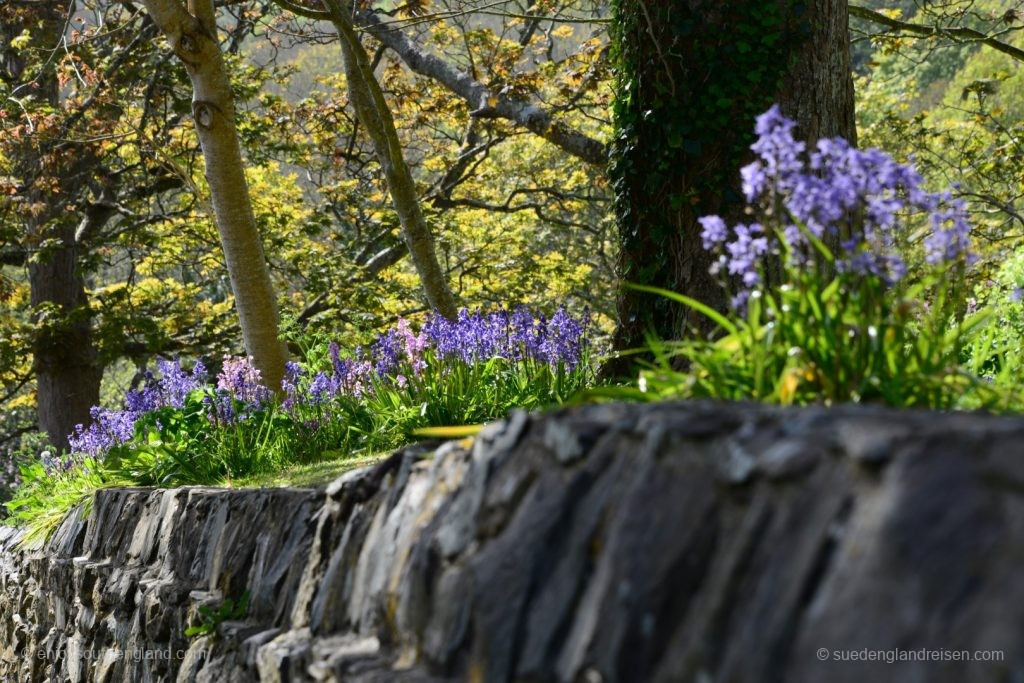
Beautifully situated by the roadside…
and more of that
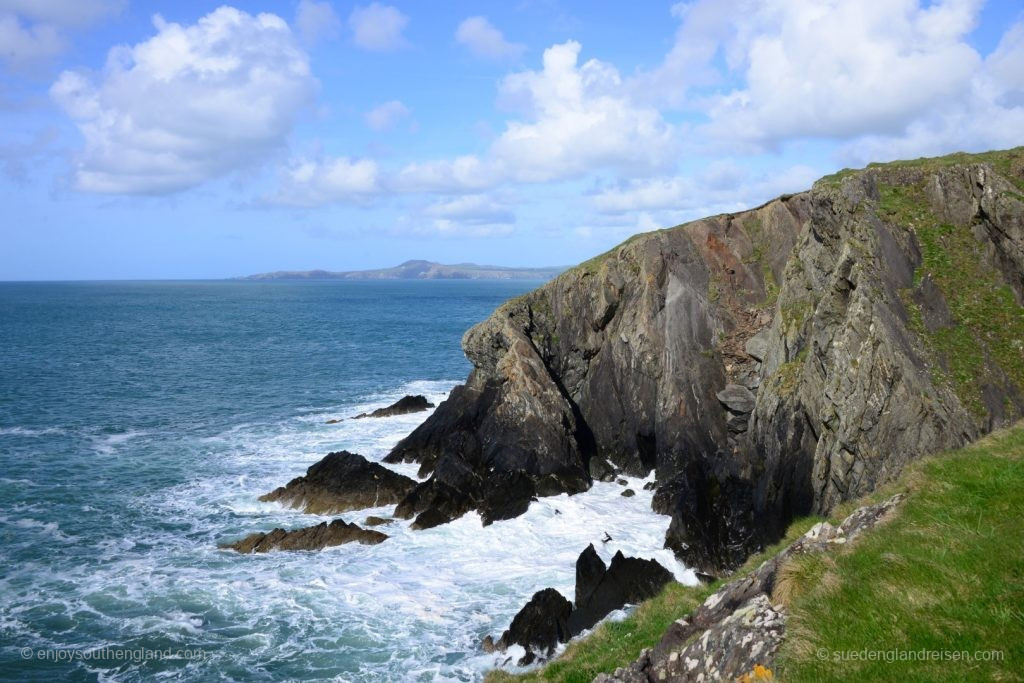
near Porthgain
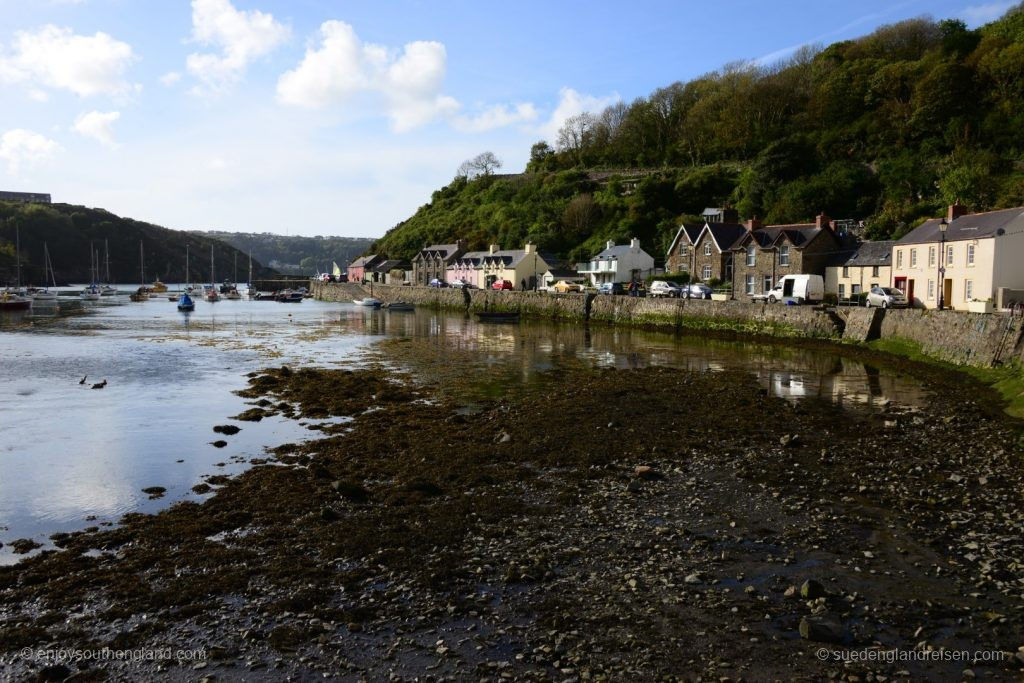
Lowertown
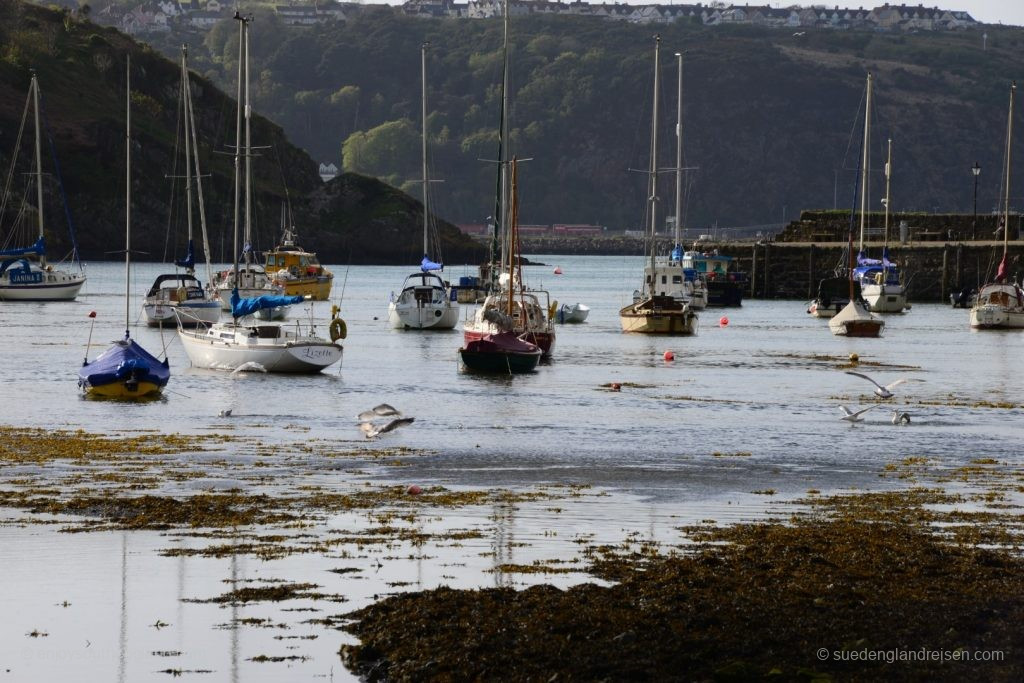
near Lowertown
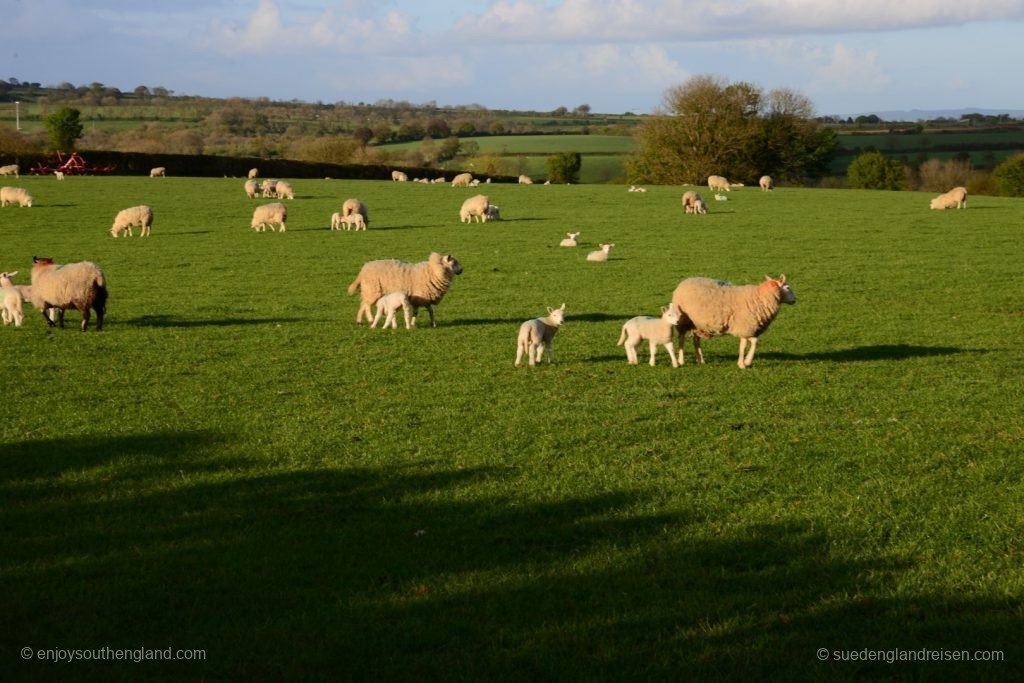
Isn’t that a magnificent evening light?
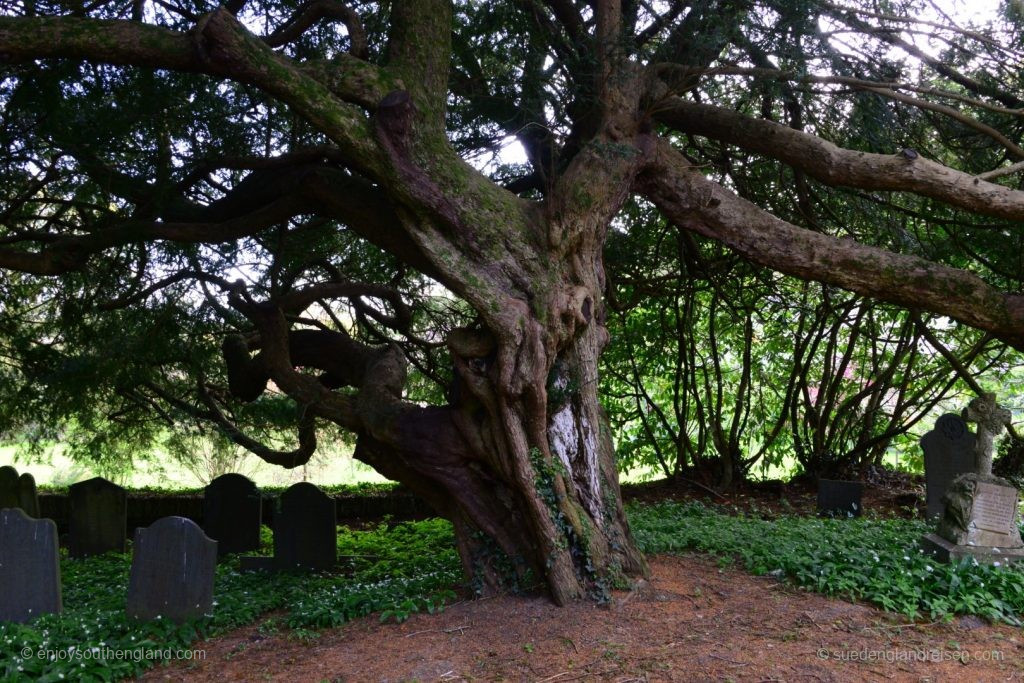
The Bleeding Yew Tree of Nevern
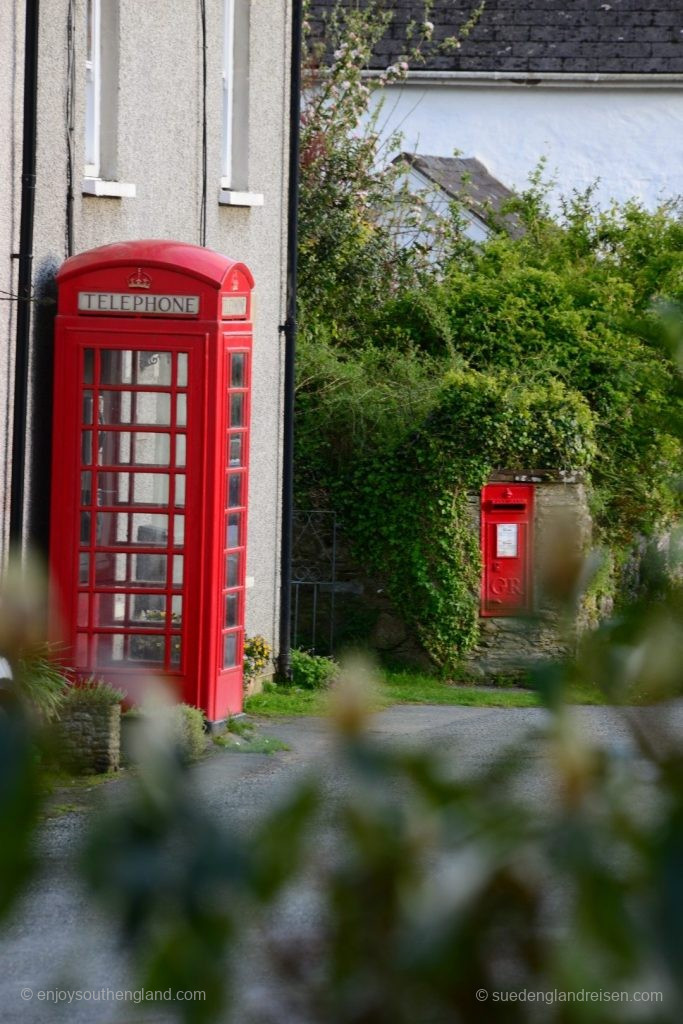
No words needed
Via Aberaeron to Aberystwyth
A British breakfast can be quite extensive and take a while – especially if you’re having a nice chat. So we set off rather late, but the wind and the approaching rain make our visit to Poppit Sands a brief one. We continue on through St. Dogmeals with its abbey ruins to Cardigan. A lovely little town, by the way. Aberaeron, which we reach next, is well worth seeing with its small harbor and brightly painted houses, which even brighten up the rainy weather.
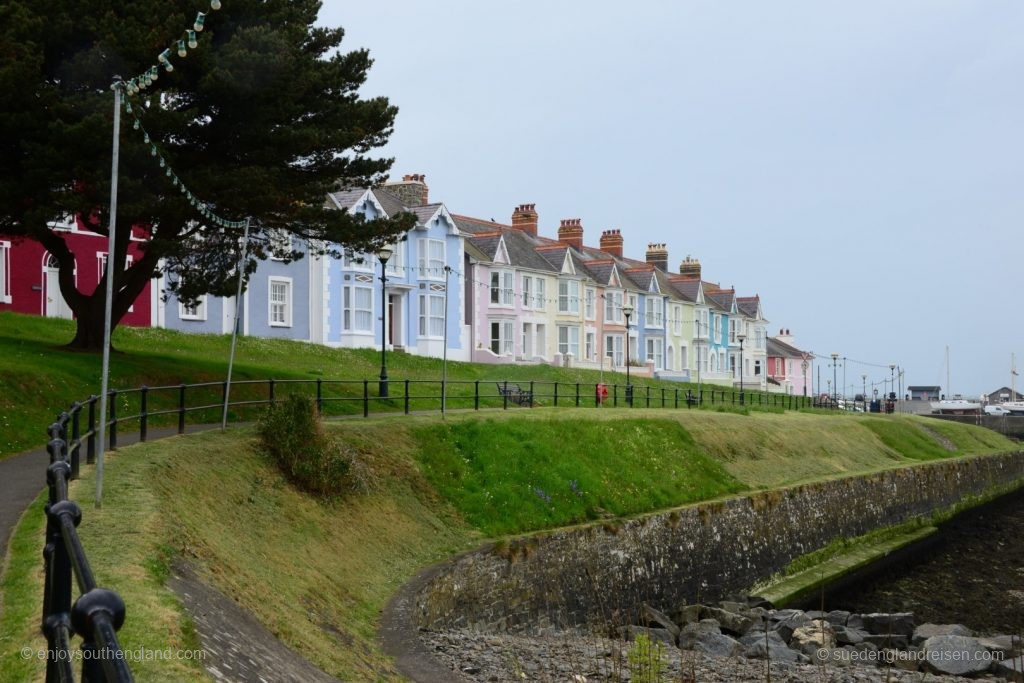
Aberaeron with its colorful houses
We continue north to our base for the next two days: Aberystwyth. Our accommodation is very close to the beach promenade and only a few minutes from the Cliff Railway. Naturally, we take advantage of it right away and ride up Constitution Hill.
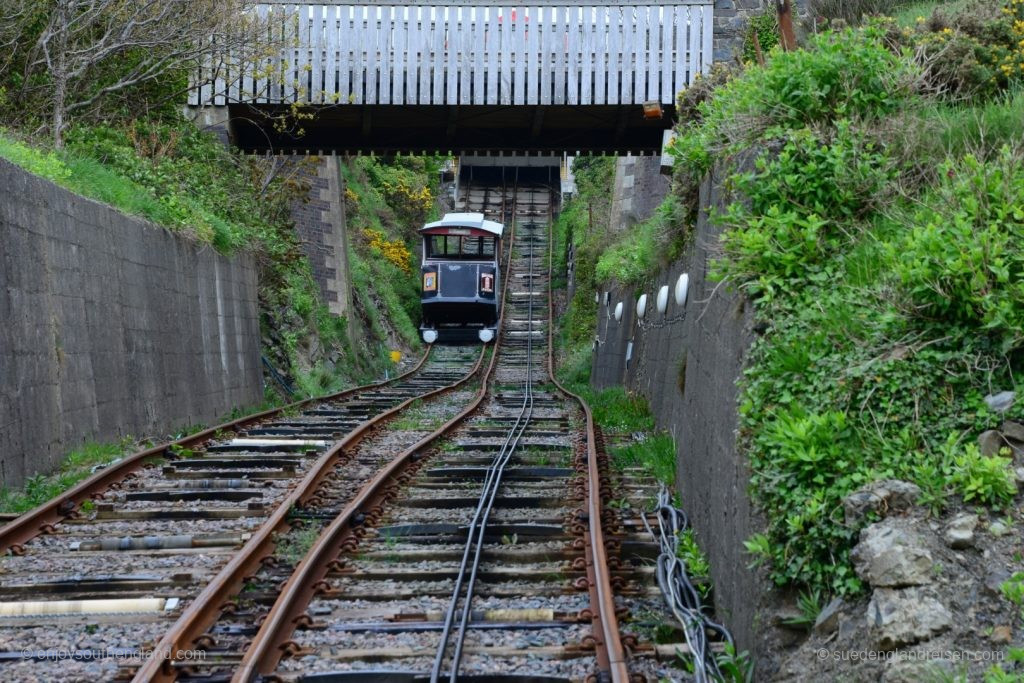
Aberystwyth Cliff Railway
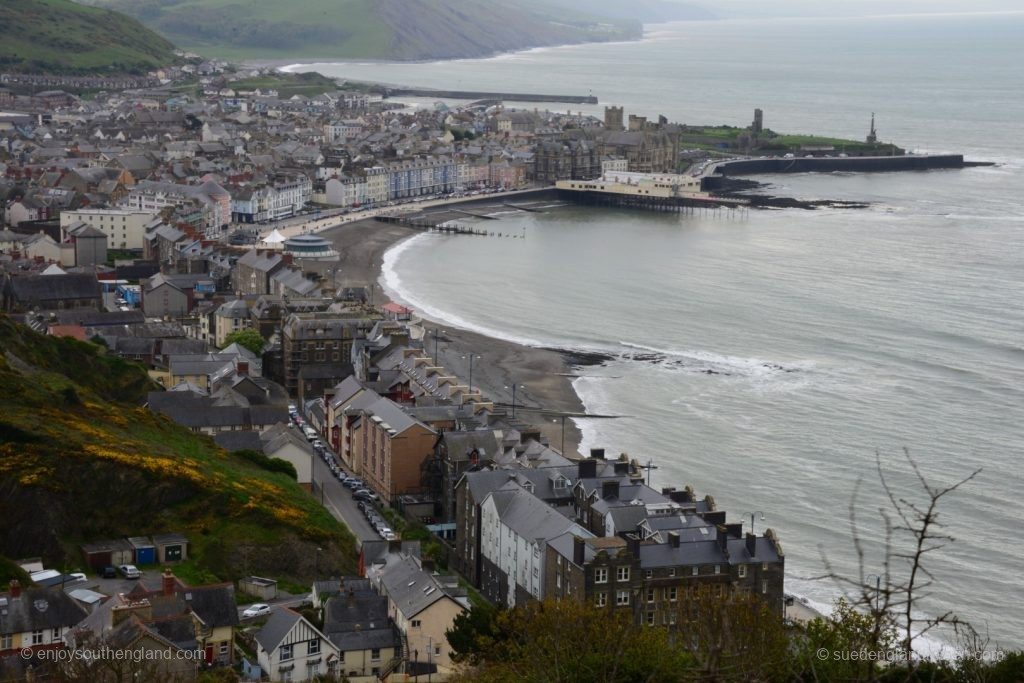
Aberystwyth seen from Constitution Hill
Later, after the rain and as the sun comes out again, the Aberystwyth promenade reveals itself in the most beautiful evening light!
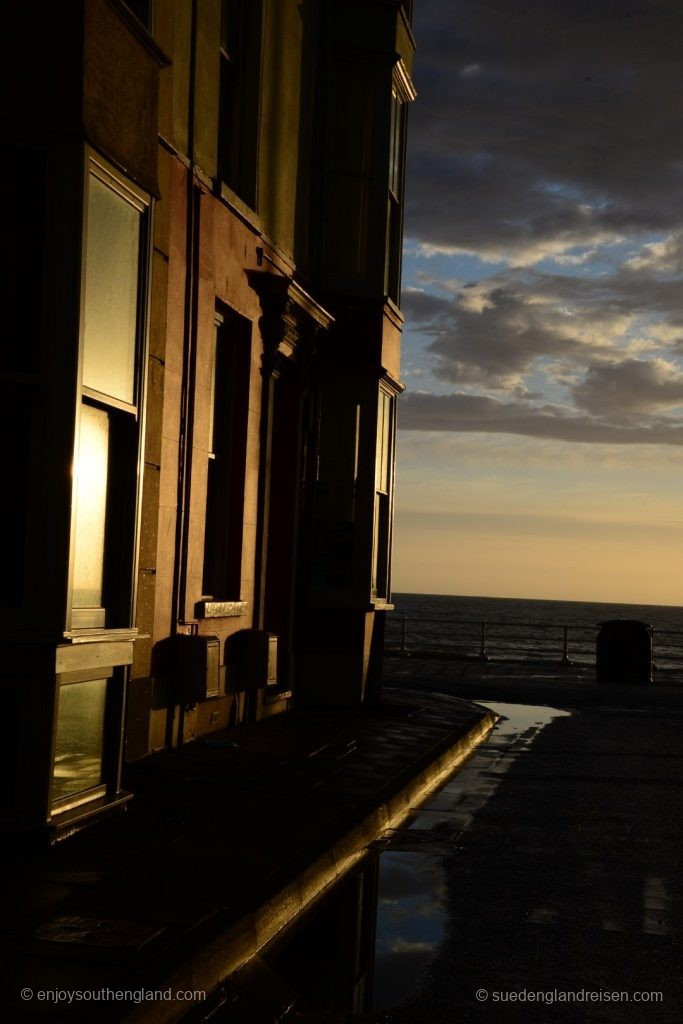
After the heavy rain in Aberystwyth
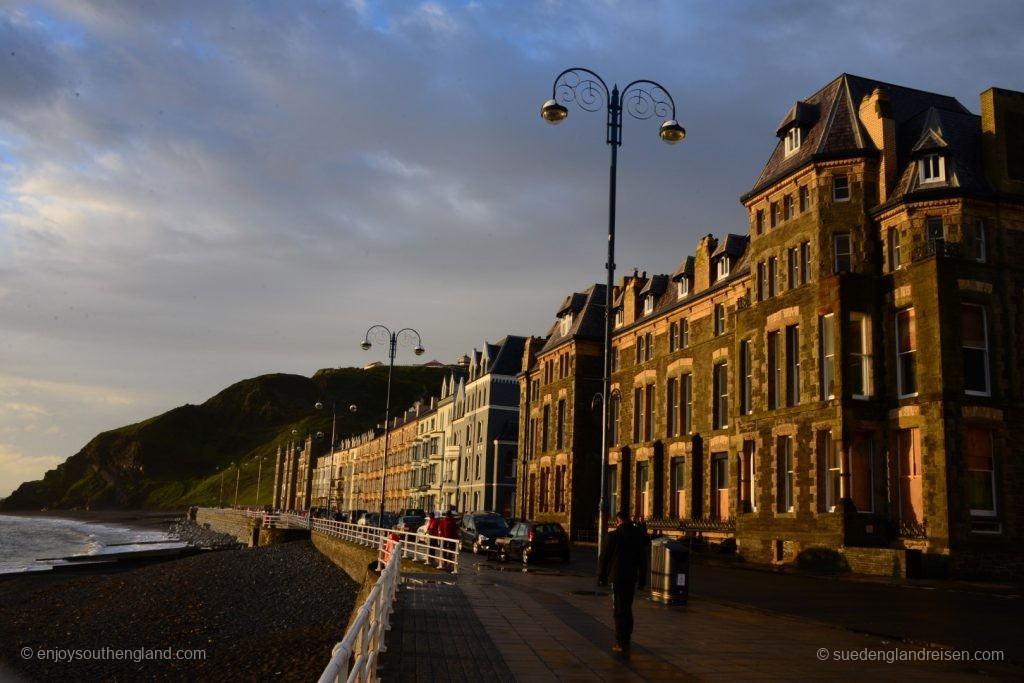
On the Aberystwyth seafront
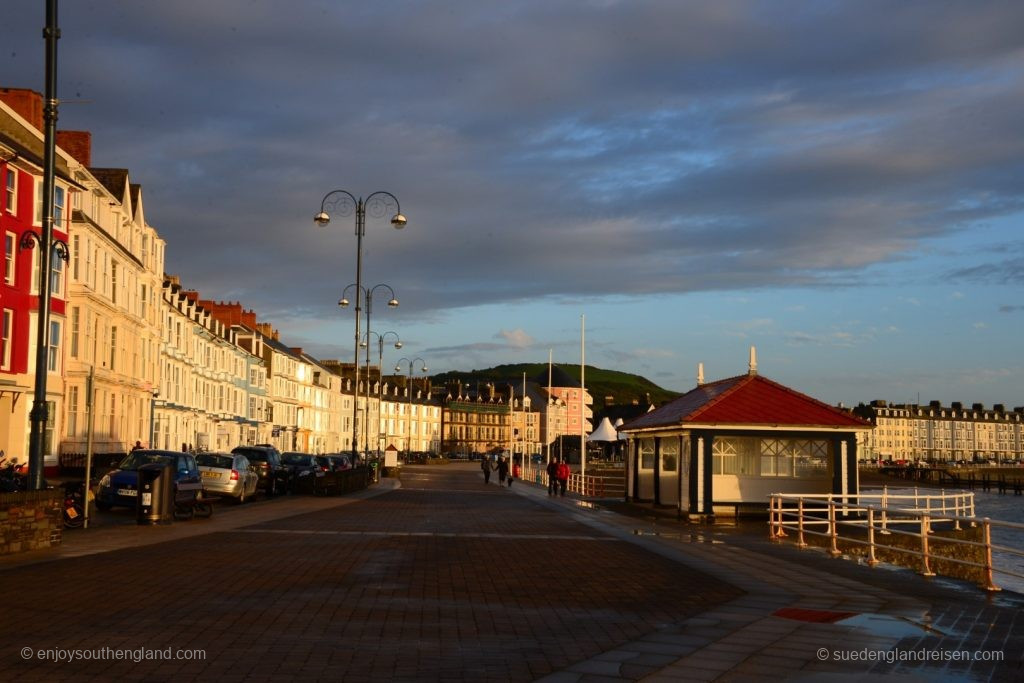
On the Aberystwyth seafront
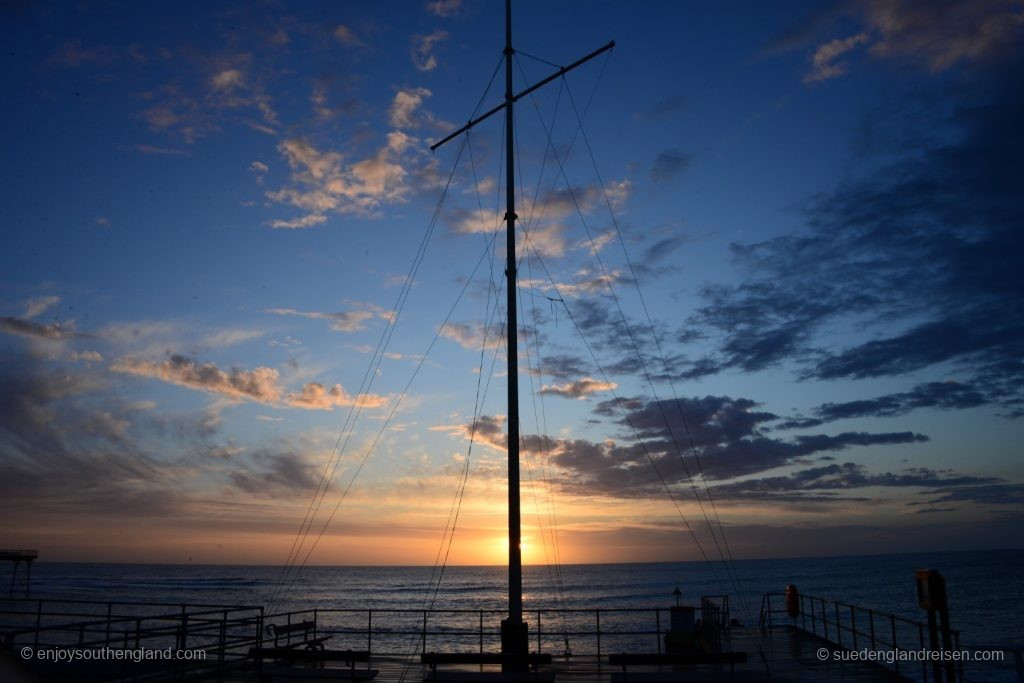
Evening atmosphere in Aberystwyth
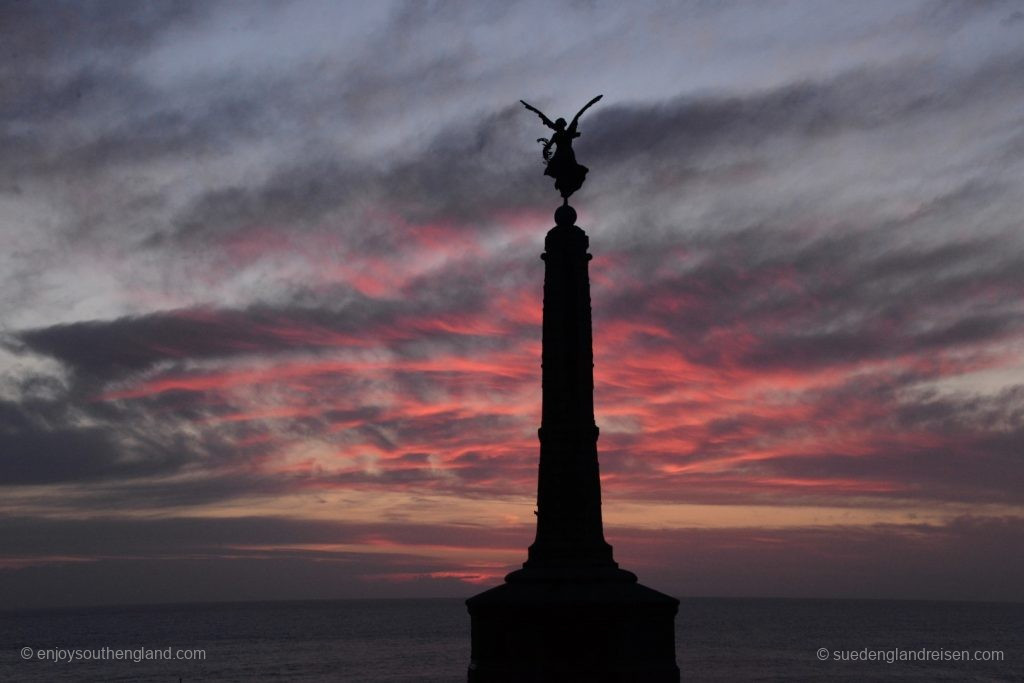
Evening atmosphere in Aberystwyth
Vale of Rheidol & Elan Valley
The next day’s itinerary includes a scenic drive. Along the beautiful Vale of Rheidol, we enjoy the views, and at Devils Bridge – which is actually three bridges stacked on top of each other – we visit Mynach Falls. Then we continue along the Mountain Road through the Elan Valley and along the reservoirs to Rhayader, another charming little town. The mountain scenery is constantly changing and breathtaking. In short: a fantastic tour, one of the many highlights of this trip.

Vale of Rheidol

Vale of Rheidol

Vale of Rheidol Railway
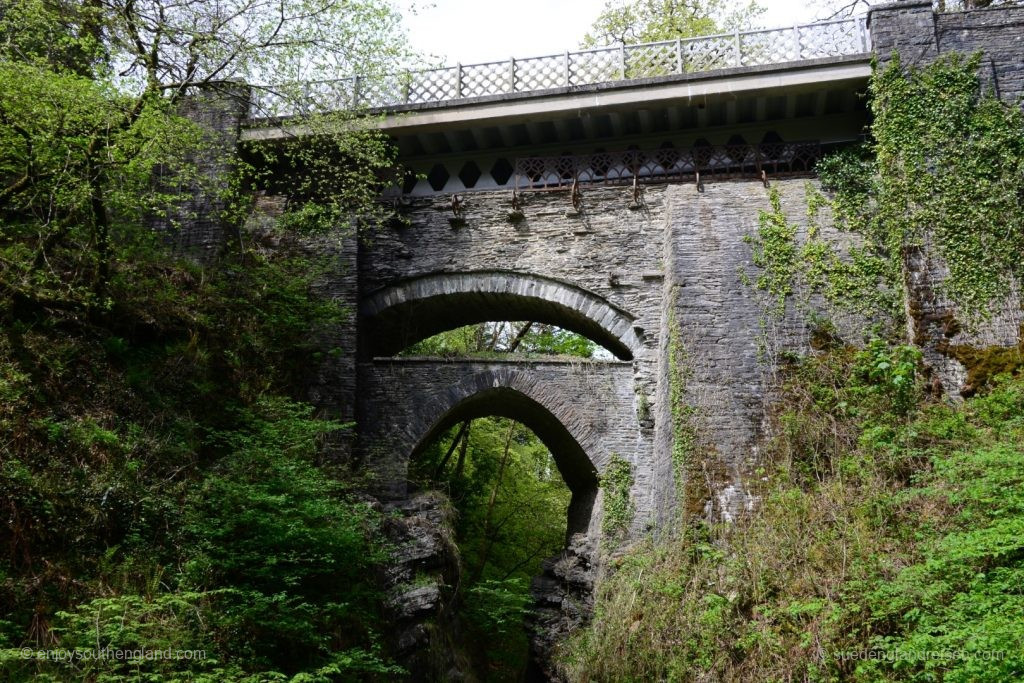
Devil’s Bridge – three generations of bridges stacked one above the other
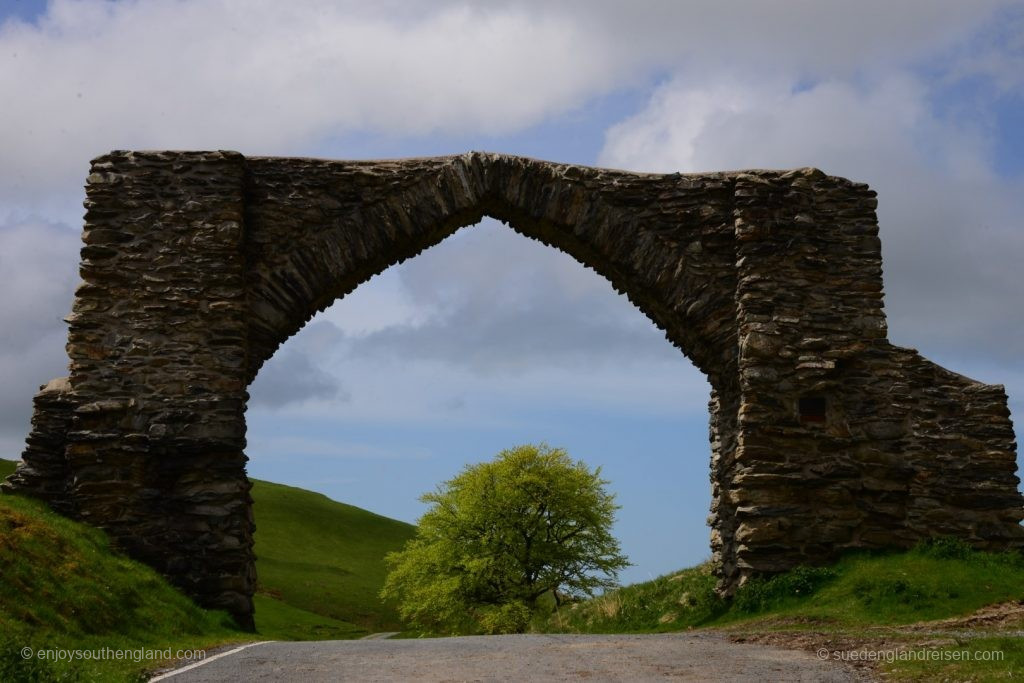
Archway in the middle of nowhere on the Rhayader Mountain Road
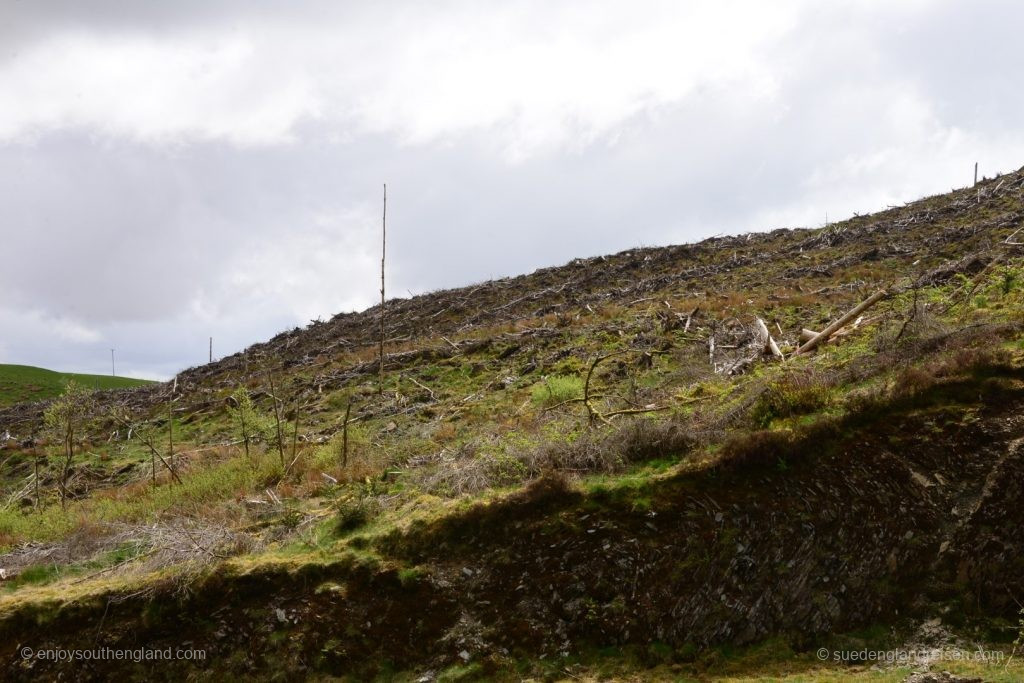
This, too, is Wales: large-scale clear-cutting for timber production.
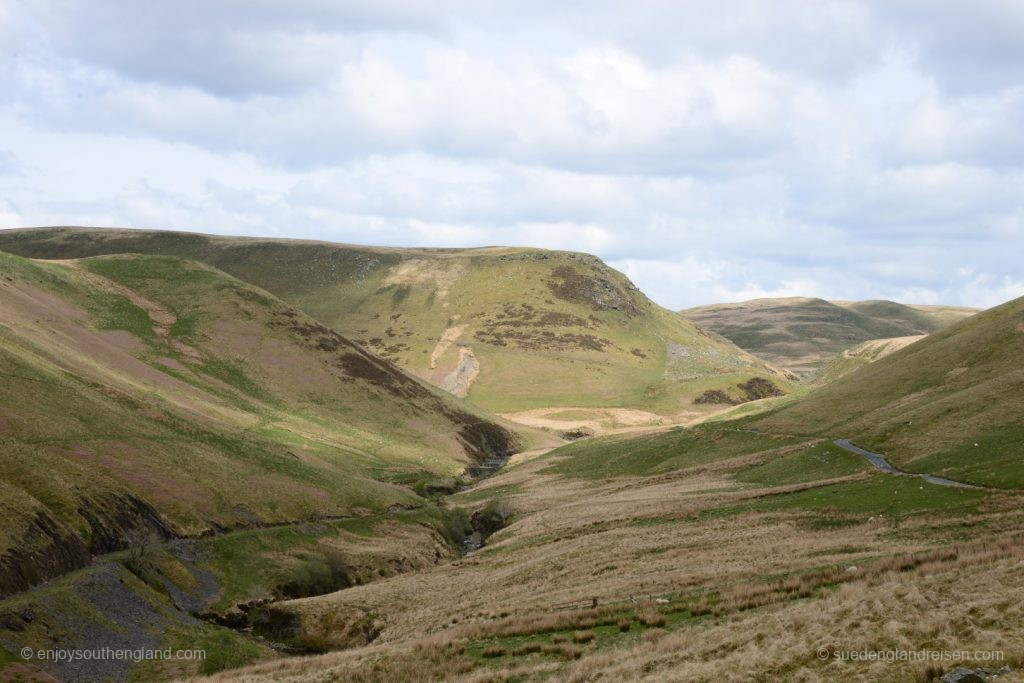
Rhayader Mountain Road
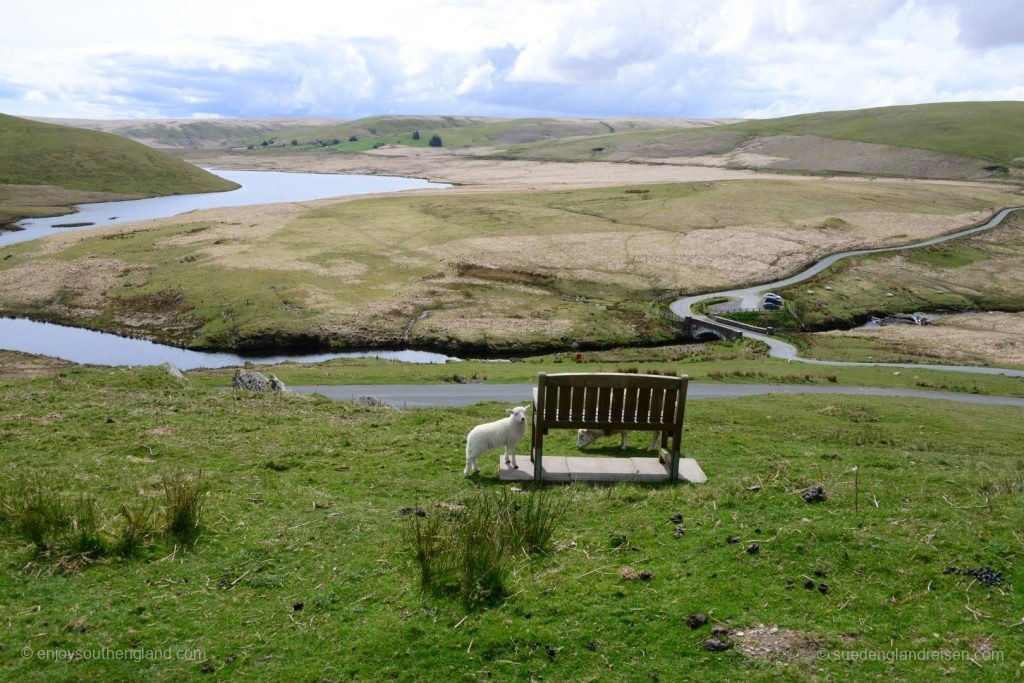
Wales – Elan Valley
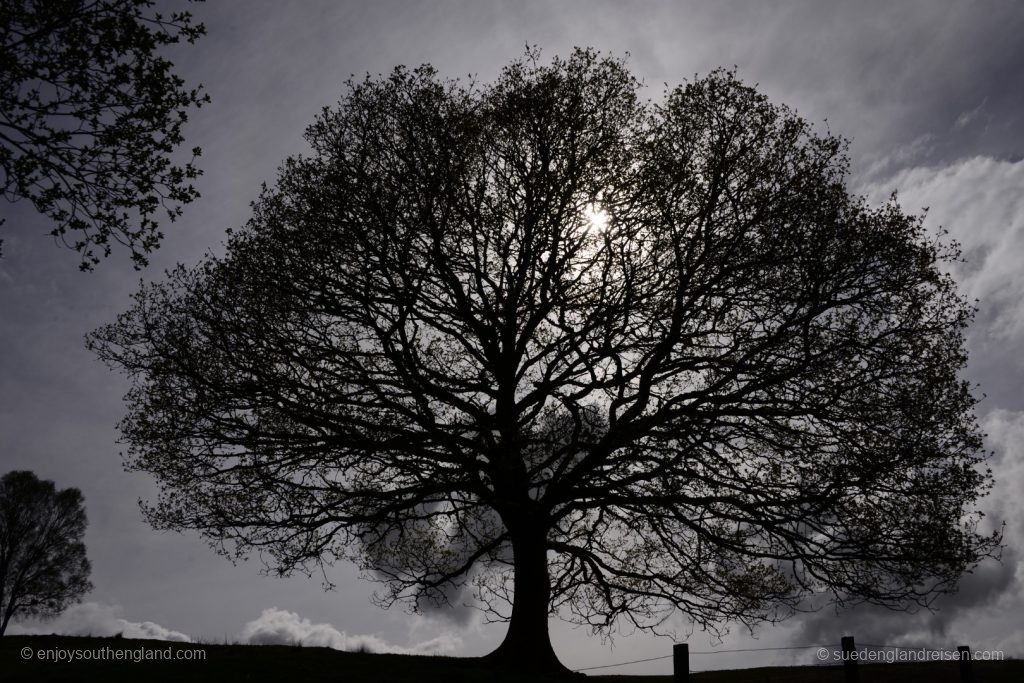
no words needed
Further North
It’s Mother’s Day, and for us, it’s a day of travel with fantastic weather: a bright blue sky, but a cold wind. Our first stop is Machynlleth with its clock tower and eccentrically British front garden complete with a piano player, before continuing through a magnificent landscape to Dolgoch Falls in the beautiful Tal-y-Llyn valley. First, a stunning lake, then green, sheep-dotted hills in the valley’s center, and finally, the sun-drenched, romantically enchanting forest path leading up to the falls.
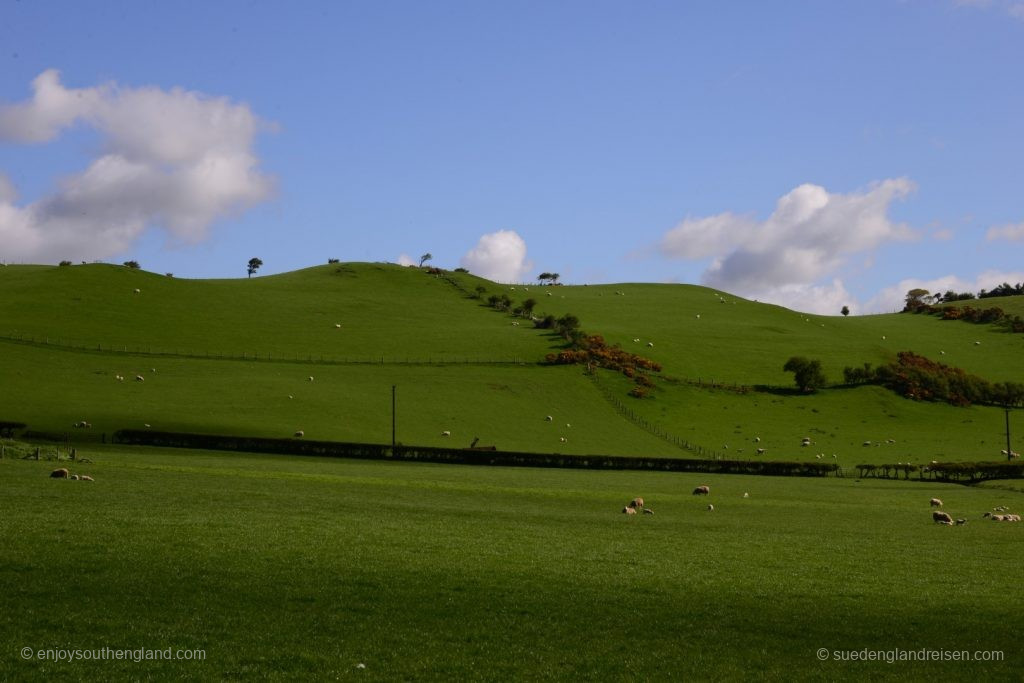
Welsh landscape north of Aberystwyth
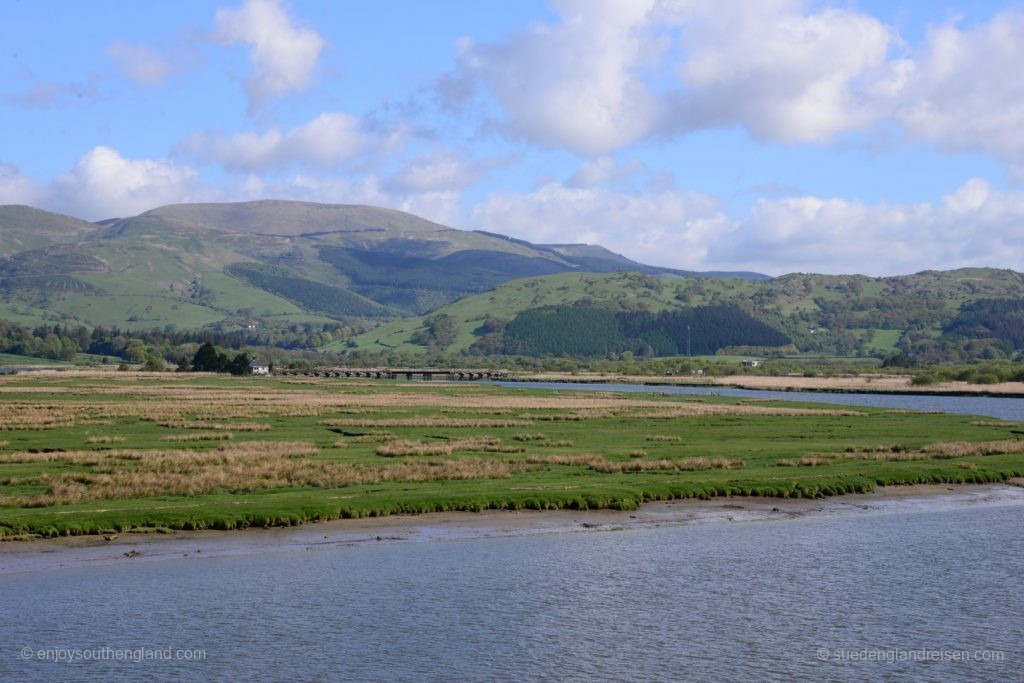
magnificent Welsh landscapes
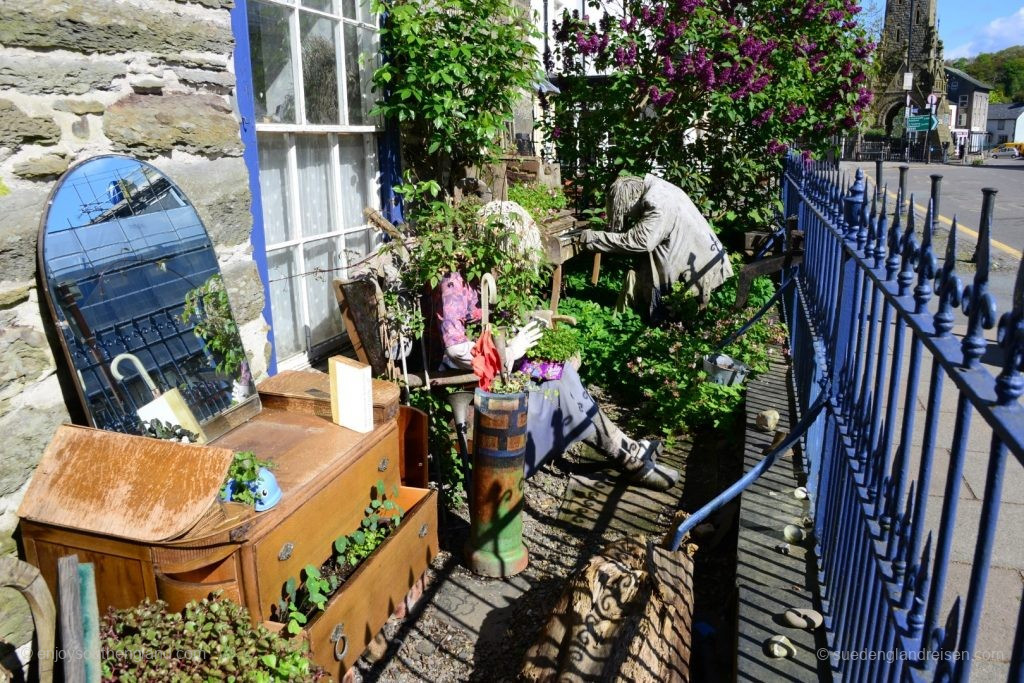
And who started the rumor that the British are eccentric? It’s the truth! Here’s a perfectly “normal” front garden…
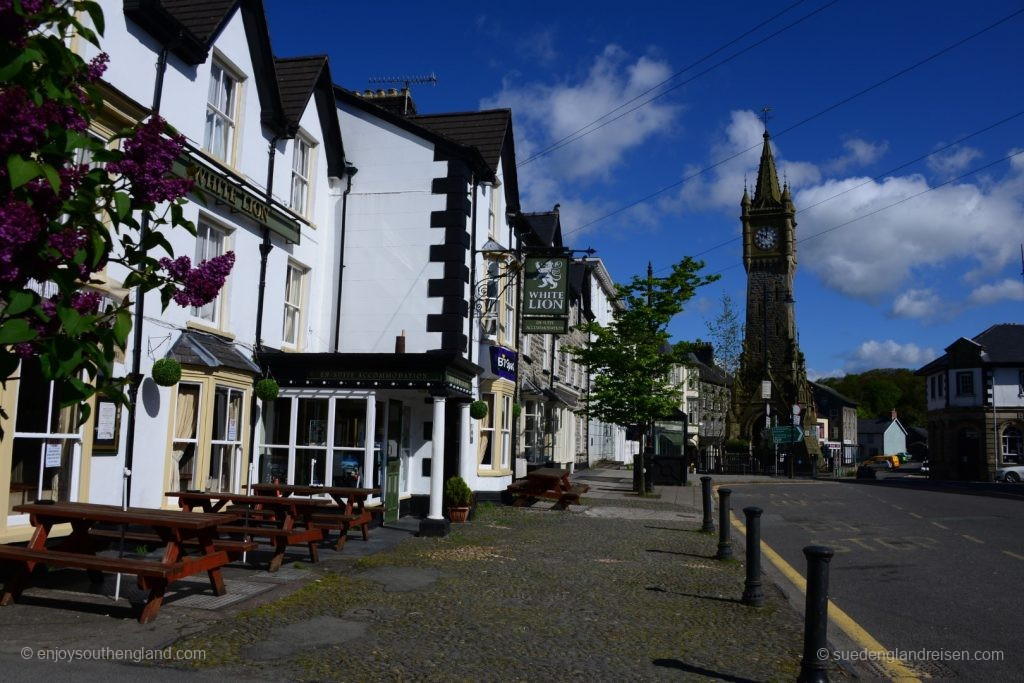
Machynlleth
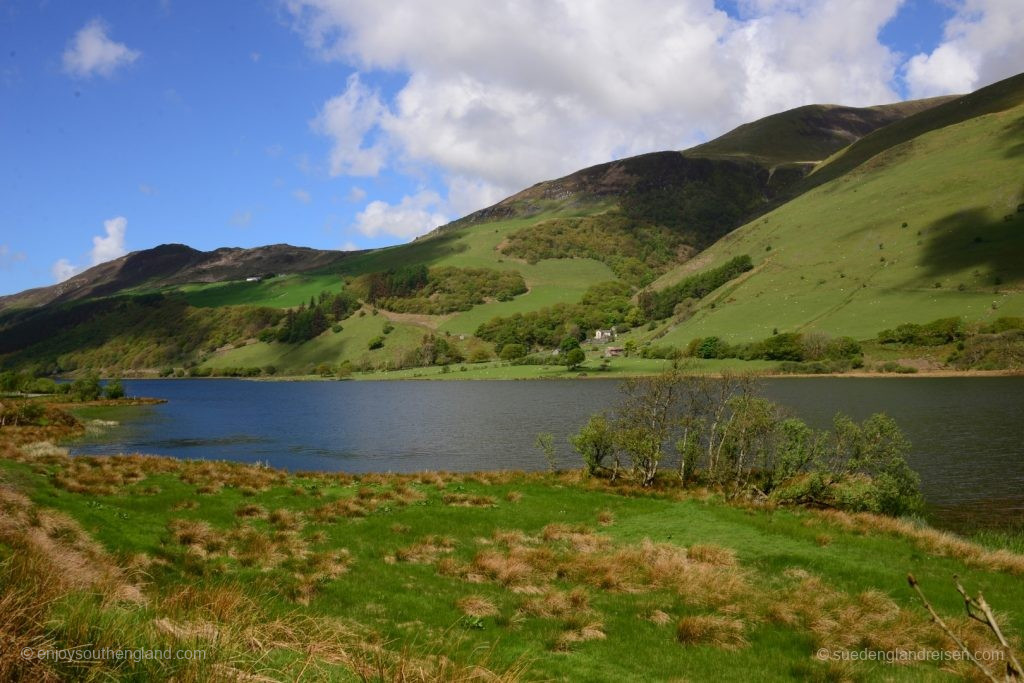
Incredibly beautiful, isn’t it?
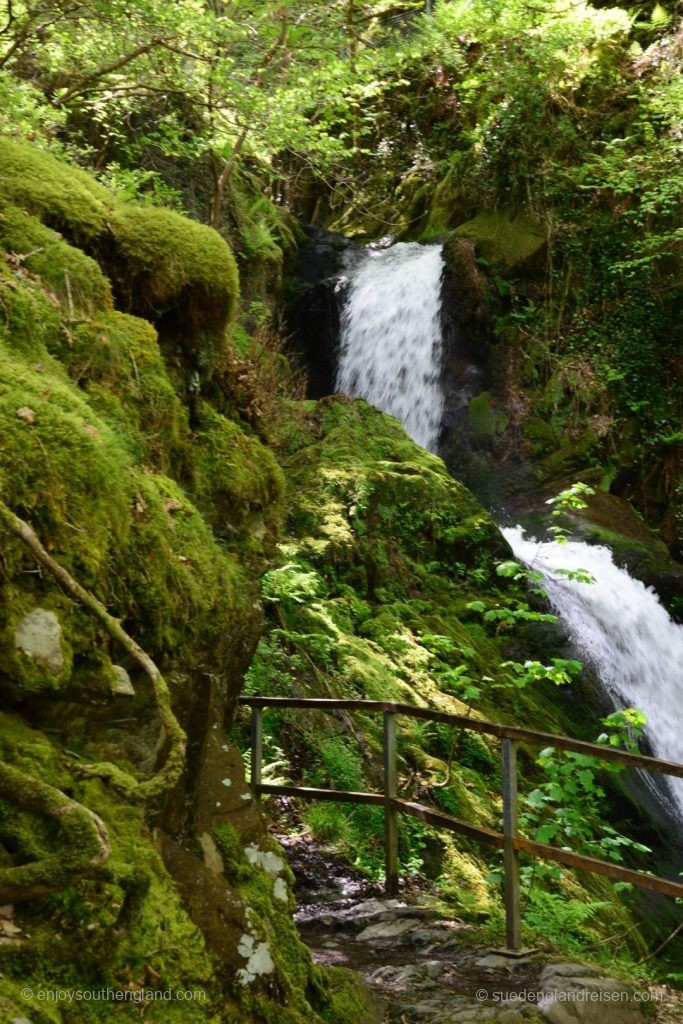
Dolgoch Falls – green on green
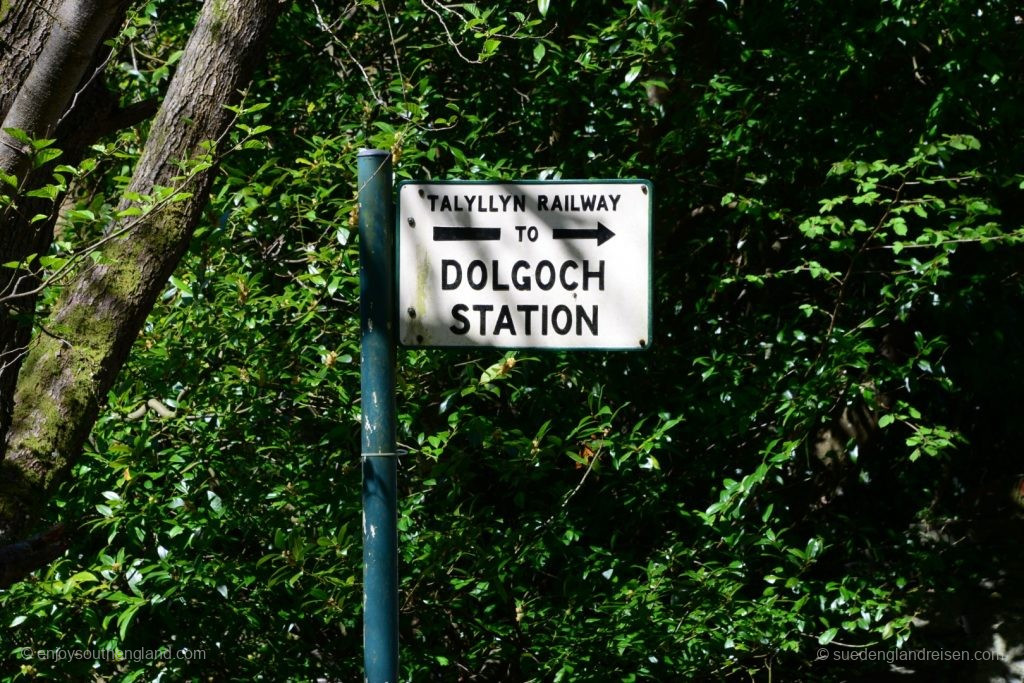
Hidden in the woods – Dolgoch Station
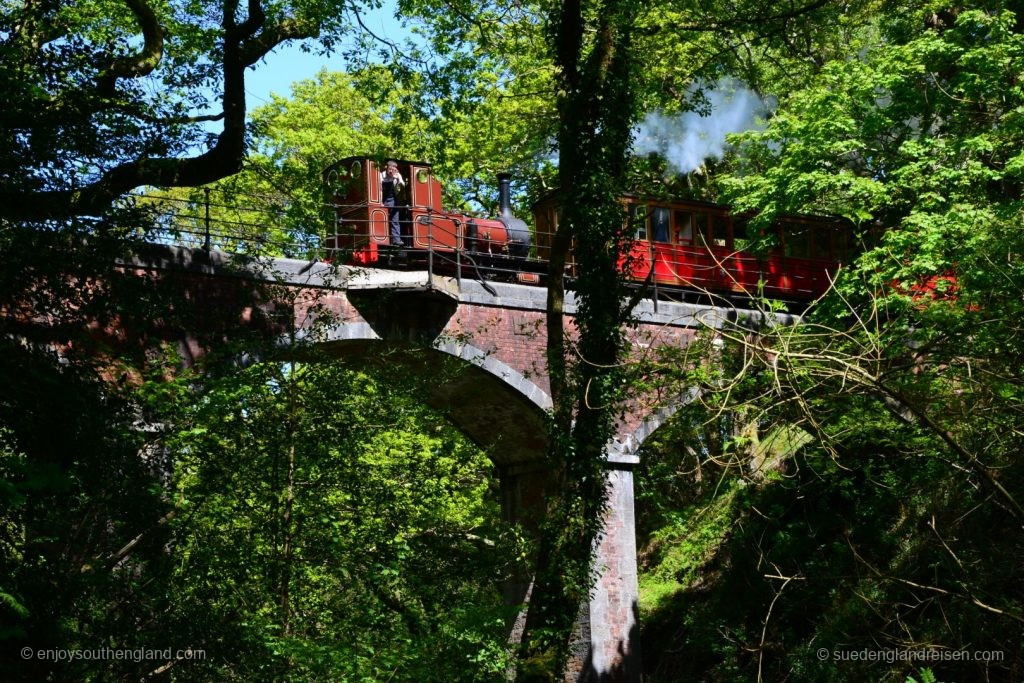
The Tal-y-Llyn Railway on a high viaduct
We continue towards the sea, first to Fairbourne. There are an extraordinary number of stone walls to be seen in this section. In Fairbourne itself, we follow the Lilliput steam train until it disappears into the dunes.
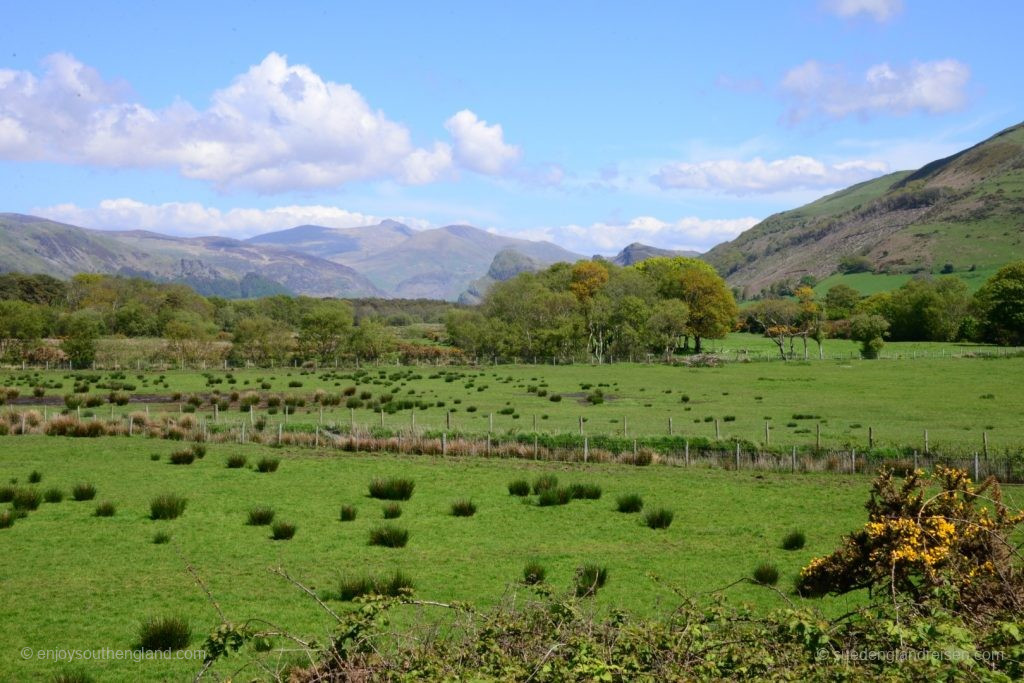
Tal-y-Llyn
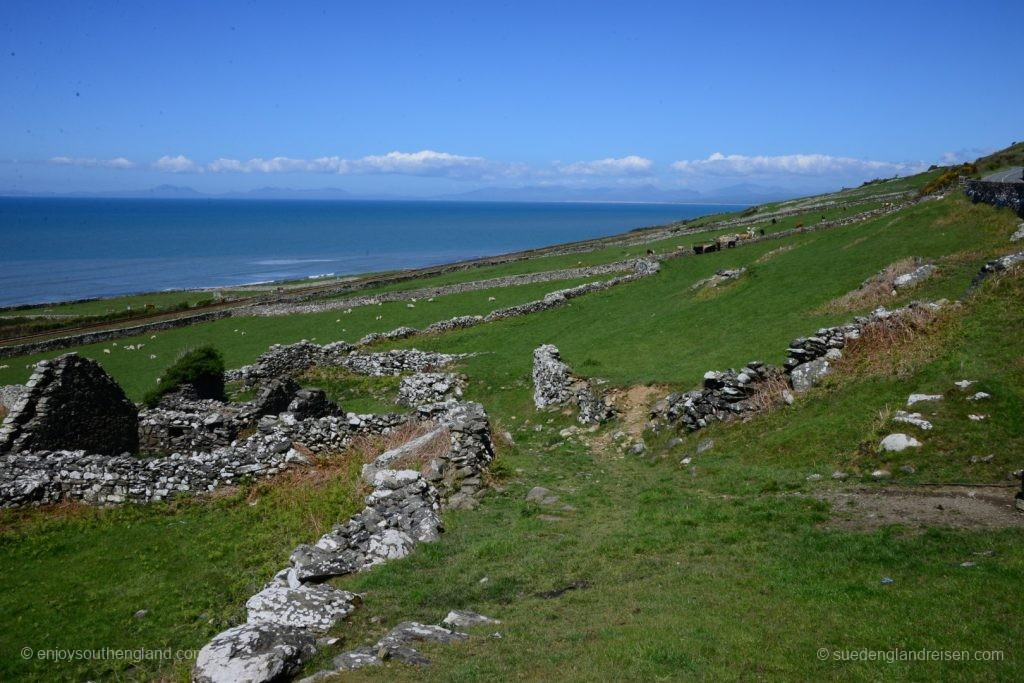
back on the coast
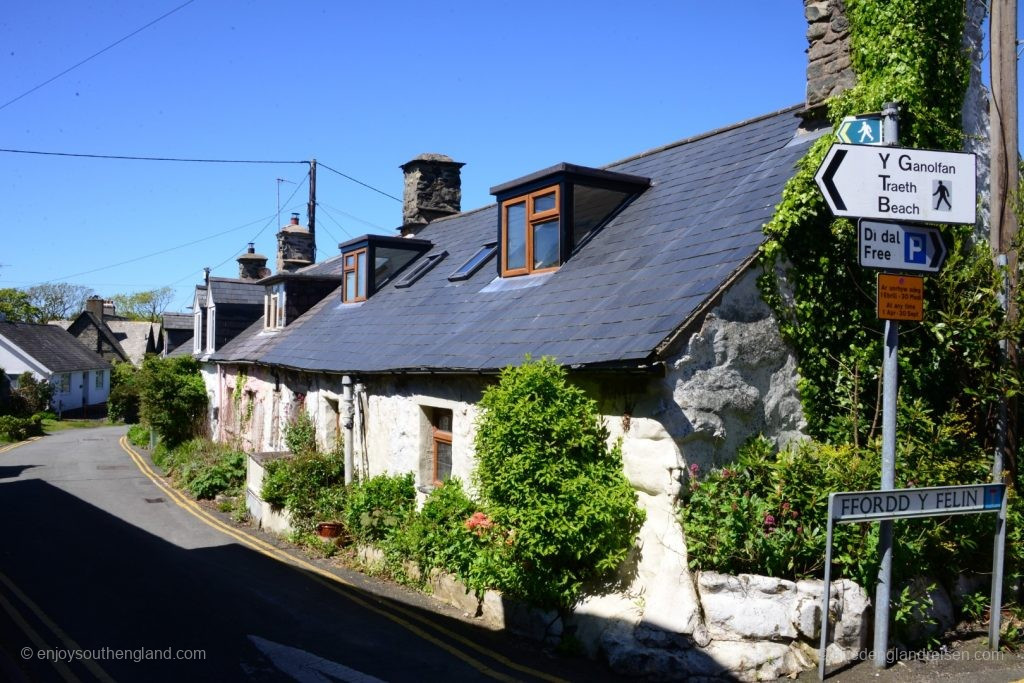
with delightful villages
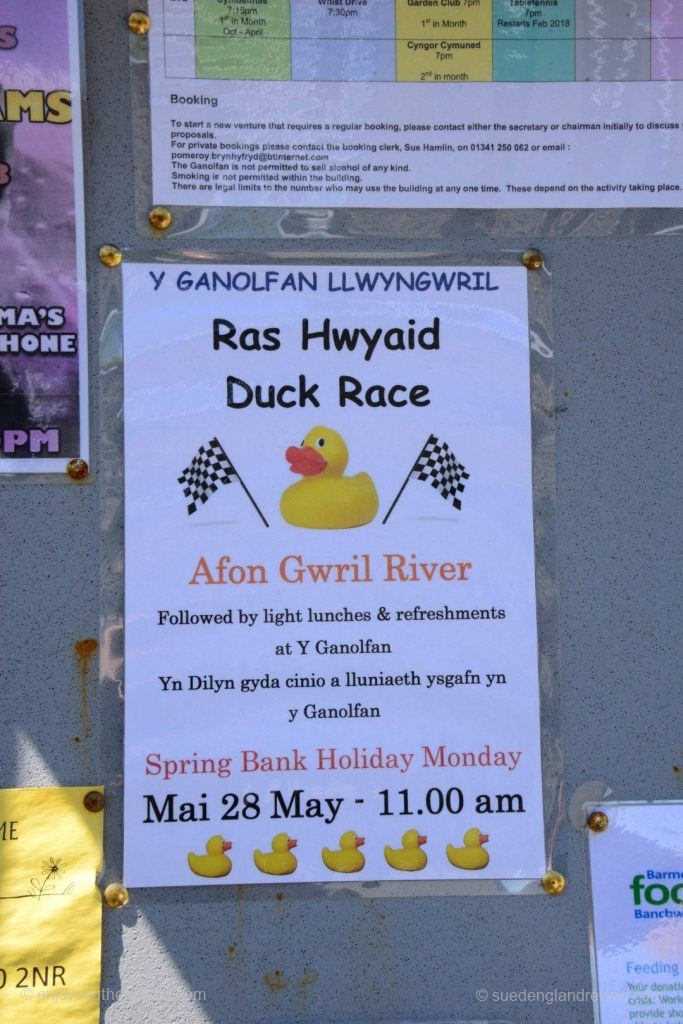
sporting highlights such as the rubber duck race
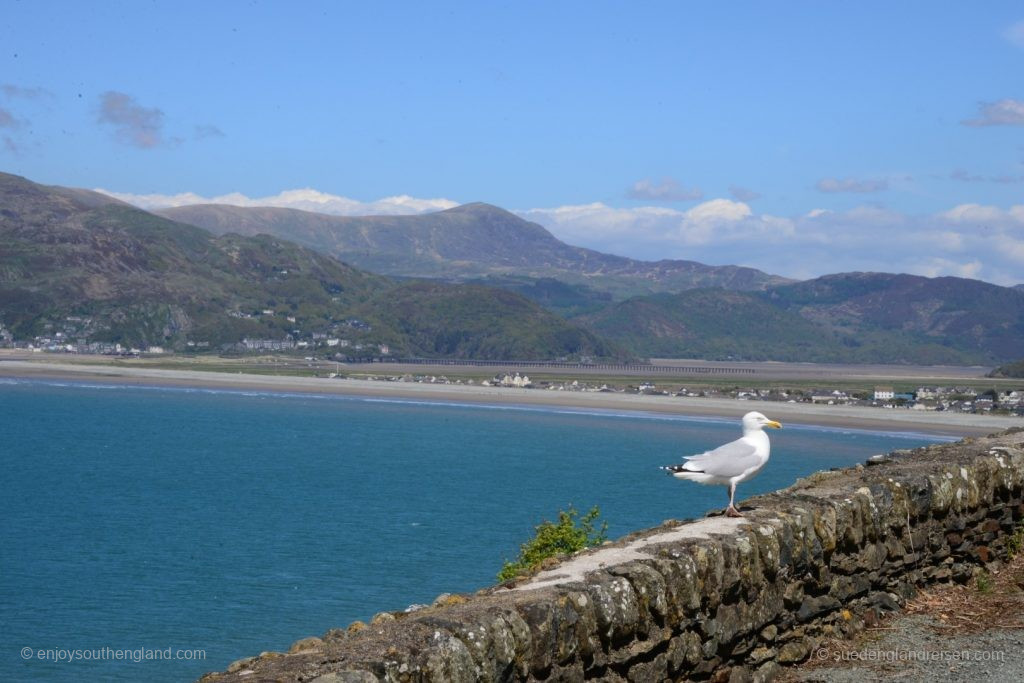
View of the estuary
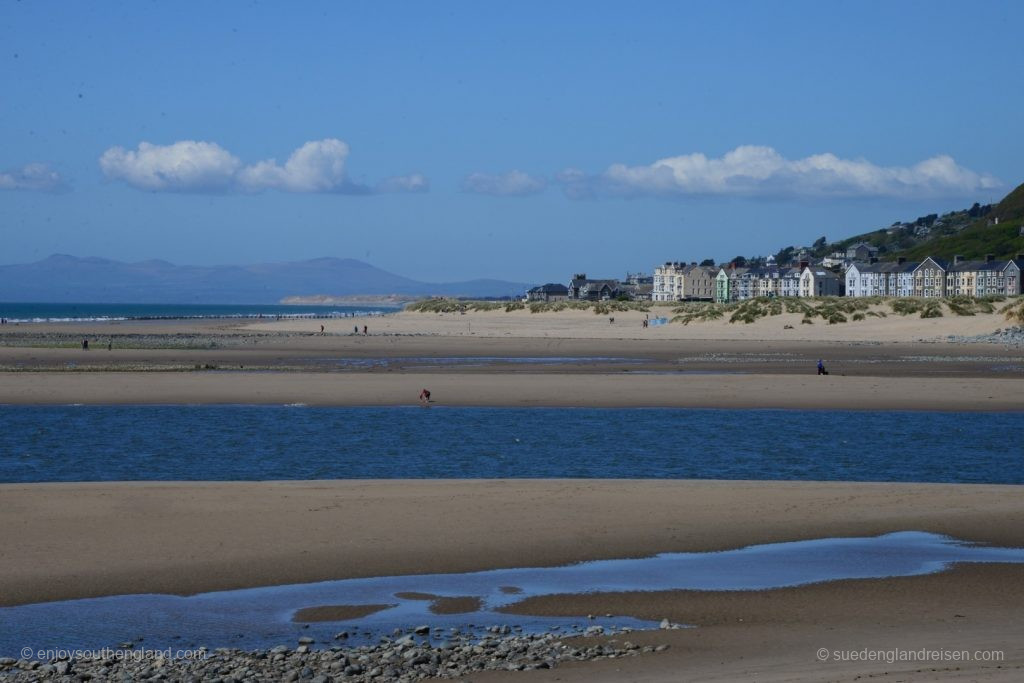
Impression of the Welsh coast
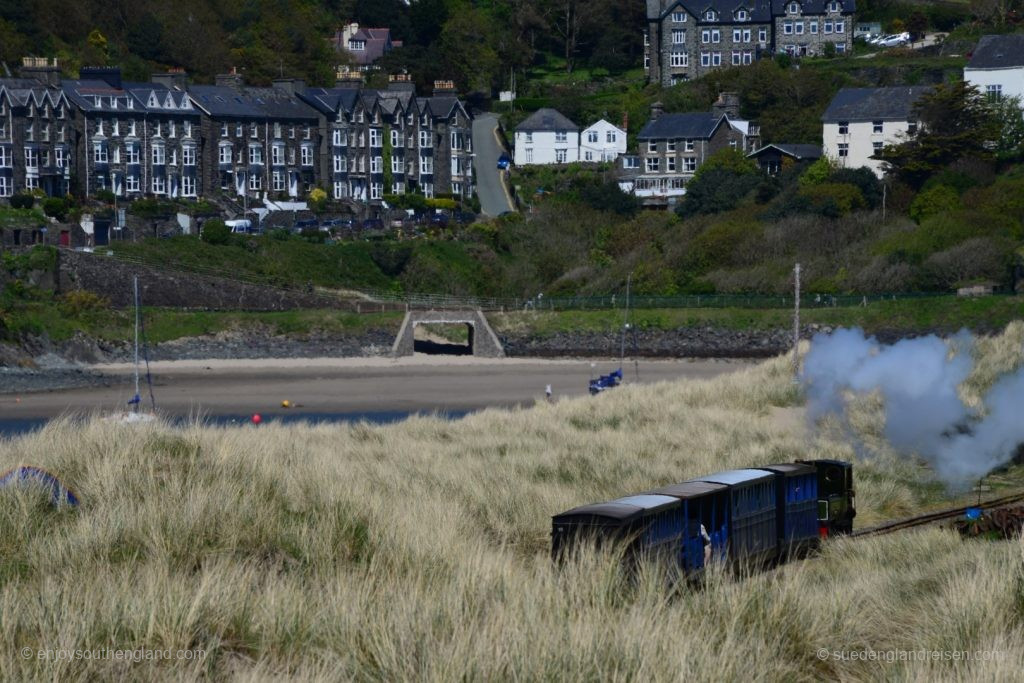
A Lilliput steam train deep in the dunes
The route to Barmouth goes around the vast estuary (a really long drive, which can only be shortened by crossing the wooden toll road bridge). Taking the little train and a roughly two-minute ferry ride would have been significantly faster. However, Barmouth, a true summer resort, is lively but very pleasant. The beach is fantastic, with many boats stranded on the sand due to the low tide.
By the way: An ice cream for refreshment is incredibly expensive in Great Britain!
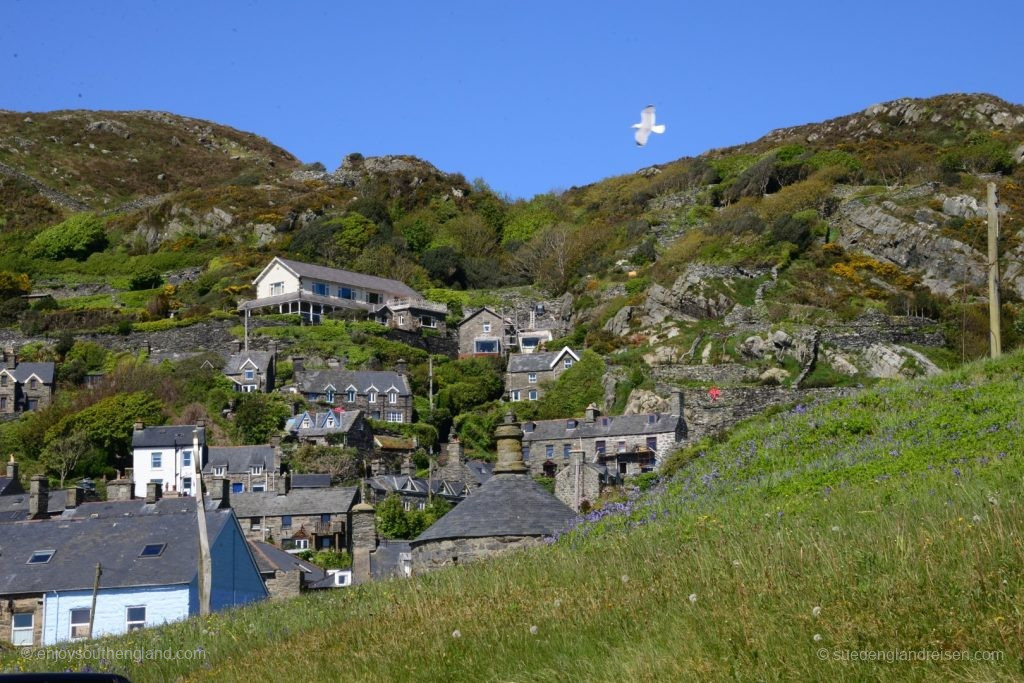
Barmouth between the hills…
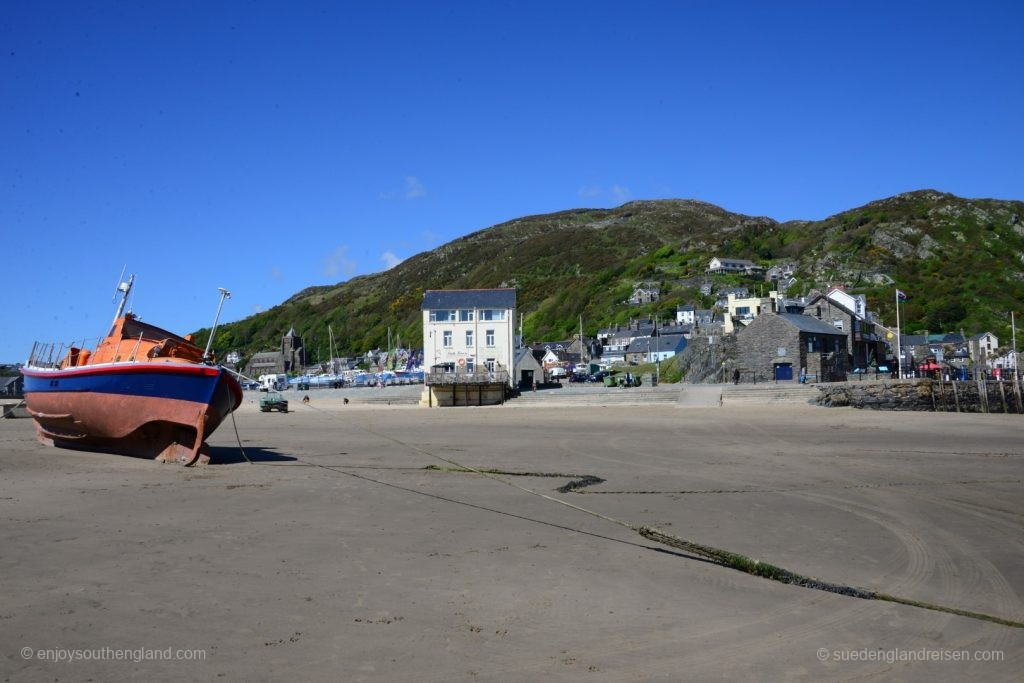
… and the sea.
We continued north towards Harlech, enjoying the unique views of the Snowdonia mountains time and again. We made a brief visit to the Plas Tan-Y-Bwlch garden, which didn’t really impress us. Instead, we had a very special dinner. We bought everything at the local Spar supermarket and enjoyed the evening all to ourselves in a romantic picnic area by a small lake (on the B4410), accompanied by a family of geese with six fluffy goslings.
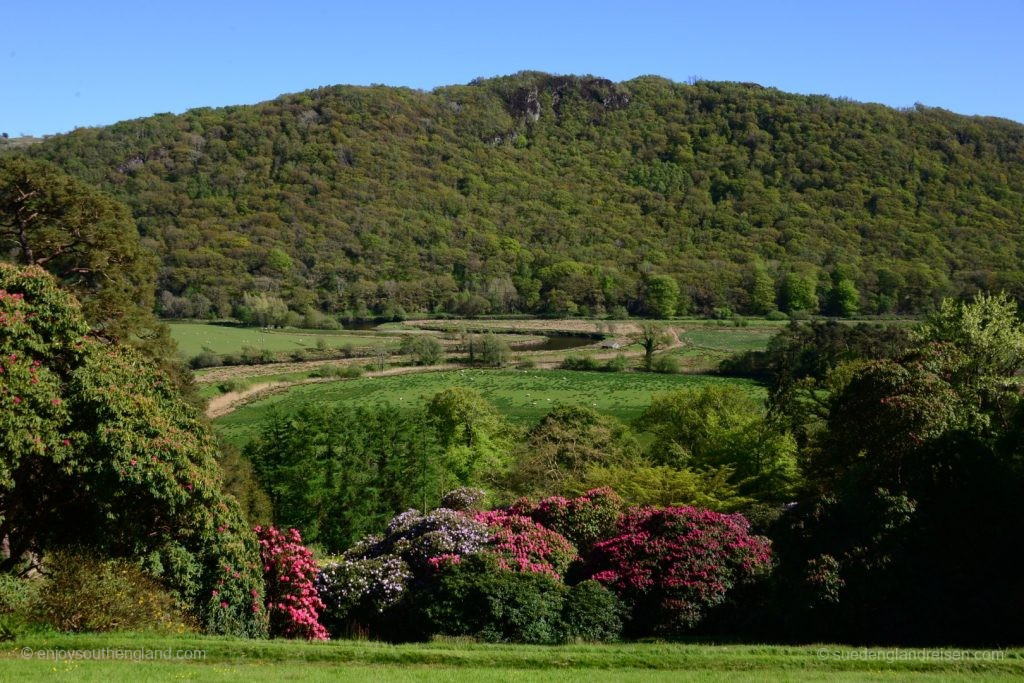
Plas Tan y Bwlch
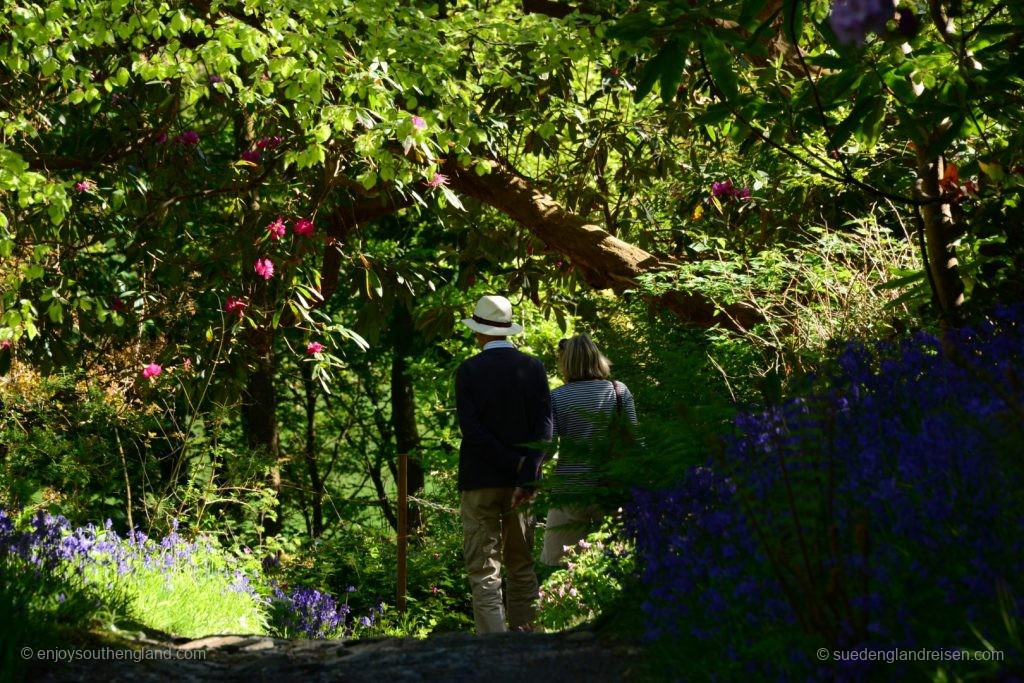
Britain is Britain
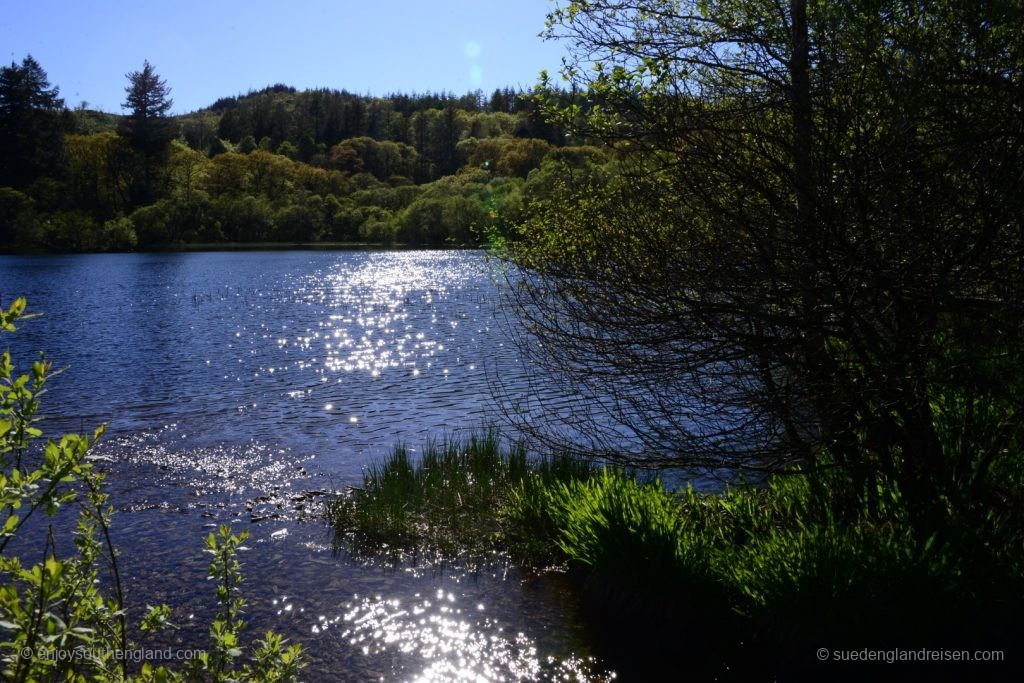
Llyn Mair Lake – our dinner spot
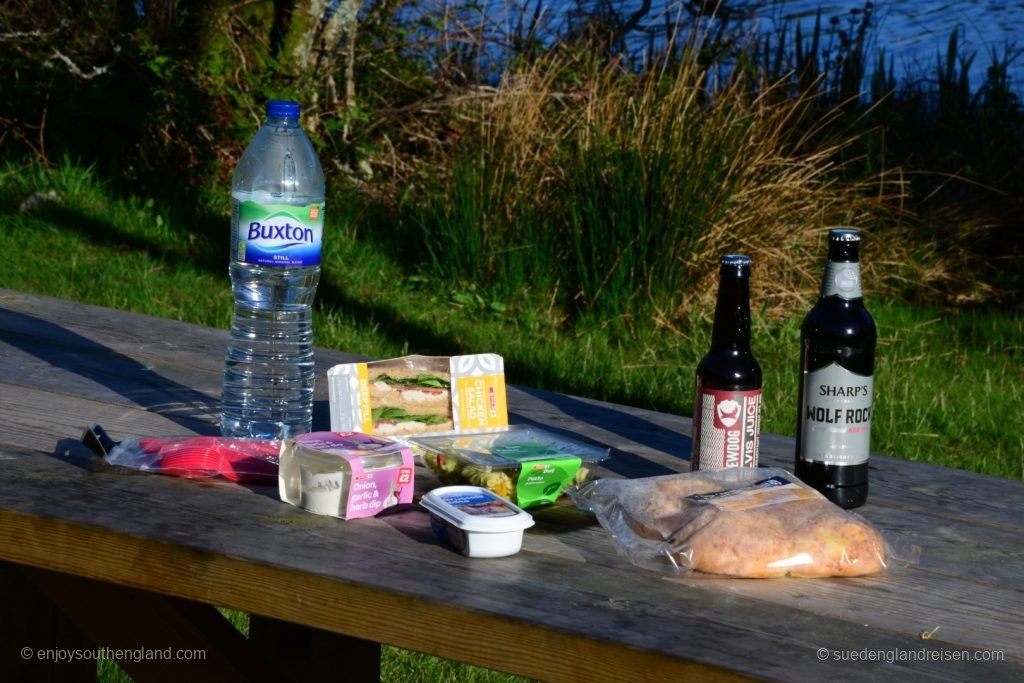
We admit: That was our supper!
Snowdonia
The next day begins with a leisurely chat with our landlady, Linda, over a cooked breakfast in the kitchen. The weather also seems to be cooperating. We drive along fantastic routes via the A4085, Beddgelert, A498, and A4086 over the Pass of Llanberis to Llanberis, to take the famous Snowdon Mountain Railway to the top of Wales’ highest mountain. It has been unusually cloudless since yesterday. Unfortunately, the next available tickets aren’t until the afternoon of the same day. So we take advantage of the time and drive up to Caernarfon to explore the town and castle. Both places greeted us warmly; the castle is truly enormous in size and condition. Then we took a slightly different route back to, and finally up, Mount Snowdon. Just then, however, the clouds began to roll in. The drive up was still fantastic with good light. The views, especially to the right, were simply breathtaking, but just before the summit, the fog enveloped us. And it continued to descend, something we noticed quite strongly on the way back down.
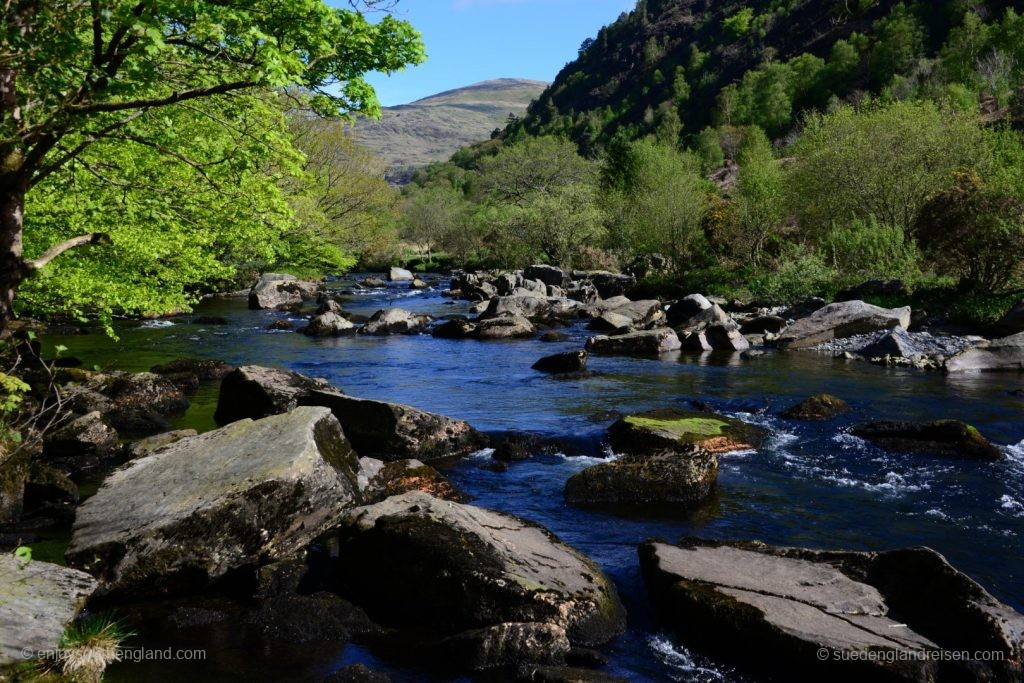
eEn route in Snowdonia
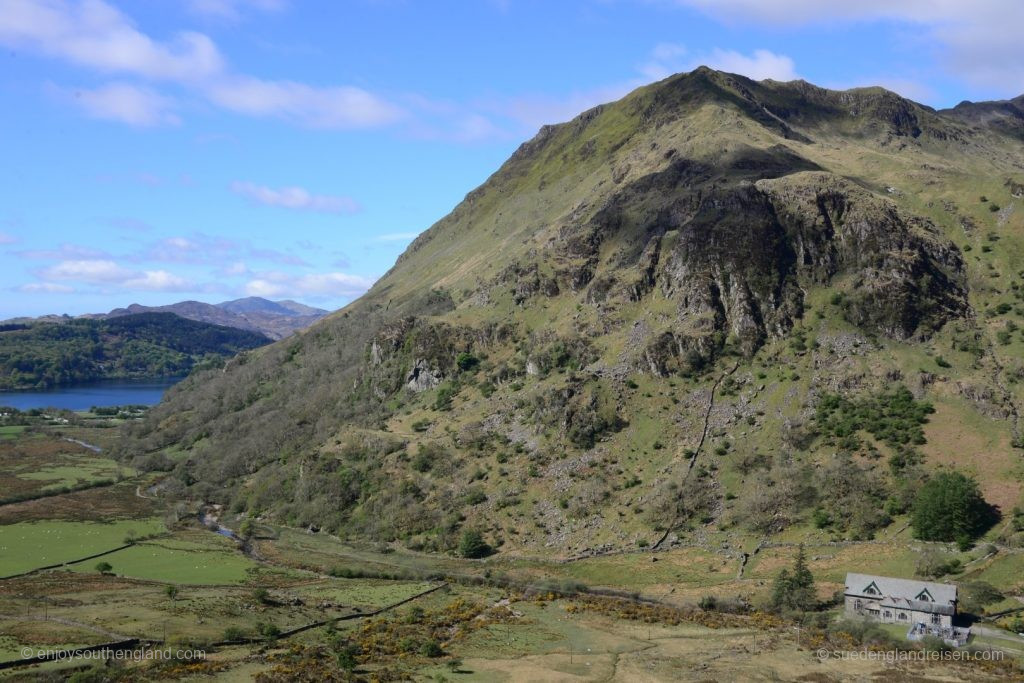
eEn route in Snowdonia
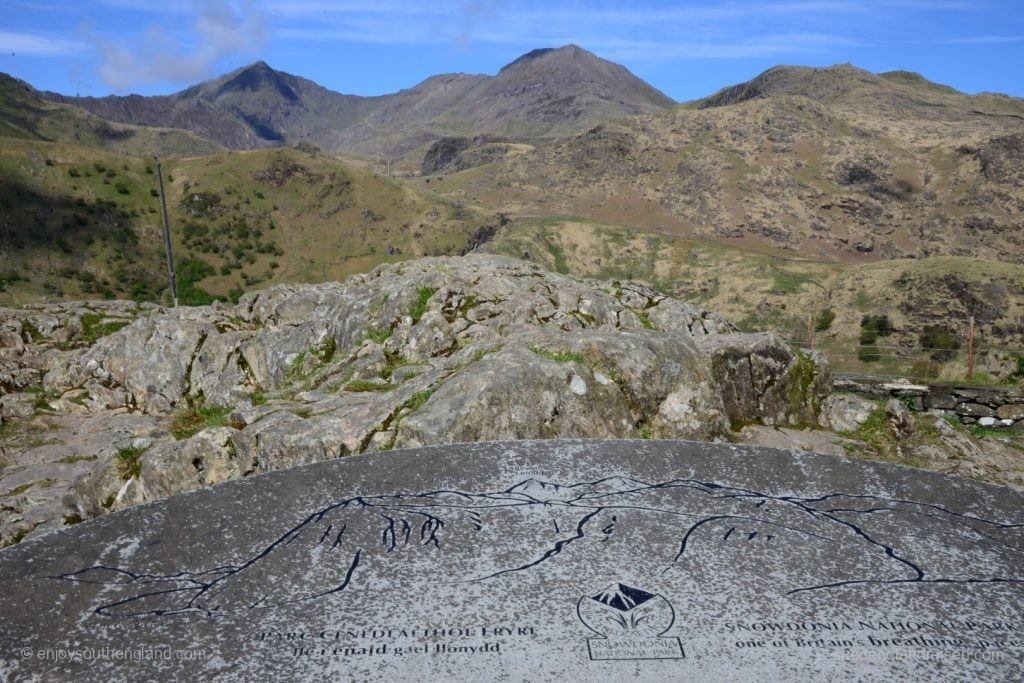
Impressive mountain scenery in Snowdonia – Mount Snowdon, completely free of clouds, in the center background
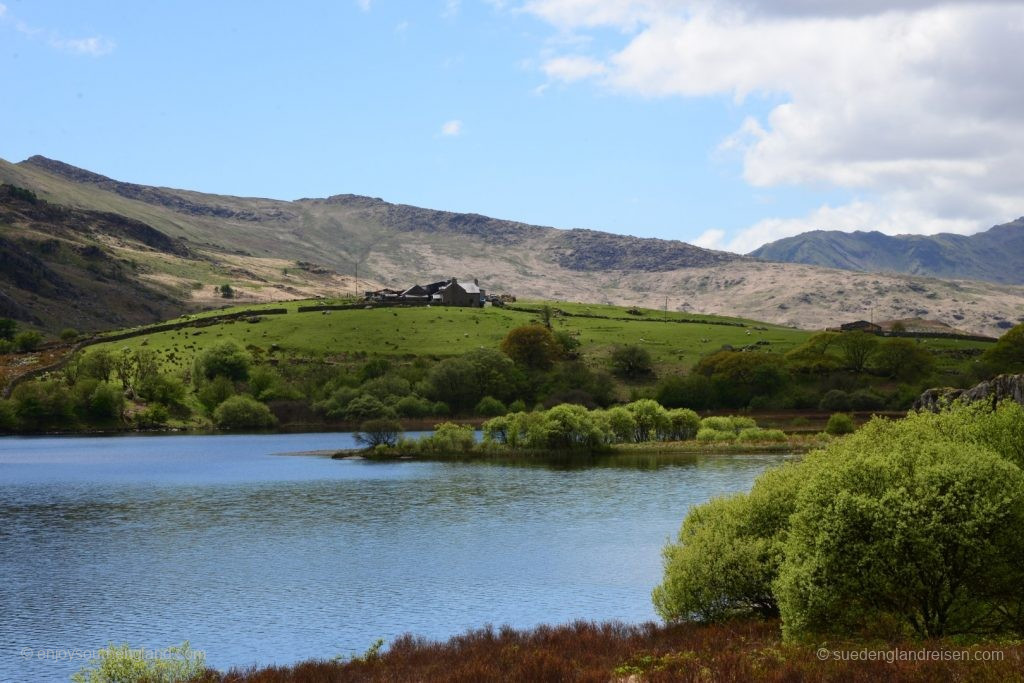
En route in Snowdonia
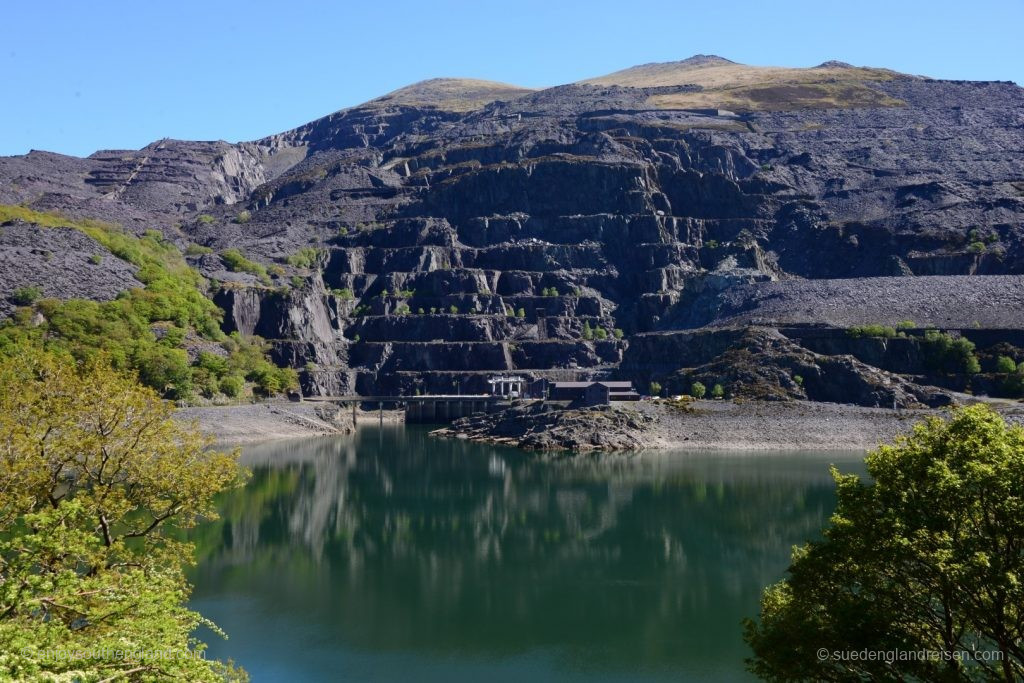
old slate quarry
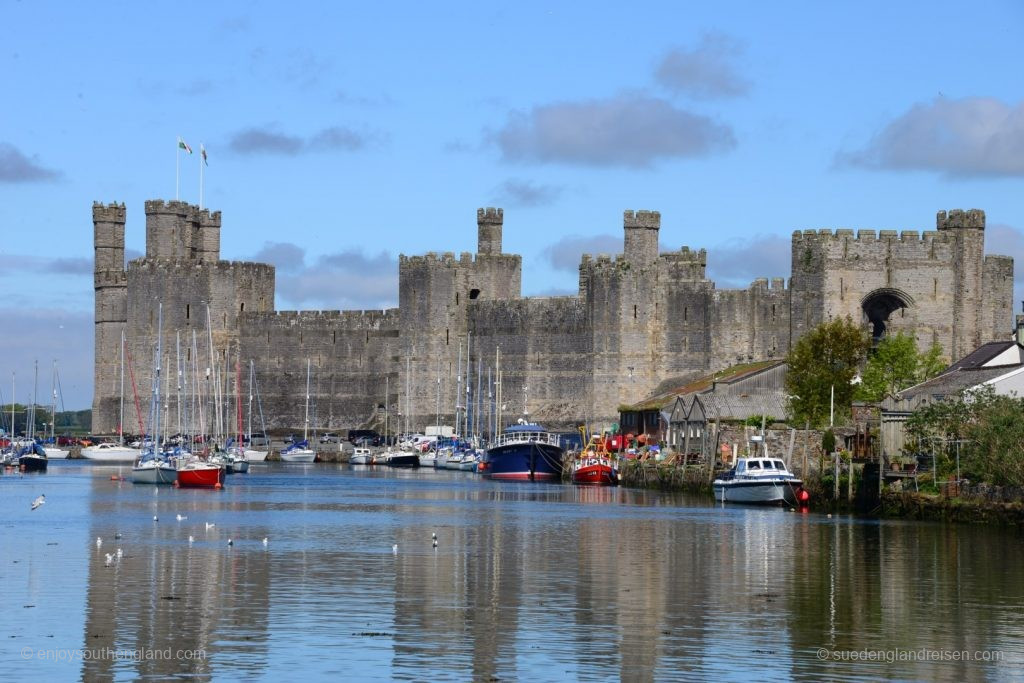
Caernarfon Castle
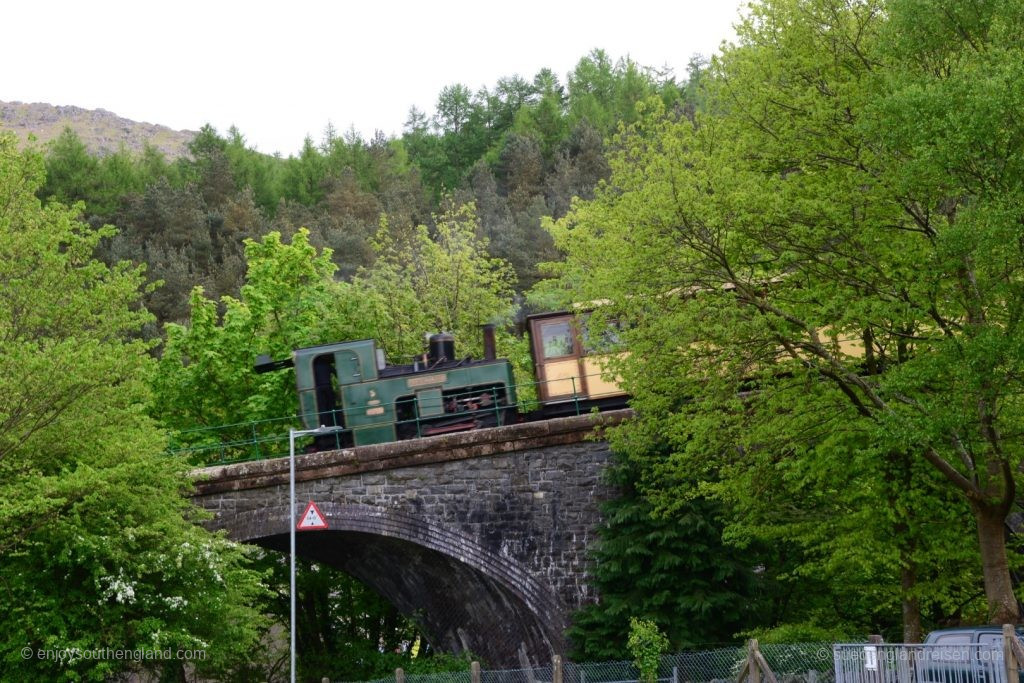
Up Mount Snowdon on the Snowdon Mountain Railway
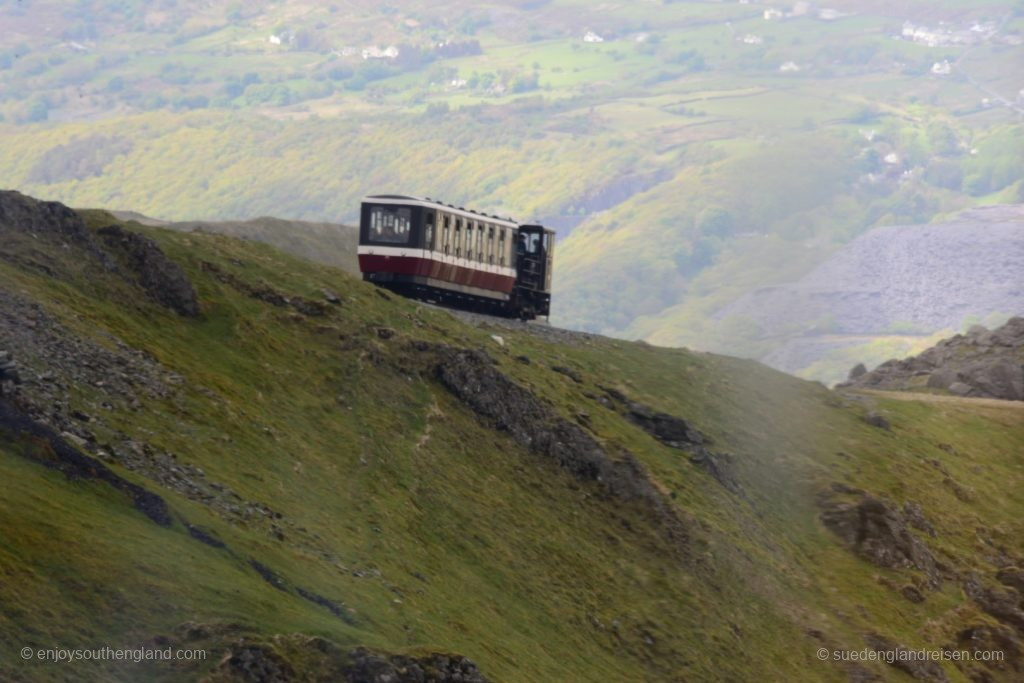
Up Mount Snowdon on the Snowdon Mountain Railway
But it only truly looks ingenious from the air:
You are currently viewing a placeholder content from YouTube. To access the actual content, click the button below. Please note that doing so will share data with third-party providers.
We continue on to Criccieth via Porthmadog, which lies at the entrance to the Llwyn Peninsula. The light is beautiful now, the bay and the sea are perfectly calm before us. The castle looms overhead. We can even make out Harlech in the distance.
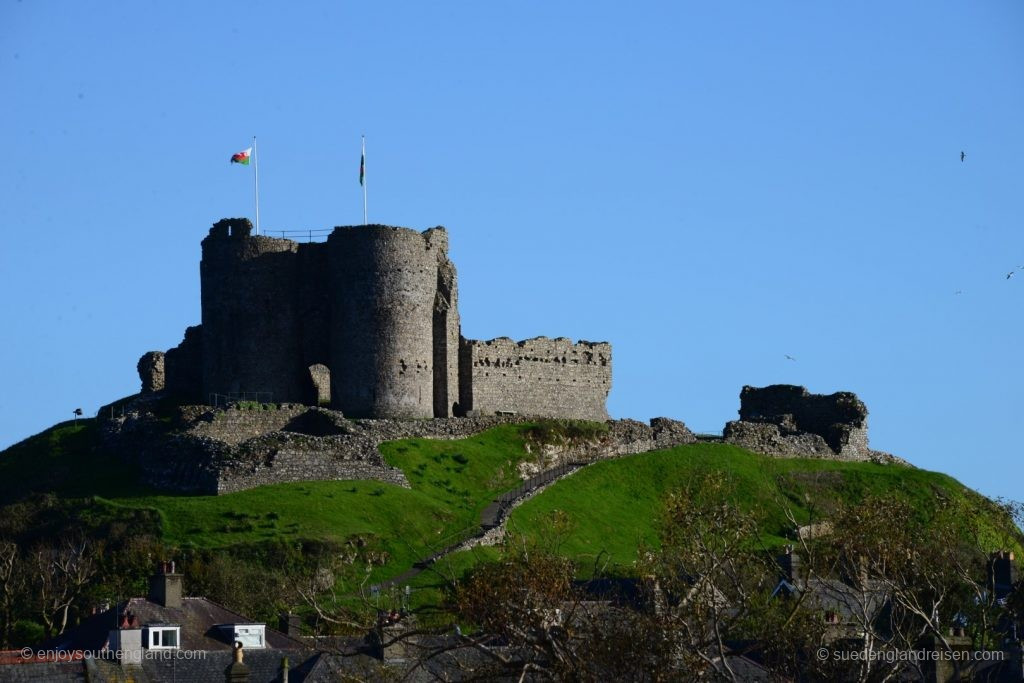
Criccieth
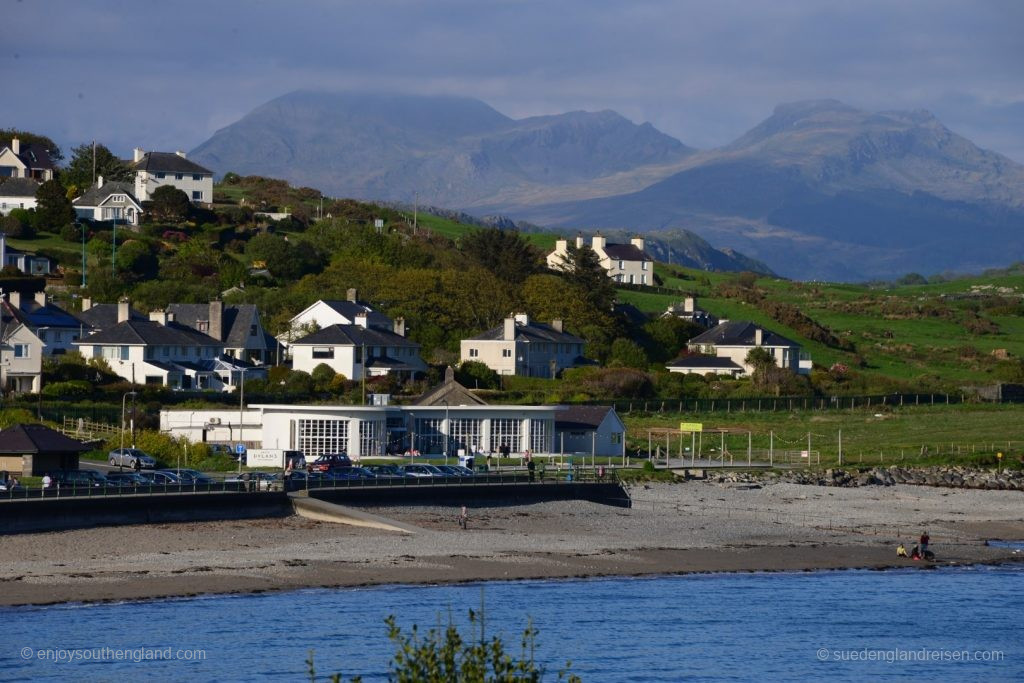
Criccieth – Note the Art Deco cafe
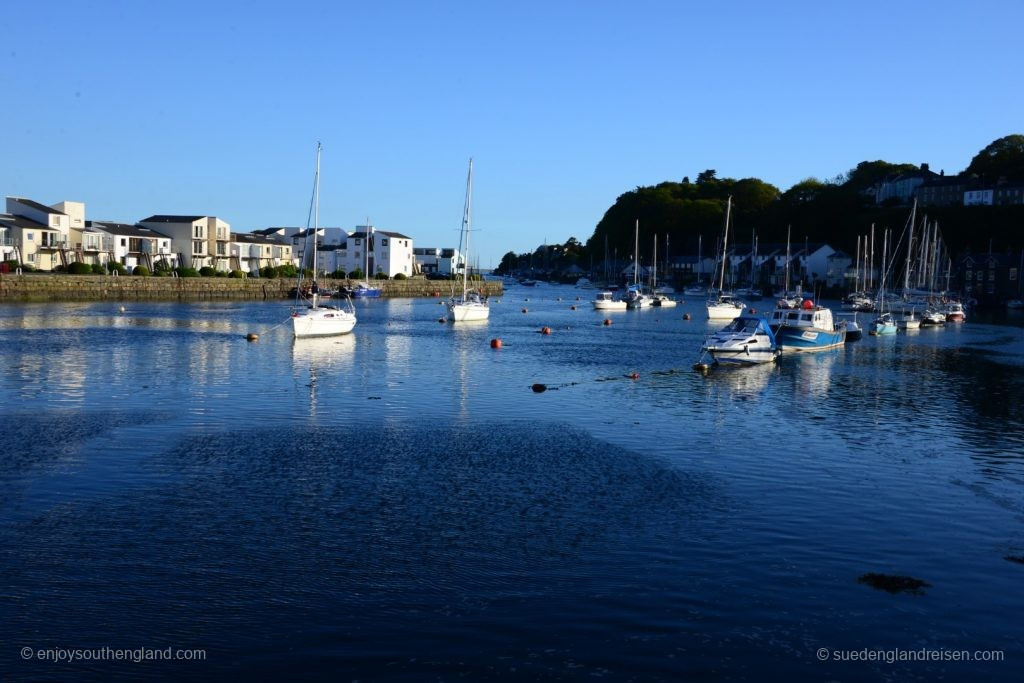
Evening mood near Maentwrog
The next morning, we are the first guests in the Plas Brondanw garden. It’s as if we have a private garden all to ourselves. Small but perfectly formed. Then we set off on our hunt. We’re after the Welsh Highland Railway, the railway originally completed in 1923 running across Snowdonia, which existed for less than 20 years before being completely rebuilt between 1997 and 2011. We encounter it at three different locations and follow it to each one, finally reaching the terminus in Porthmadog.
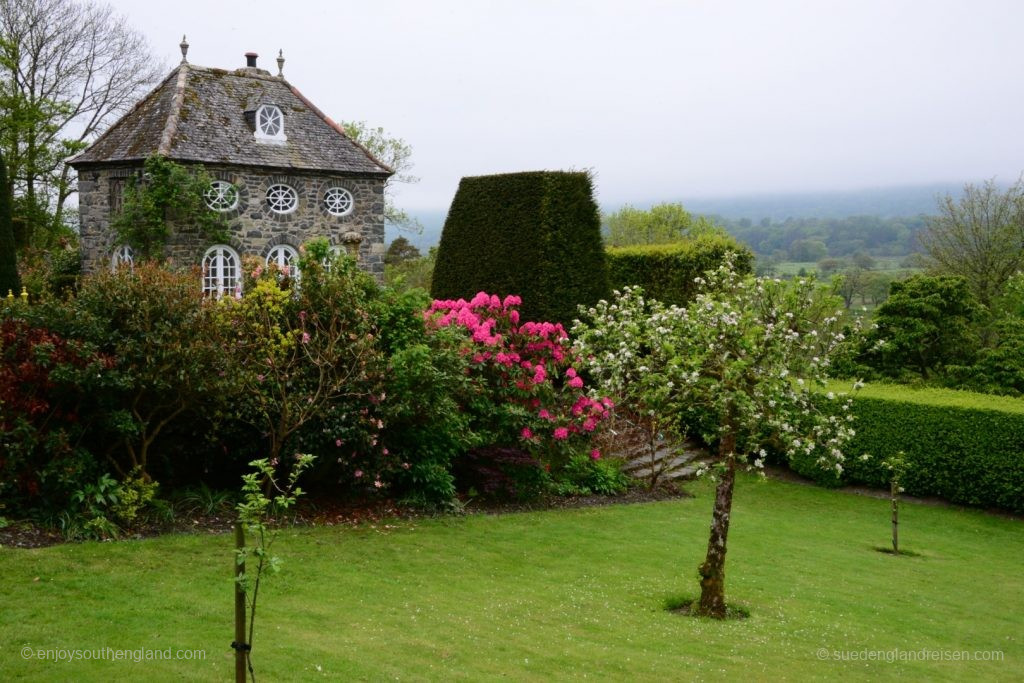
Plas Brondanw Garden

Plas Brondanw Garden
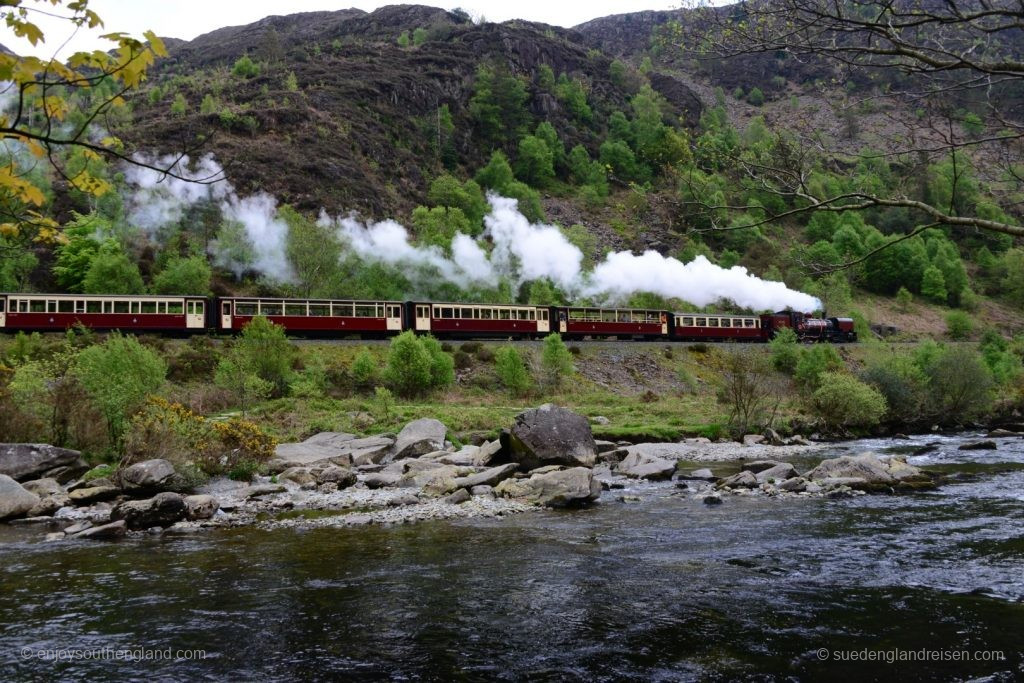
Welsh Highland Railway
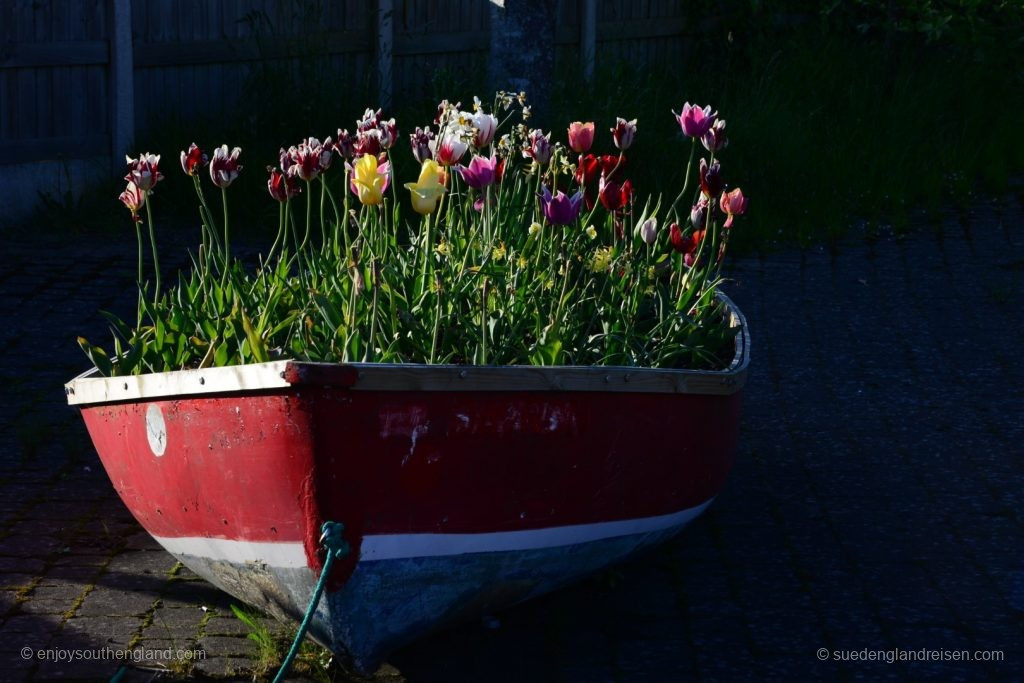
Flowers with a twist
After that, a short drive around the Llyn Peninsula is on the agenda. We already saw Criccieth the previous evening. We continue on, crossing the island to get a bird’s-eye view of Porth Dinllaen on the west coast. We generally like the west coast with its mountains the best.
We head back to the mainland and near Llithfaen we discover an inconspicuous turnoff to Nant Gwrtheyrn. This old granite quarry lies down on the coast; today it houses, among other things, a Welsh language institute – and a great café where we can enjoy tea and scones in the sweltering sun.
Porthdinllaen
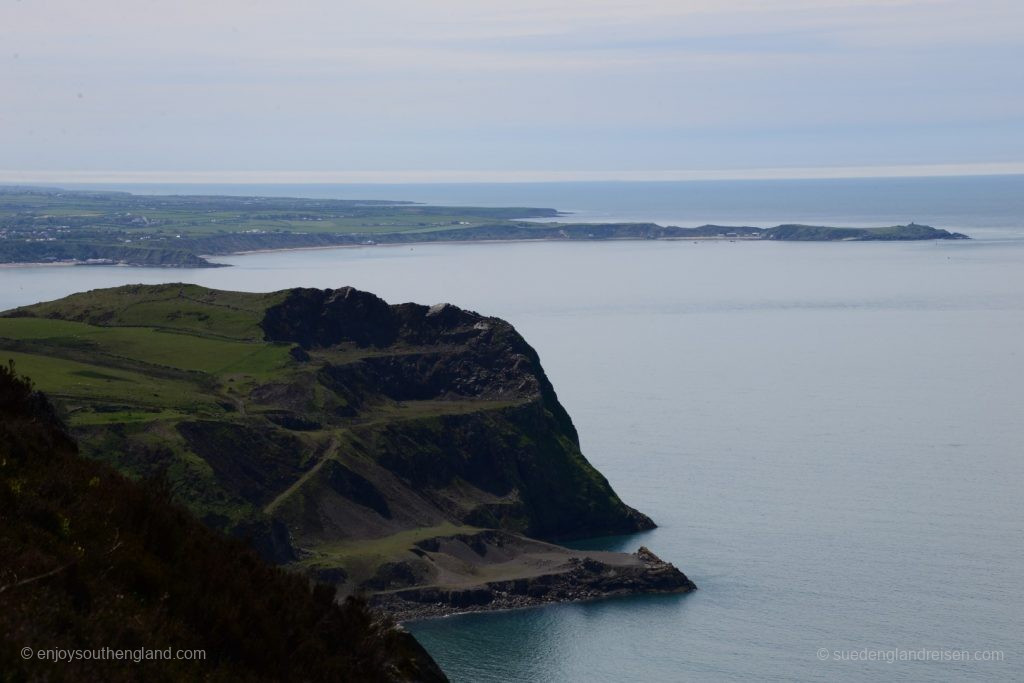
on the coast of Llŷn
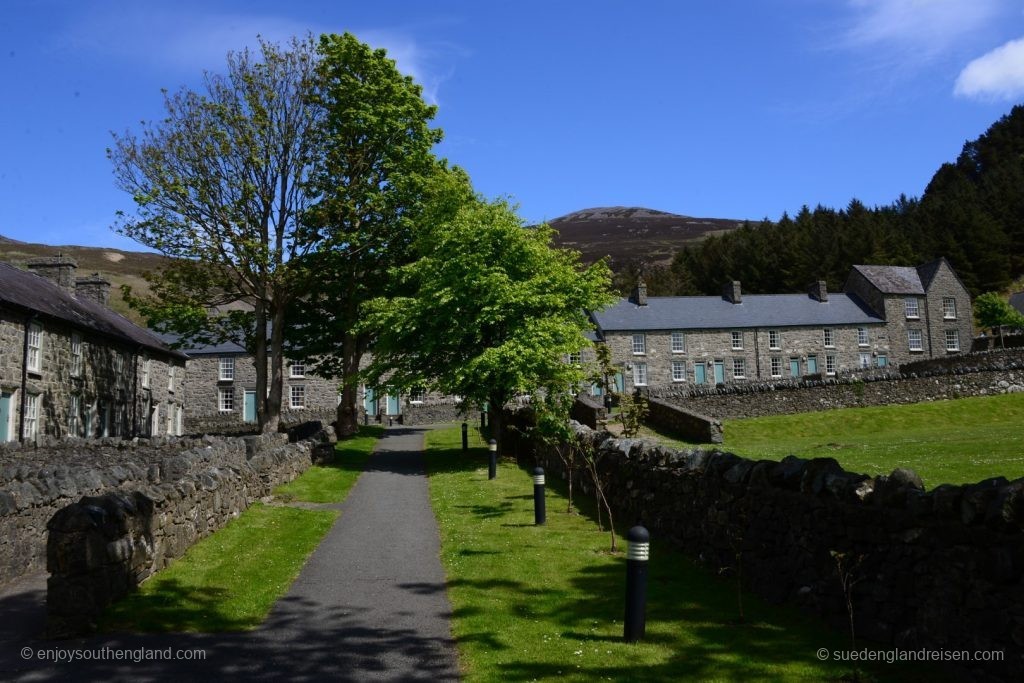
Nant Gwrtheyrn
Anglesey
Finally, we’re off to a real island – Anglesey! We cross the Menai Suspension Bridge, a chain bridge designed by the famous engineer Thomas Telford, heading towards Beaumaris. Along the way, we spot the Hidden Gardens, which immediately draw us in. It’s just a few minutes before 5 pm, and therefore before closing time. But we’re in Great Britain, an incredibly friendly country. So we quickly ask – and yes, of course, we’re still allowed in. One exit gate is always open in the evenings, so once again we have a beautiful garden all to ourselves (anyone who has read our Scotland report knows what we mean).
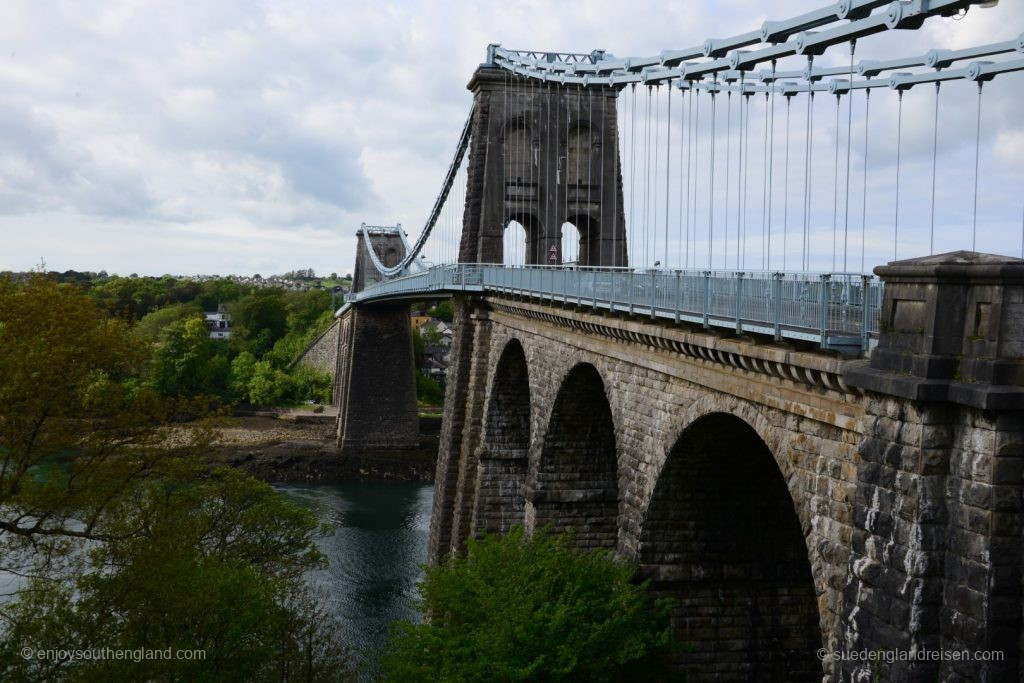
The Tellford Bridge to Anglesey
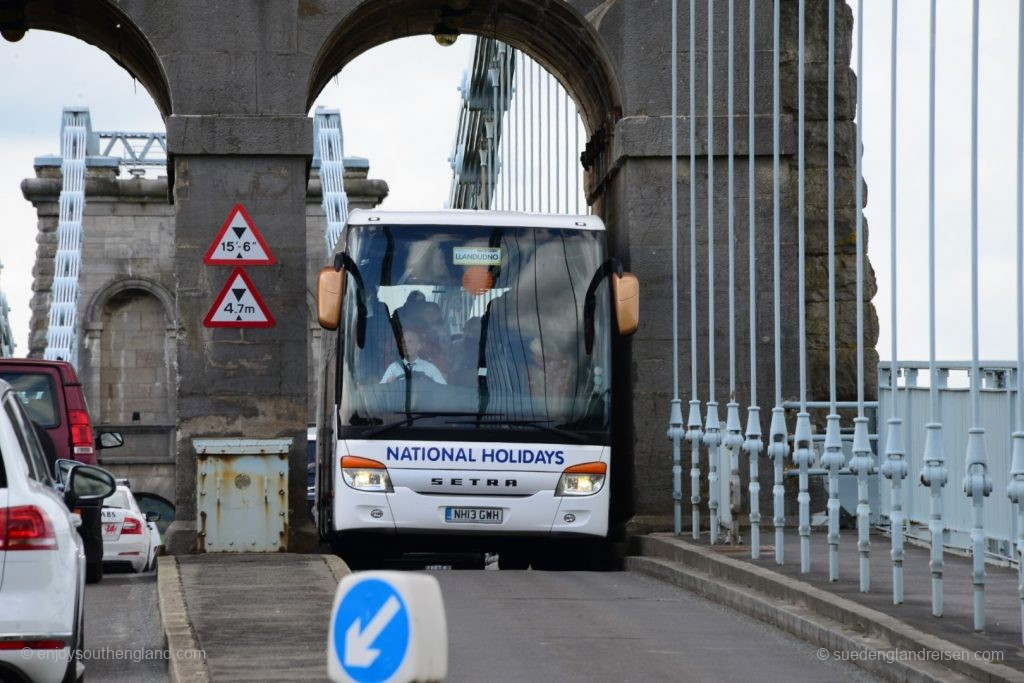
The Anglesey Bridge wasn’t really built for vehicles of today’s size
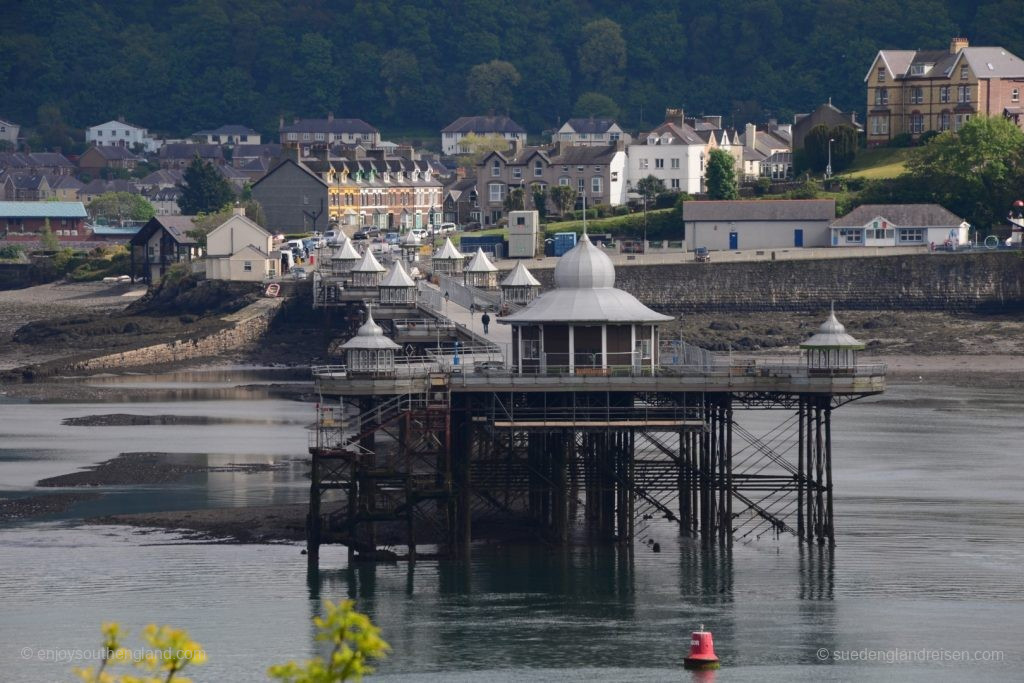
View from Anglesey towards the mainland
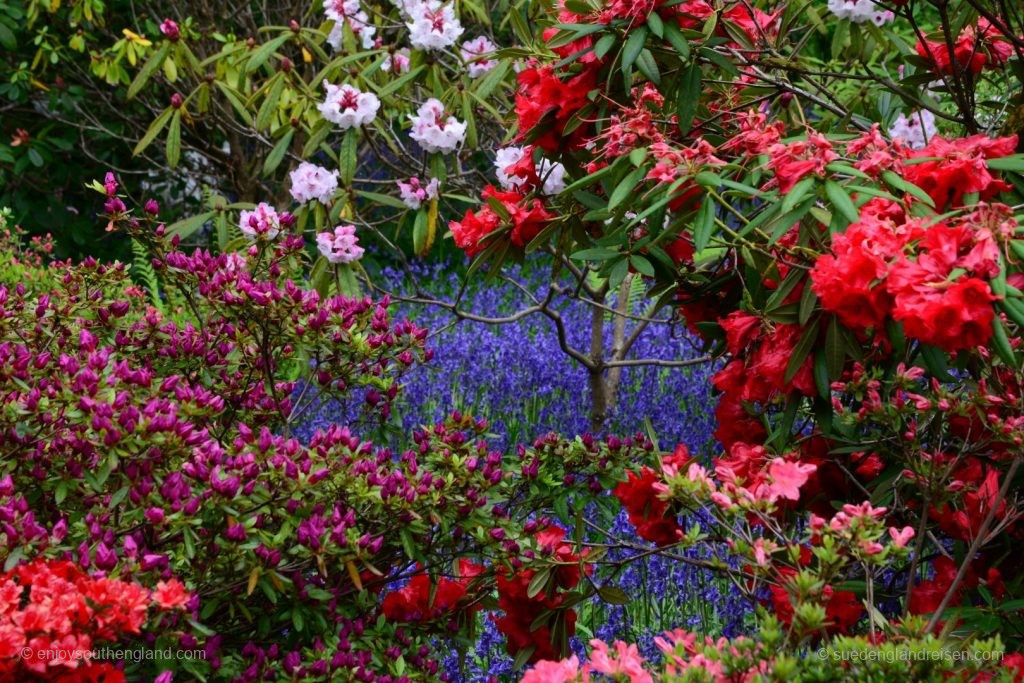
Hidden Gardens
We spent the next day on Anglesey, which, however, somewhat disappointed us and didn’t really appeal to us. Perhaps that was due to the weather, as it was mostly cloudy. First, we visited the place with the longest place name in Europe: Llanfairpwllgwyngyllgogerychwyrndrobwllllantysiliogogogoch – often simply called “Gogogoch”.
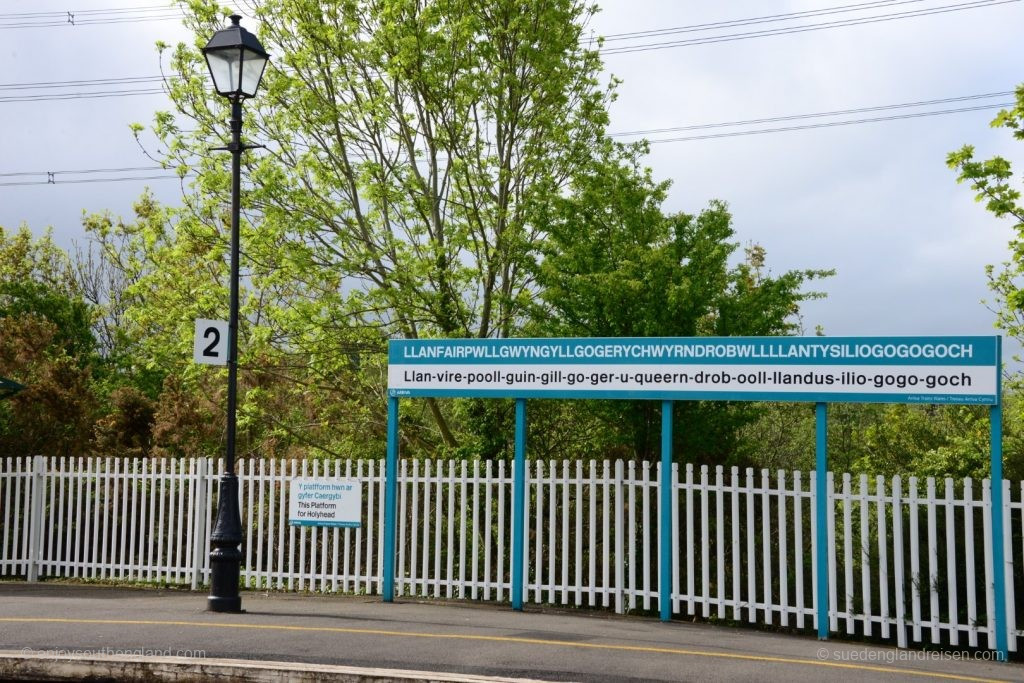
Llanfairpwllgwyngyllgogerychwyrndrobwllllantysiliogogogoch Station
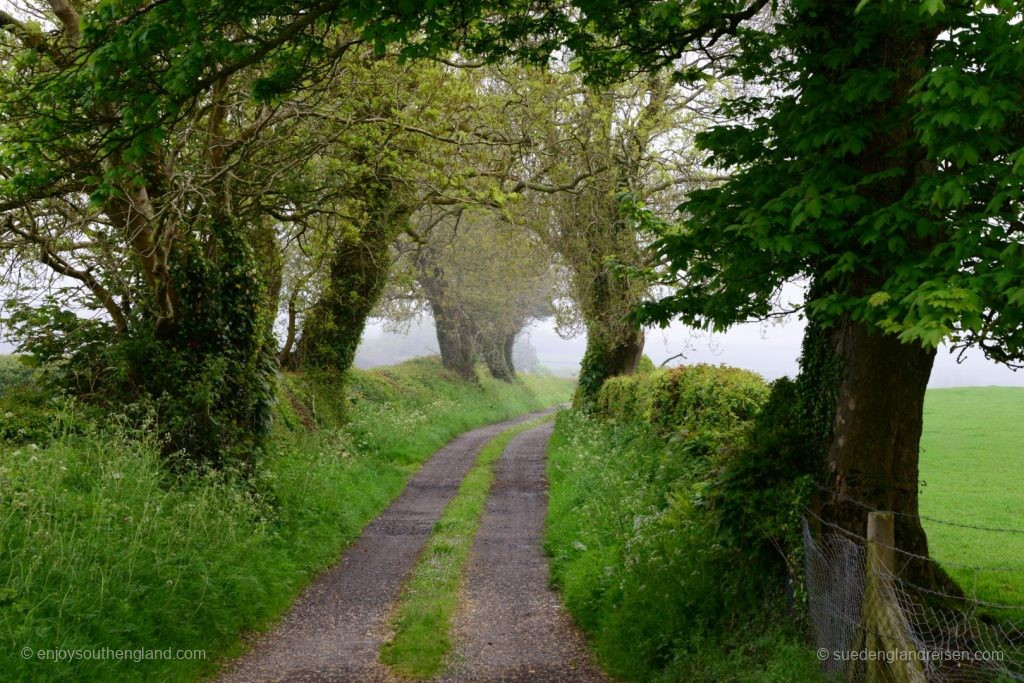
A foggy day on Anglesey
The only highlight of our tour was “Parys Mountain” near Amlwch, a disused copper mine featuring an incredible play of colors in the rock.
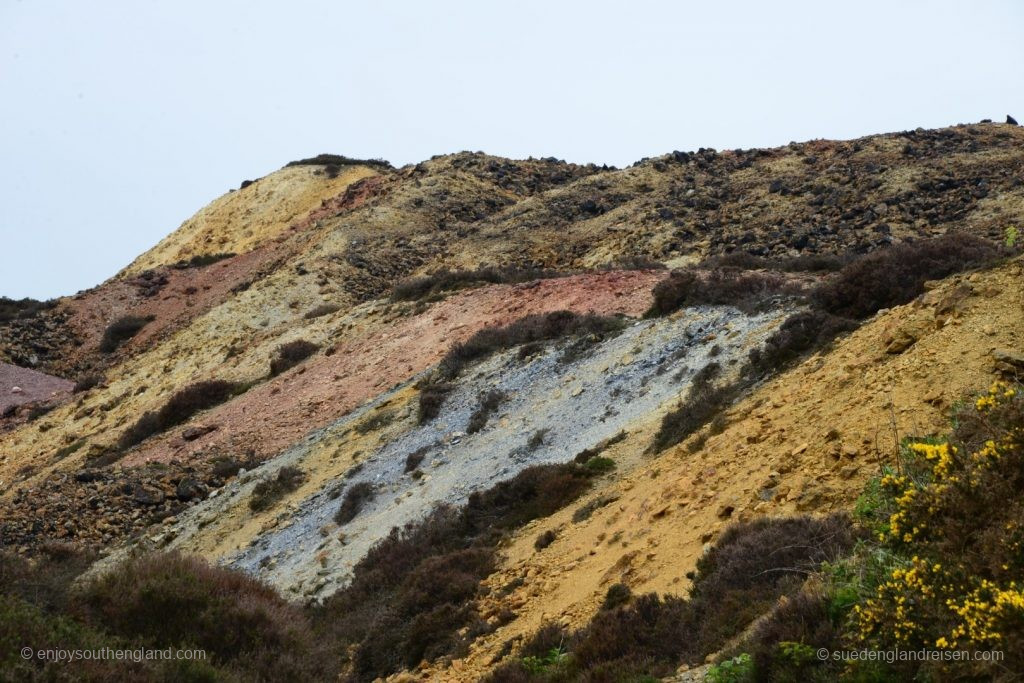
Mynyd Parys
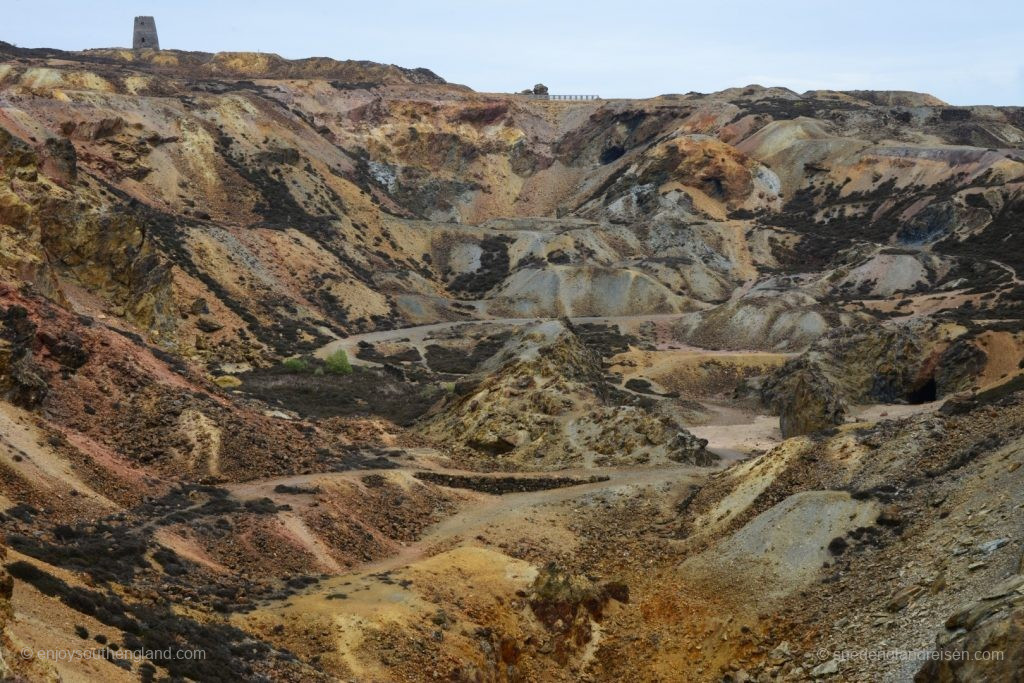
Mynyd Parys
And we really loved Beaumaris, where we’d already been the previous evening after visiting the Hidden Garden. There we saw that they offer a boat trip to Puffin Island – well, that’s where we want to go!
We’re in luck, because the strong winds have prevented any boats from going out yet. Our captain wants to give it a try and hopes we all have strong stomachs. Out on the water, however, it’s not nearly as bad as we thought, and we can admire seals, various seabirds in huge colonies, and finally, our very first puffins.
On the way back, we take a look at Beaumaris Castle.
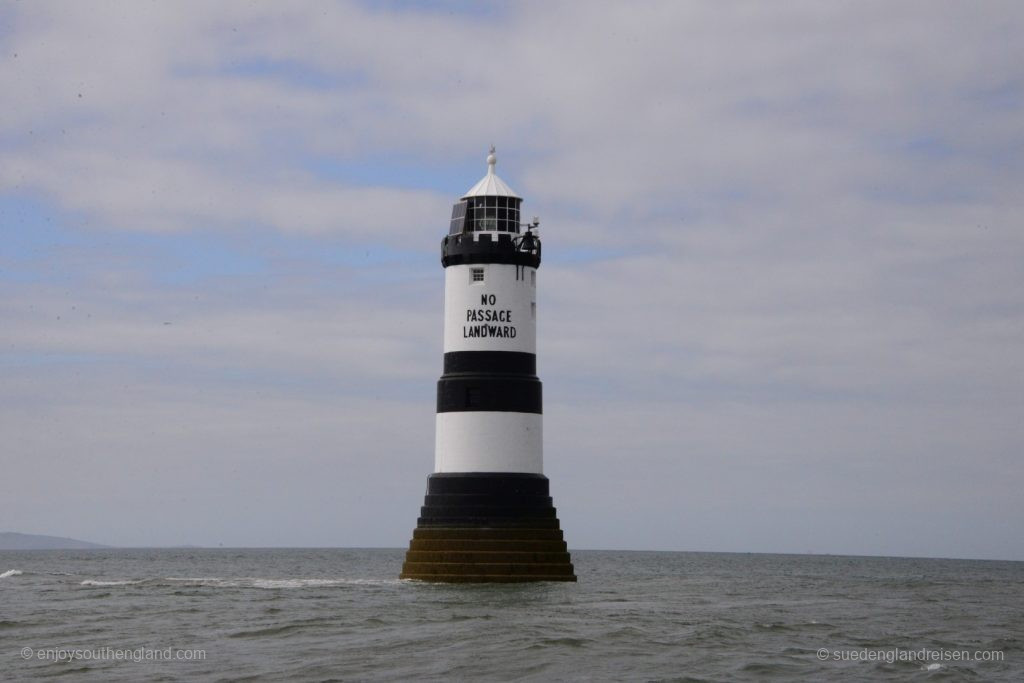
Boat trip to Puffin Island
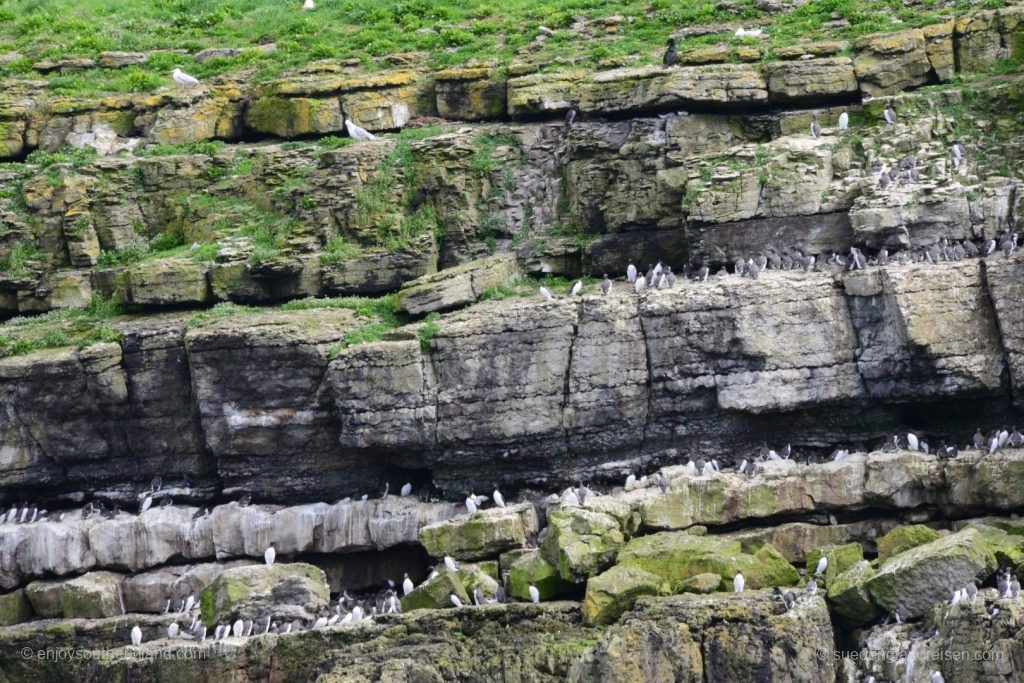
Boat trip to Puffin Island
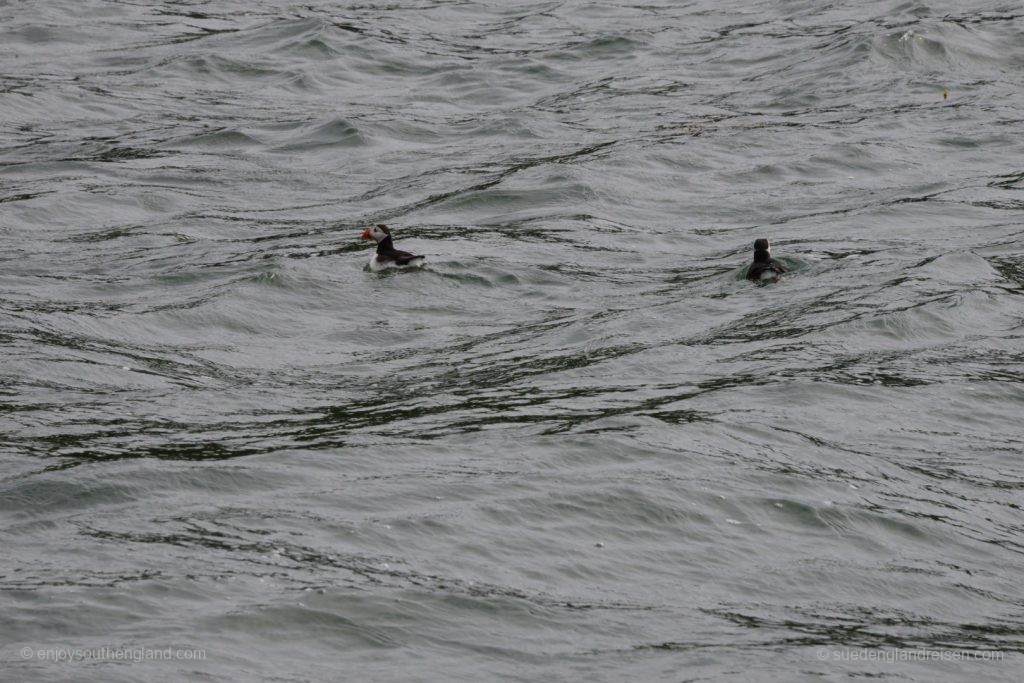
Boat trip to Puffin Island – here with the creatures who gave it its name
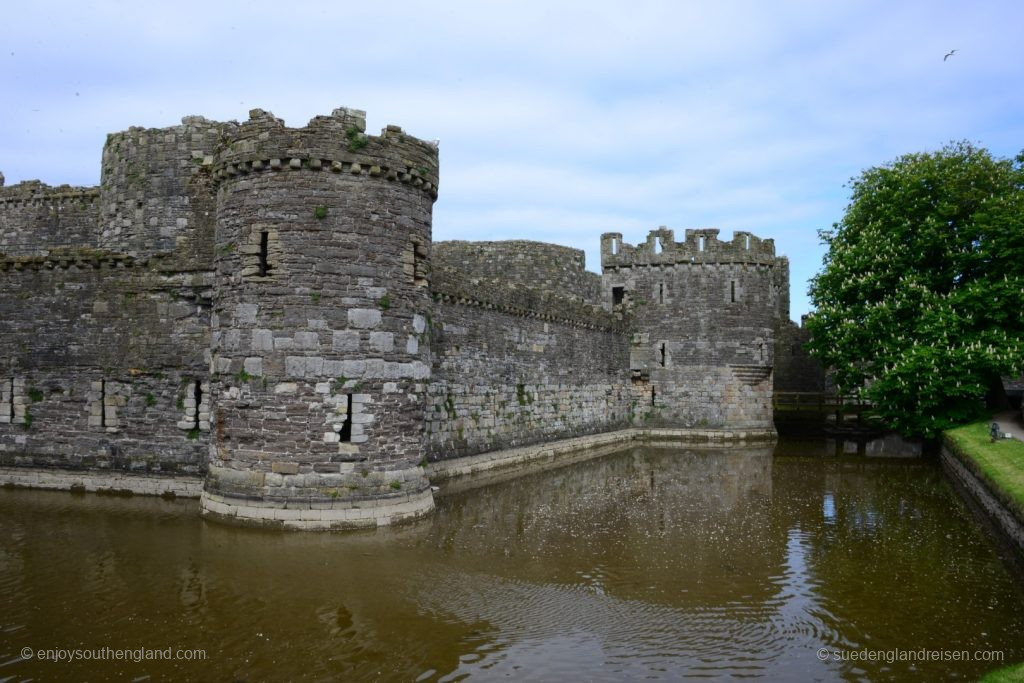
Beaumaris Castle
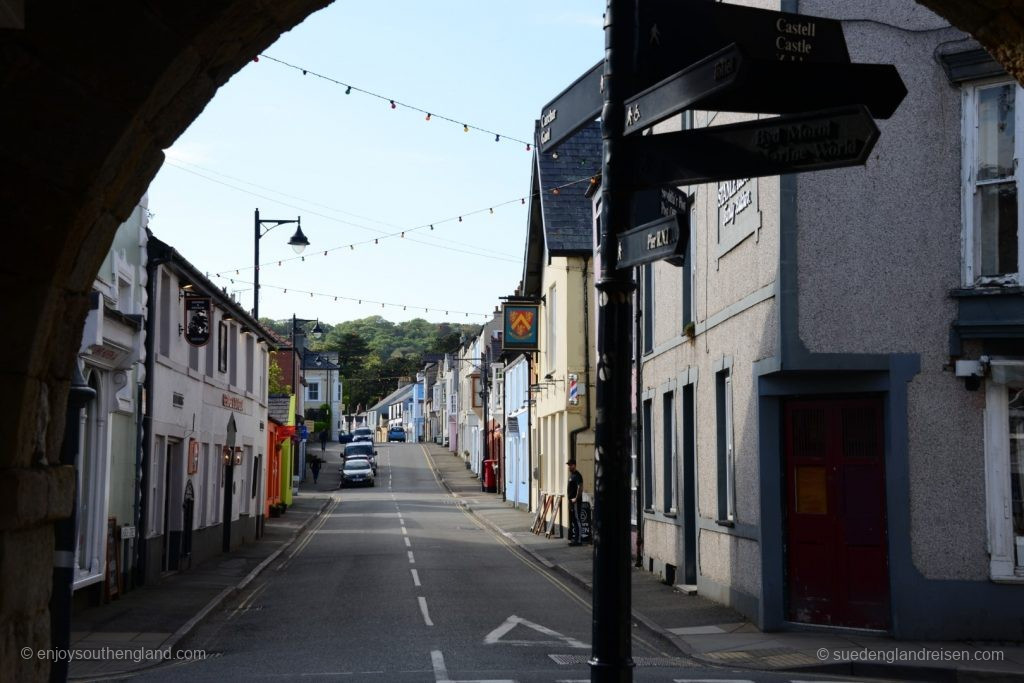
Beaumaris
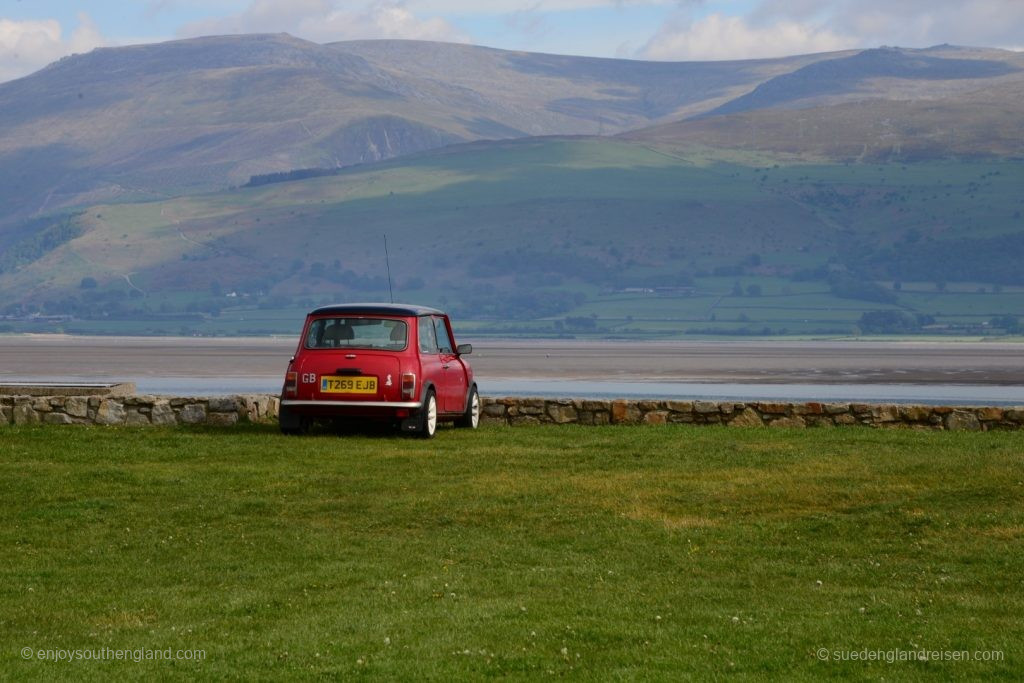
Even little ones have a great longing for high mountains.
Bodnant Garden
The next day takes us back to the mainland of the United Kingdom and to Bodnant Garden (National Trust). This garden is simply incredible in its size, expanse, and vibrant colors. And we say that after having seen well over 150 British gardens!
A must-see for rhododendron enthusiasts! From the formal garden with its house (a palace!), the path leads into a landscape garden. This slopes steeply down into the valley, and we needed well over two hours just for a complete walk around it.
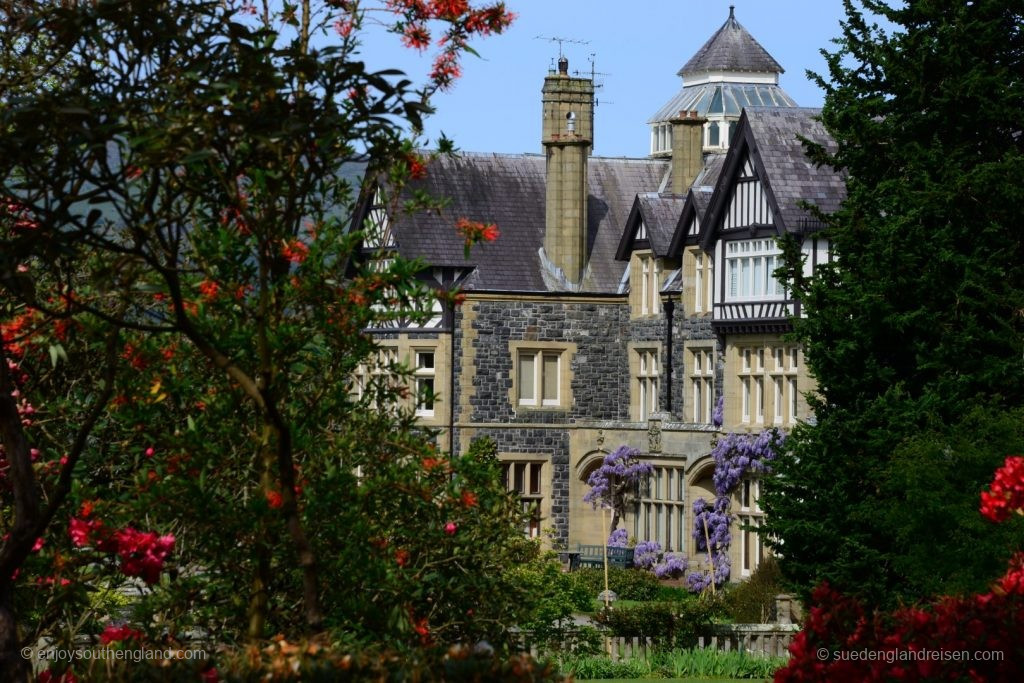
Bodnant Garden
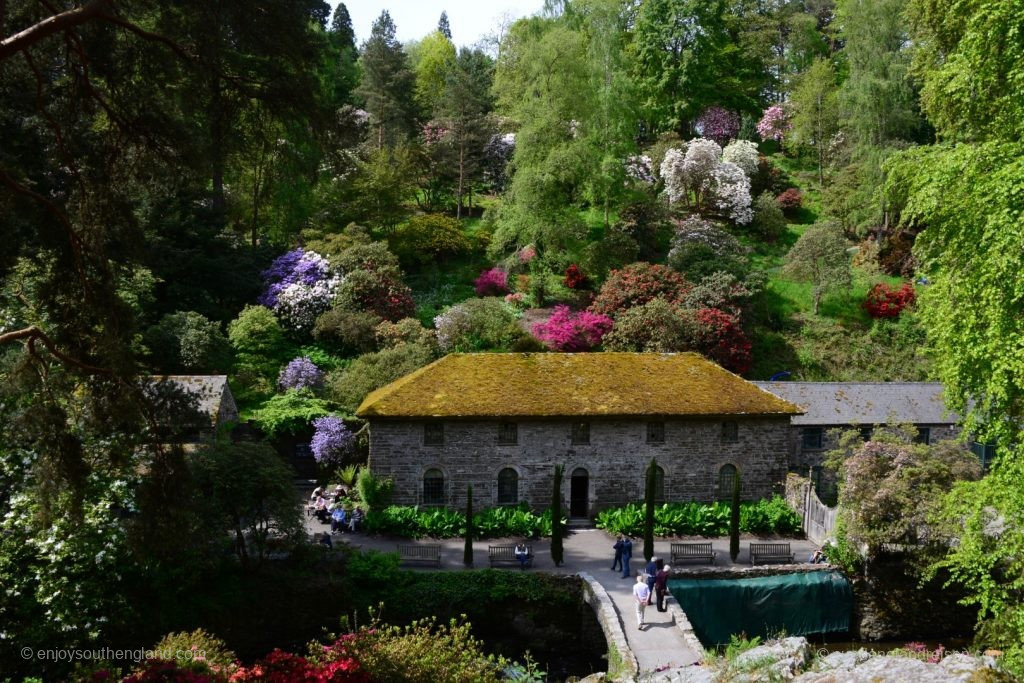
Bodnant Garden
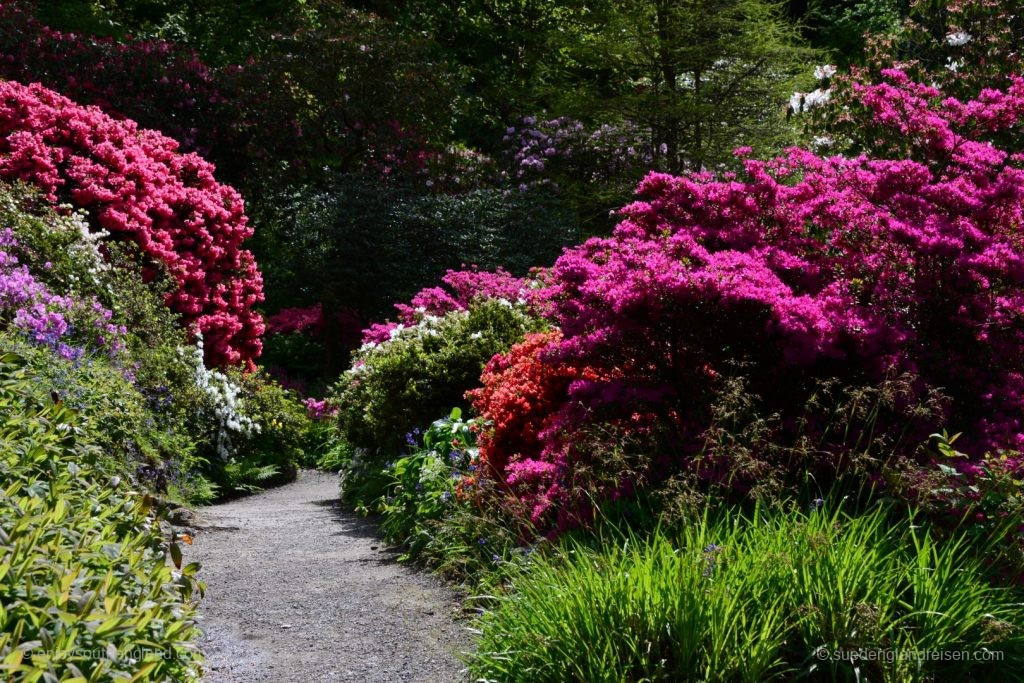
Bodnant Garden
Llandudno & Great Orme Tramway
Unfortunately, we have to move on, as we are expected in Llandudno at the Great Orme Tramway. A report for a German magazine needs to be written, and we will be busy for several hours taking photographs and conducting background interviews.
Afterwards, we strolled a bit through the streets of Llandudno, got some food from the Indian restaurant, and drove back up to the Great Orme to a picnic area where we had a view of bright yellow gorse, deep blue sea, an offshore wind farm, hares, and billy goats while we ate.
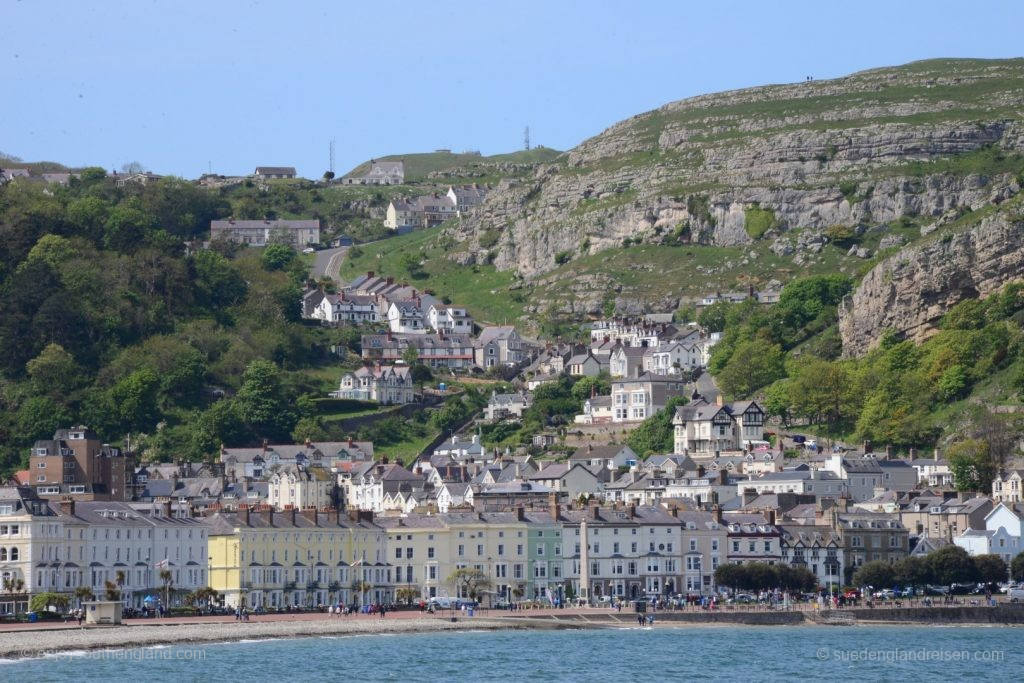
Llandudno
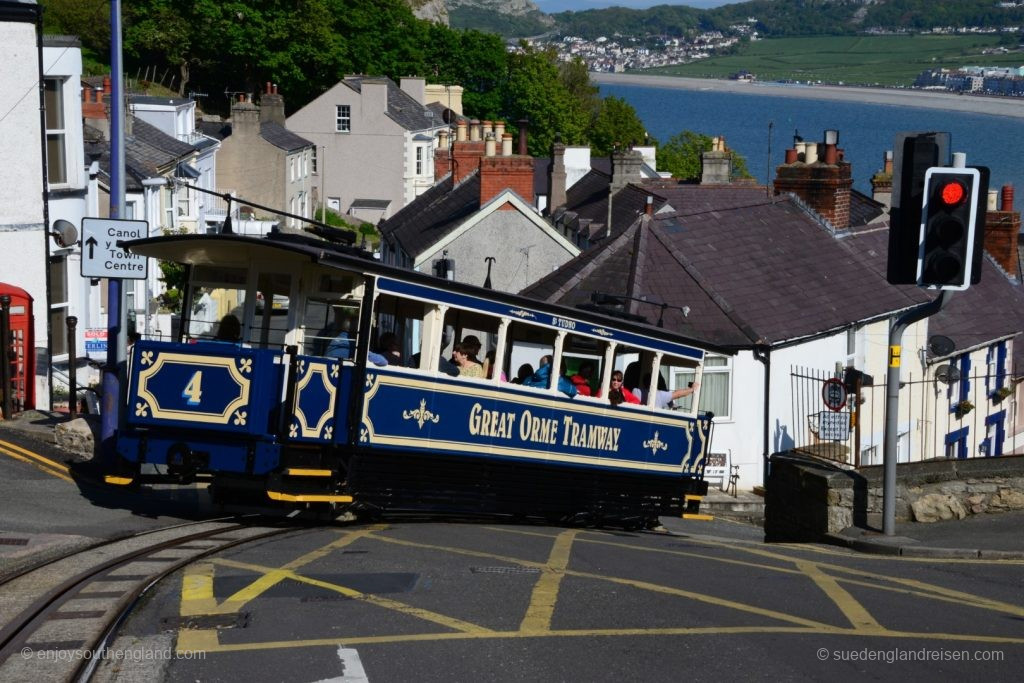
Great Orme Tramway
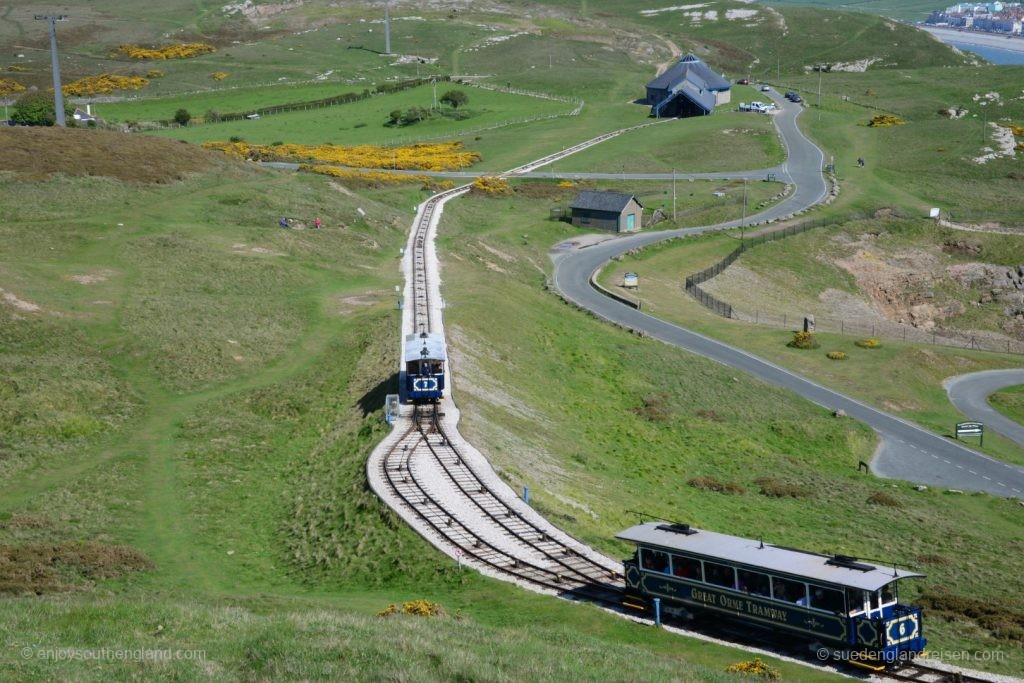
Great Orme Tramway
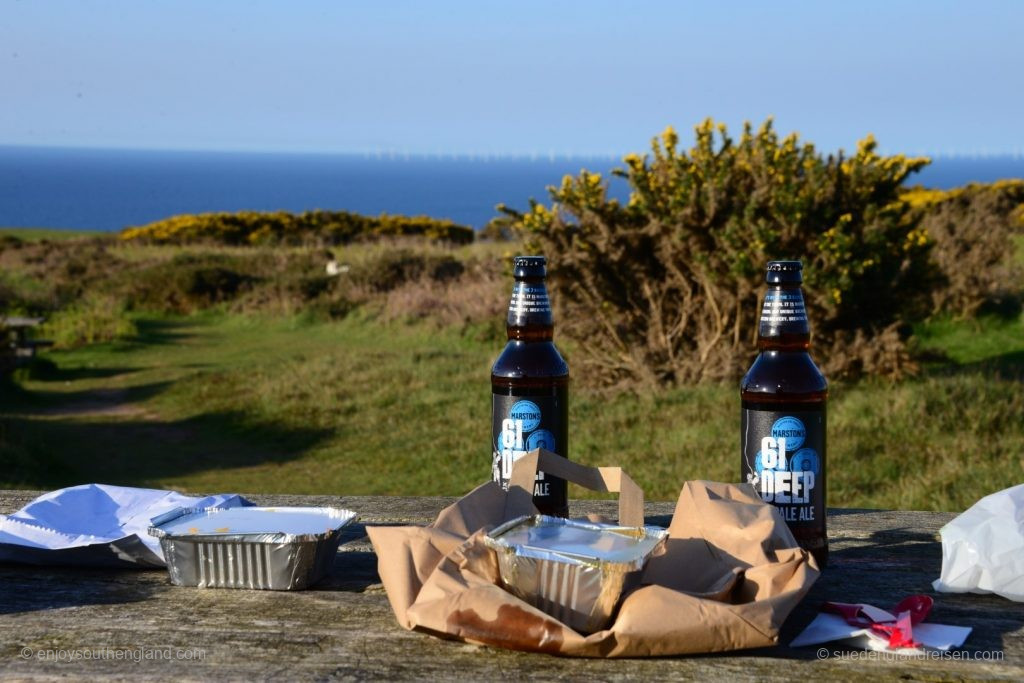
Supper on the Great Orme
From Conwy to Llangollen
The next day we went to Conwy, a charming old town with a city wall that you can even walk along. There’s also an impressive castle, and the bridges offer lovely views of the estuary.
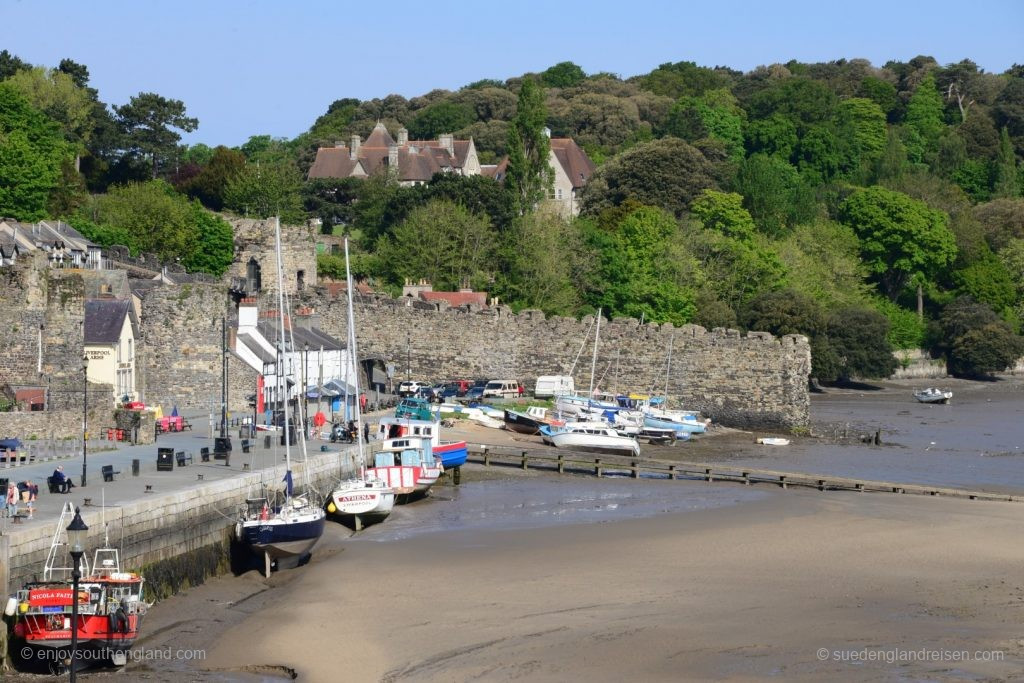
Conwy
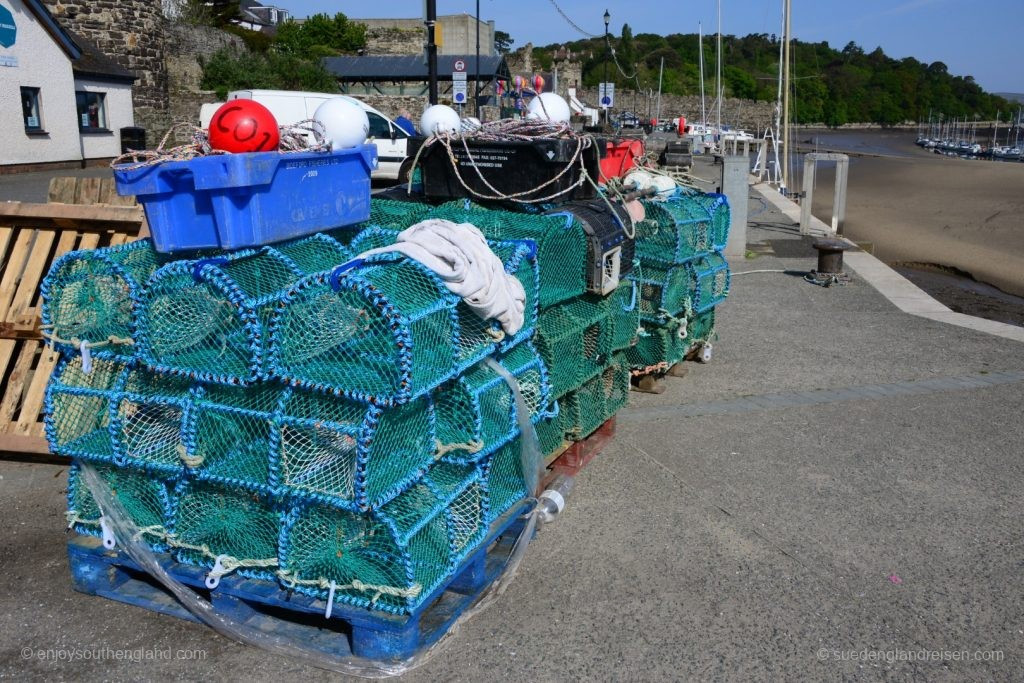
At Conwy Harbour
We continue on to Llanrwst with its beautiful stone bridge and the overgrown, ancient tearoom dating back to 1480, before driving through Gwydir Forest on scenic narrow roads to the Ugly House. We make a brief stop at Swallow Falls, and Betws-y-Coed – a charming little town – is so overrun with tourists that we move on immediately.
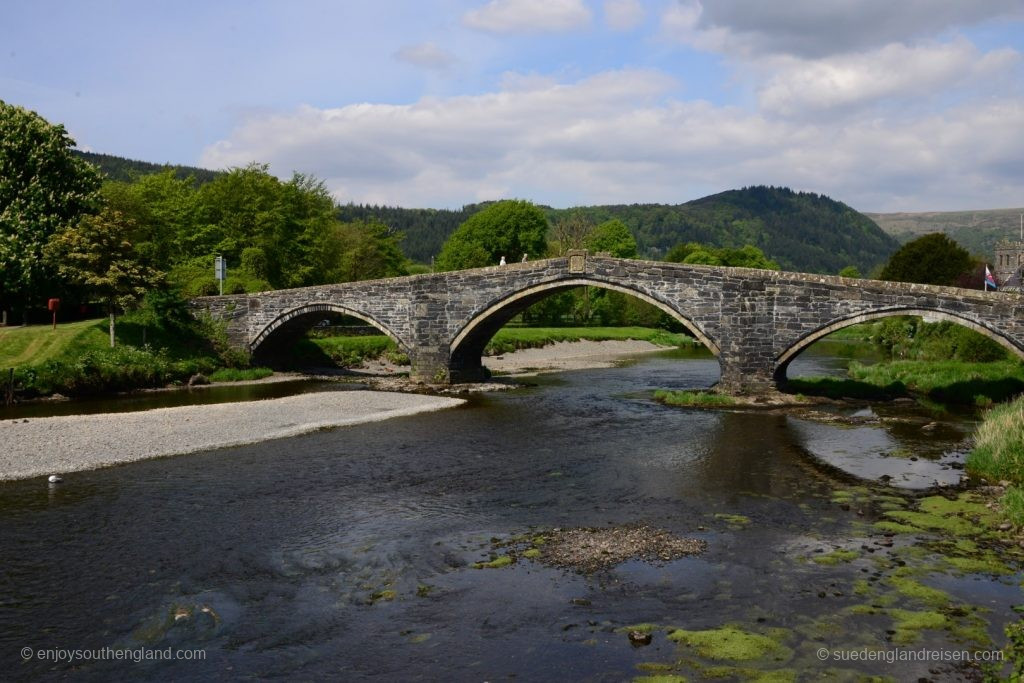
Pen-Y-Bont
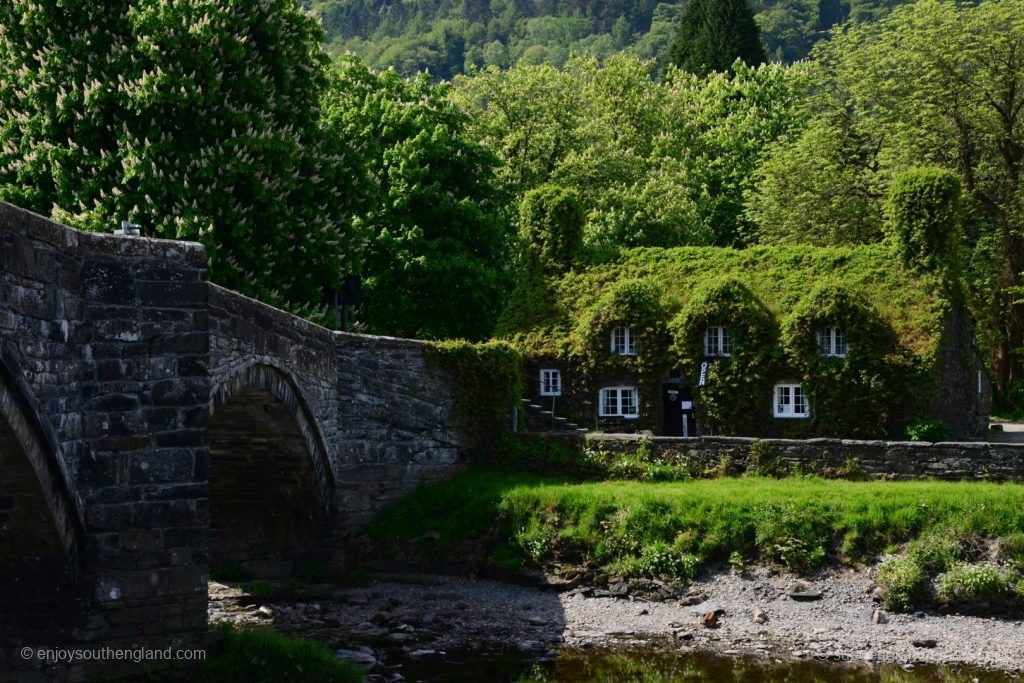
Pen-Y-Bont
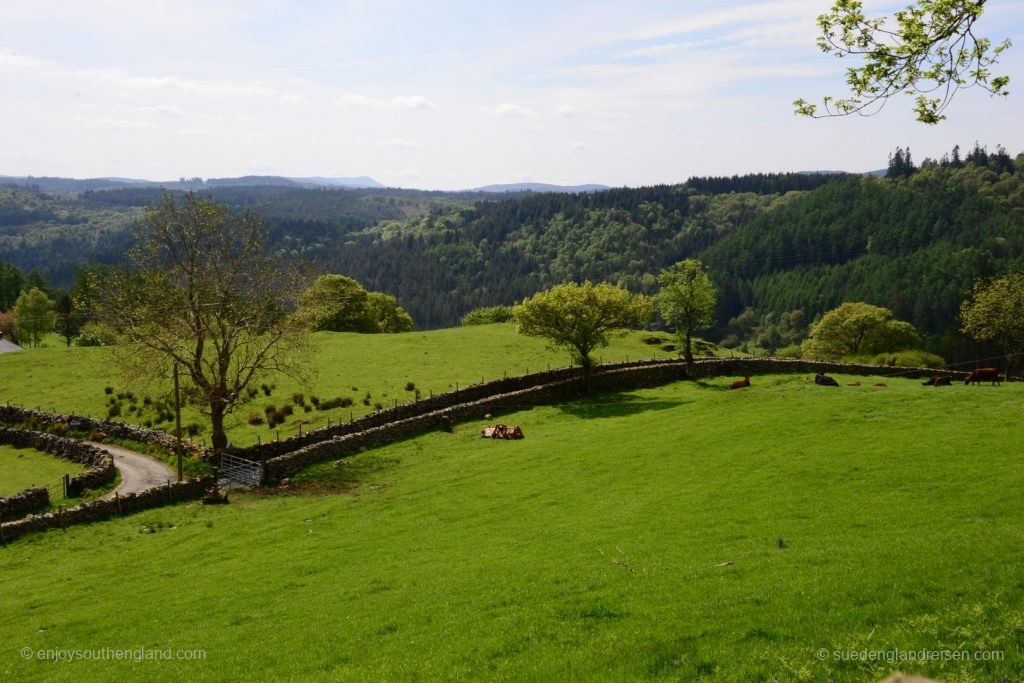
Gwydir Forest
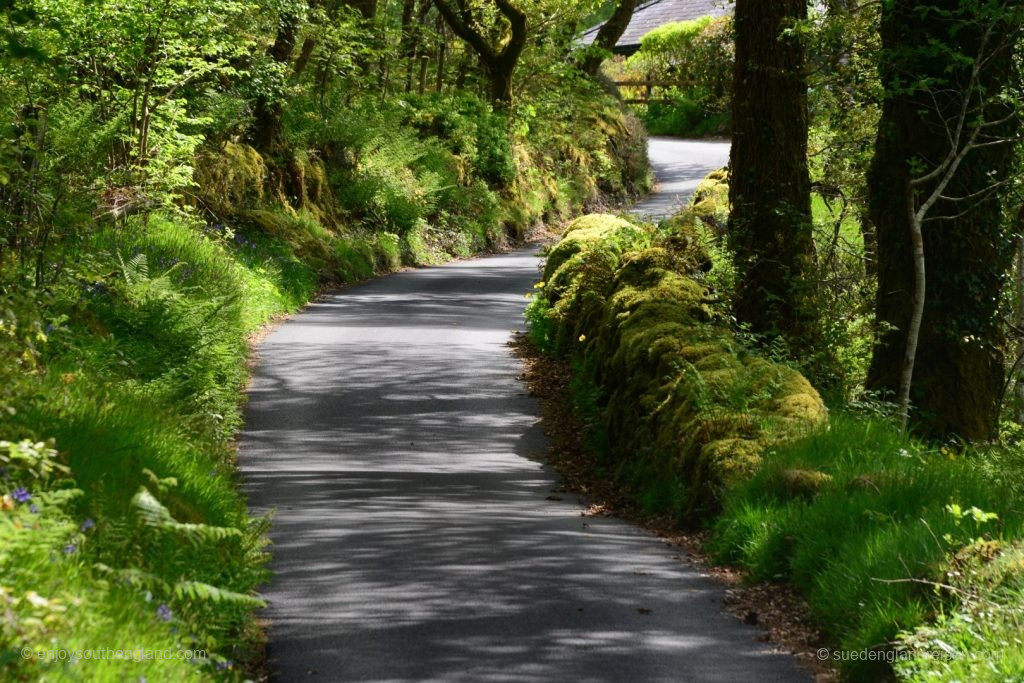
narrow roads in Gwydir Forest
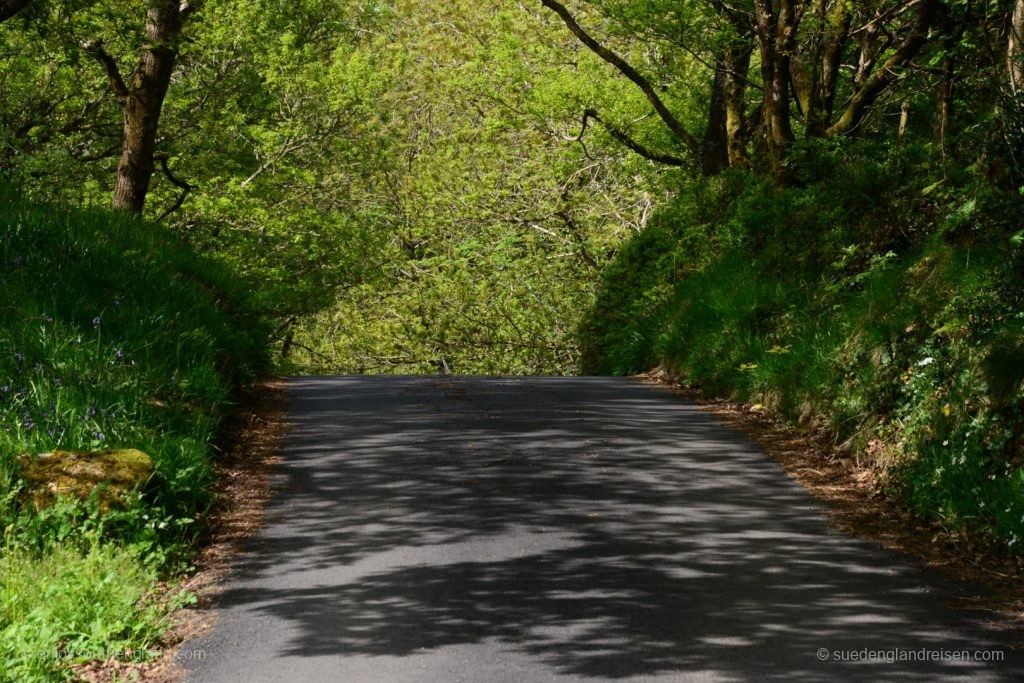
narrow roads in Gwydir Forest
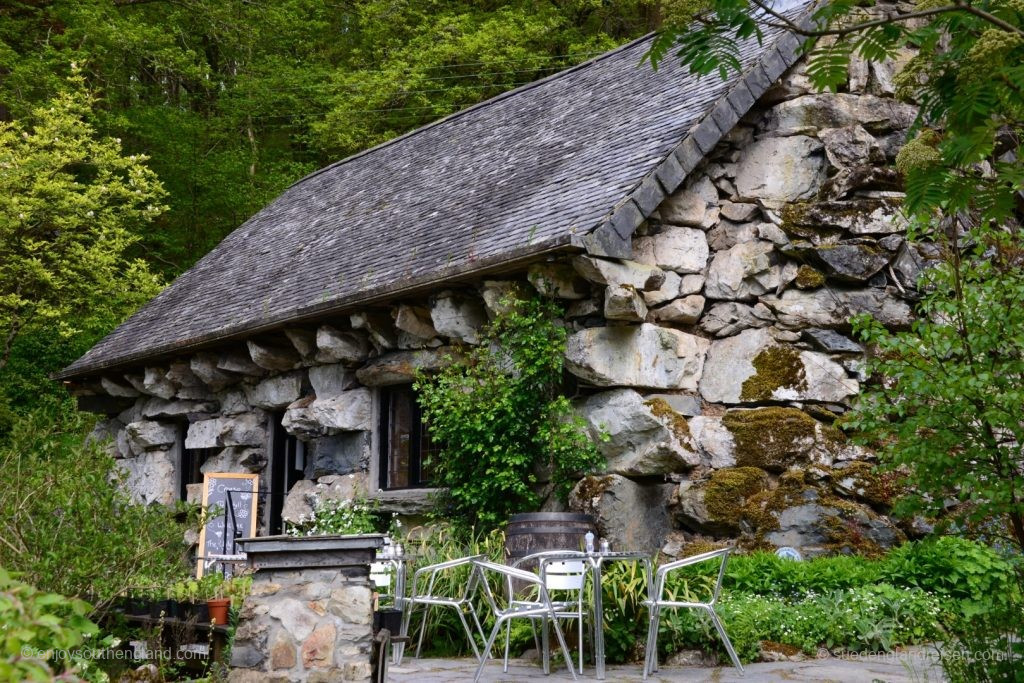
The Ugly Tea-Houe
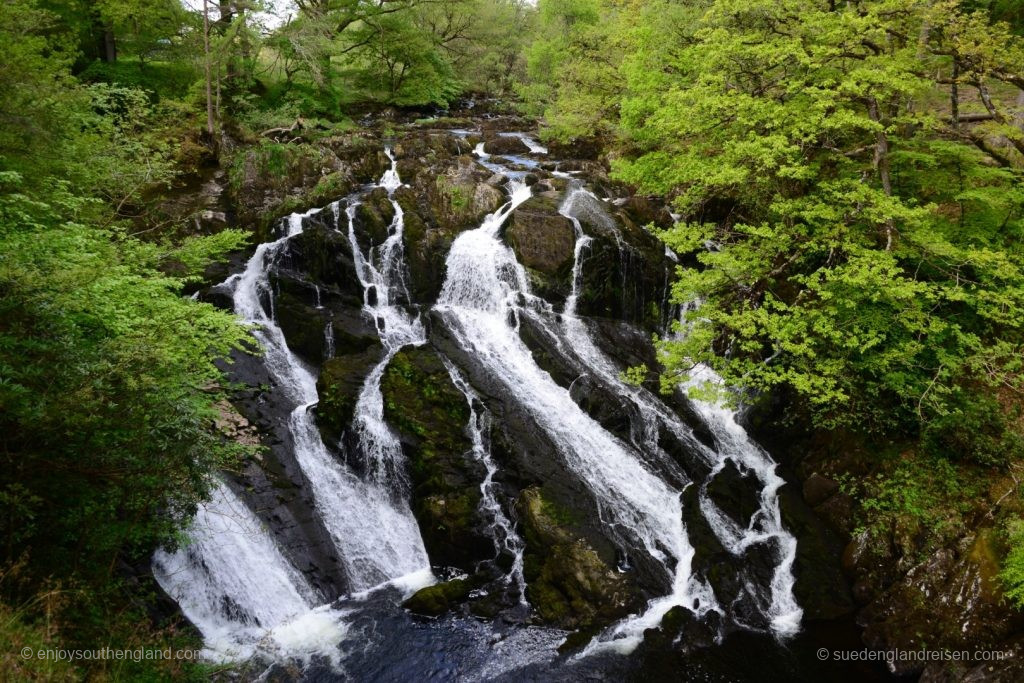
Swallow Falls
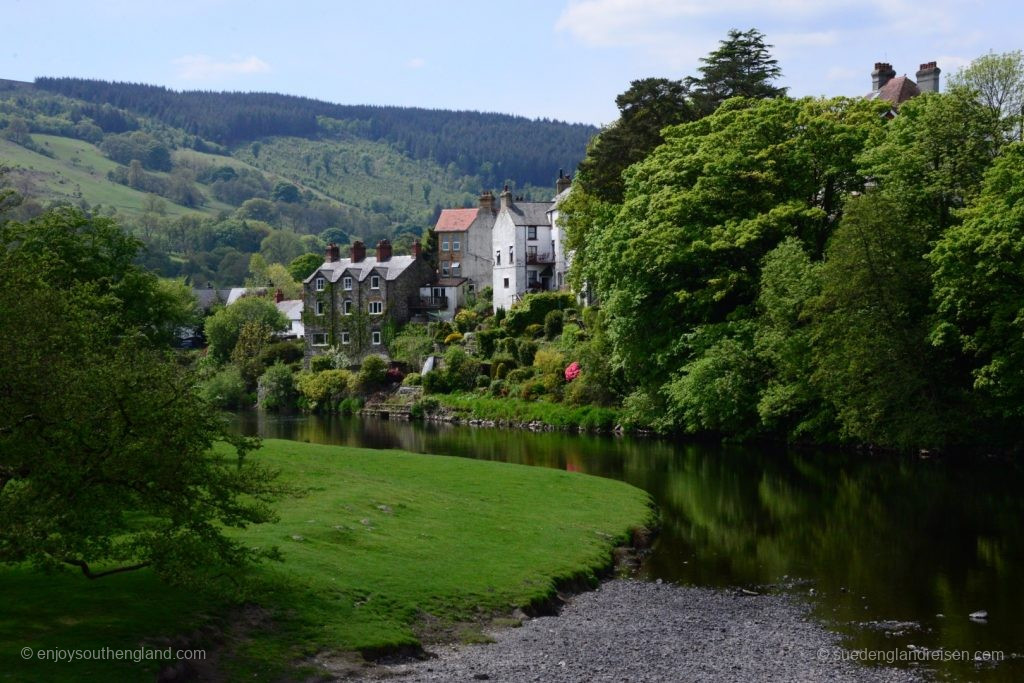
Carrog
The destination of this rather long day’s hike is Llangollen, considerably further south and near the English border. Pleasant, but also too touristy for our taste. However, one of the beautiful canals begins here, which we follow on a 3.5 mile walk to the Horseshoe Falls.
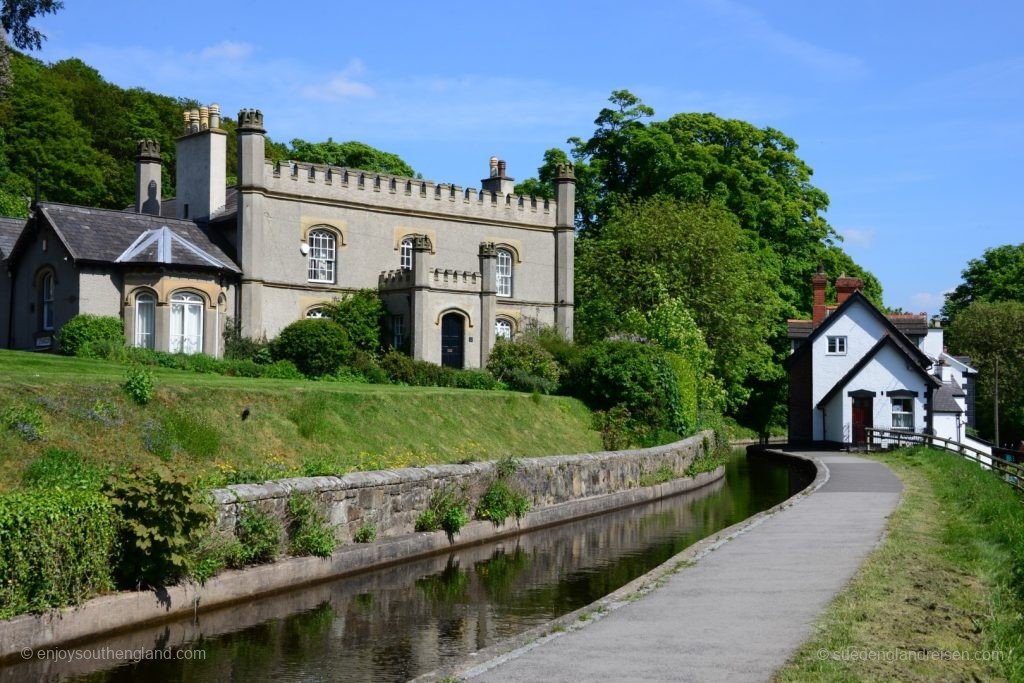
on the canal in Llangollen
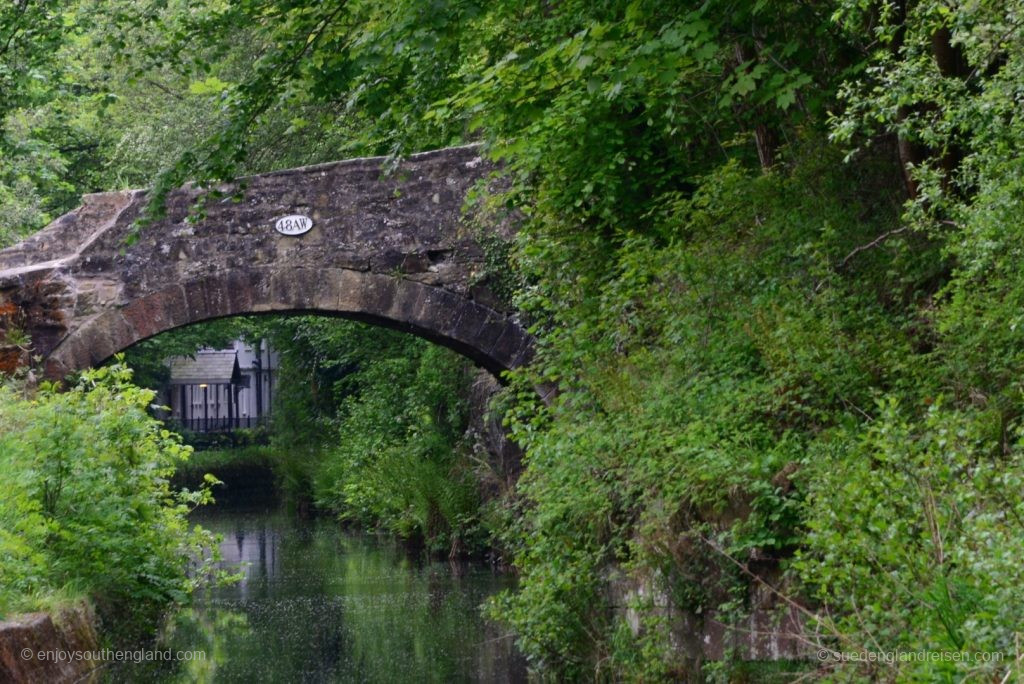
along Llangollen Canal to the Horseshoe-Falls
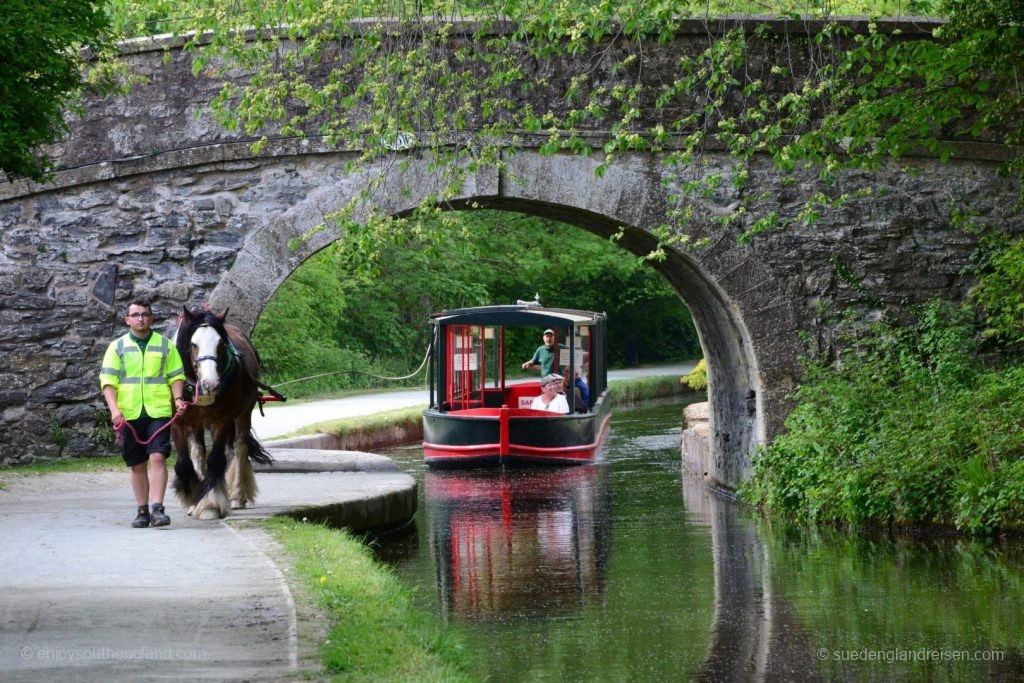
along the canal to the Horseshoe Falls
Pontcycyllte Aquaeduct
In the evening, we made a quick trip to the Pontcysyllte Aqueduct (https://www.pontcysyllte-aqueduct.co.uk/) for a wonderful dinner in the beer garden of the local pub. Tip: The lamb’s liver and especially the faggots were fantastic. Finally, we drove up to Horseshoe Pass in the last light of the evening to watch the sunset.
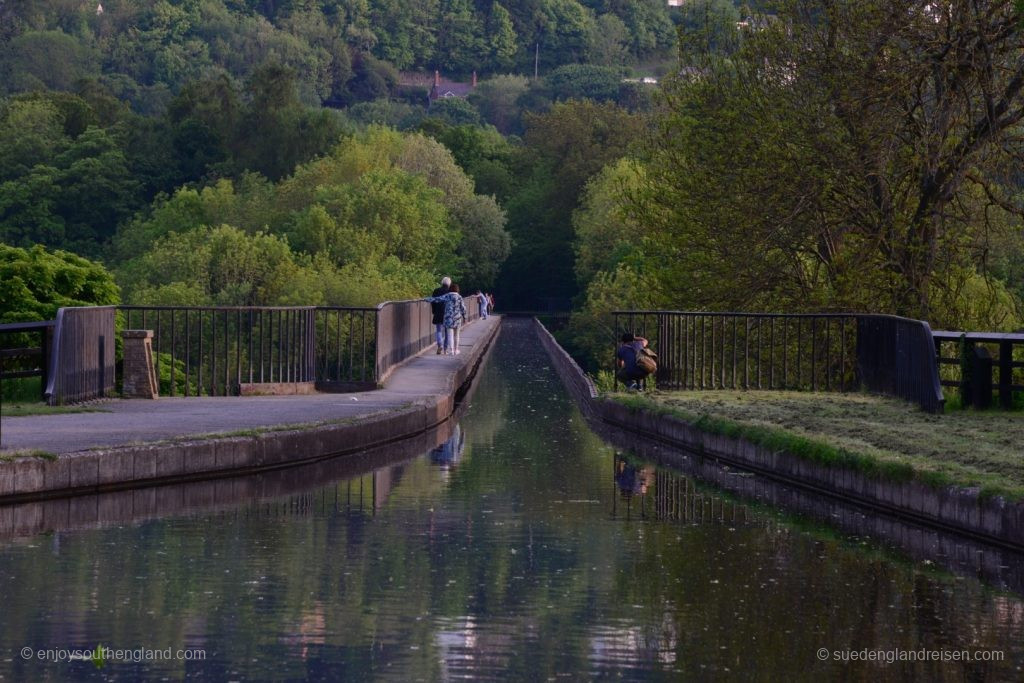
Pontcycyllte Aquaeduct
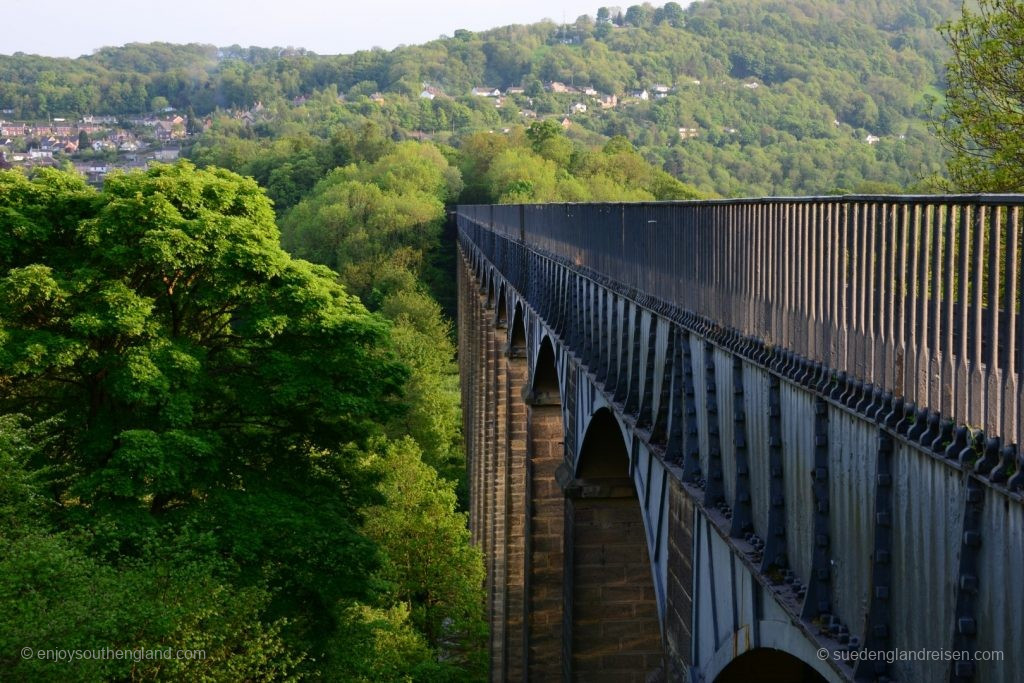
Pontcycyllte Aquaeduct
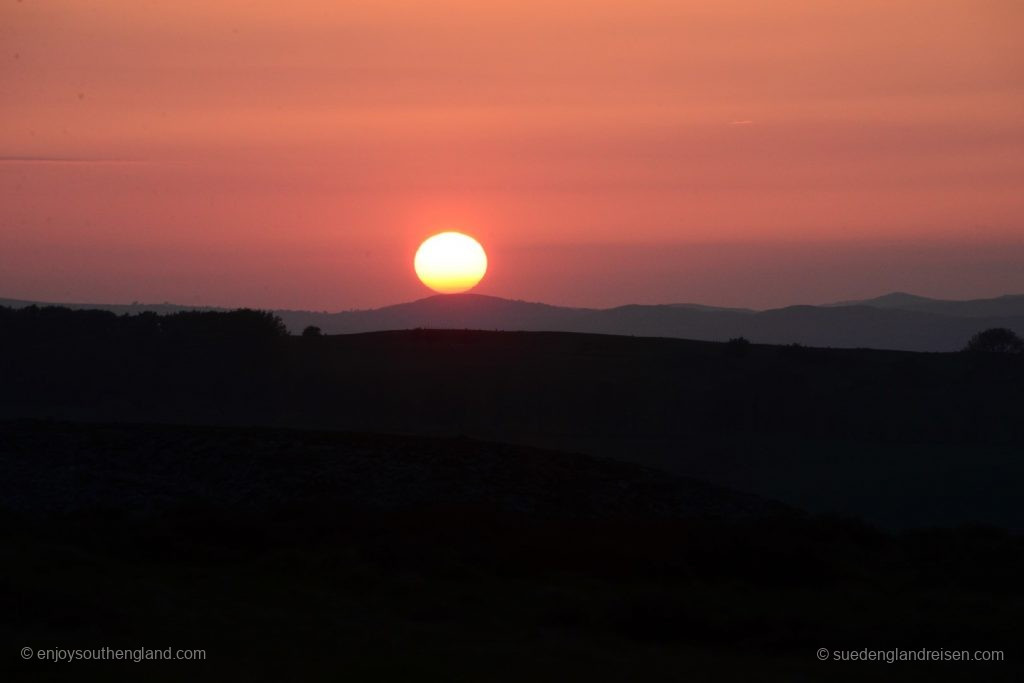
Sunset at Horseshoe Pass
It’s Saturday, May 19, 2018 – the day of Prince Harry and Meghan Markle’s wedding. We take a beautiful hike along the canal and back over the mountain, so we don’t experience much of the “wedding madness.” But at least half the country is spending the day together in front of the television. Lucky for us!
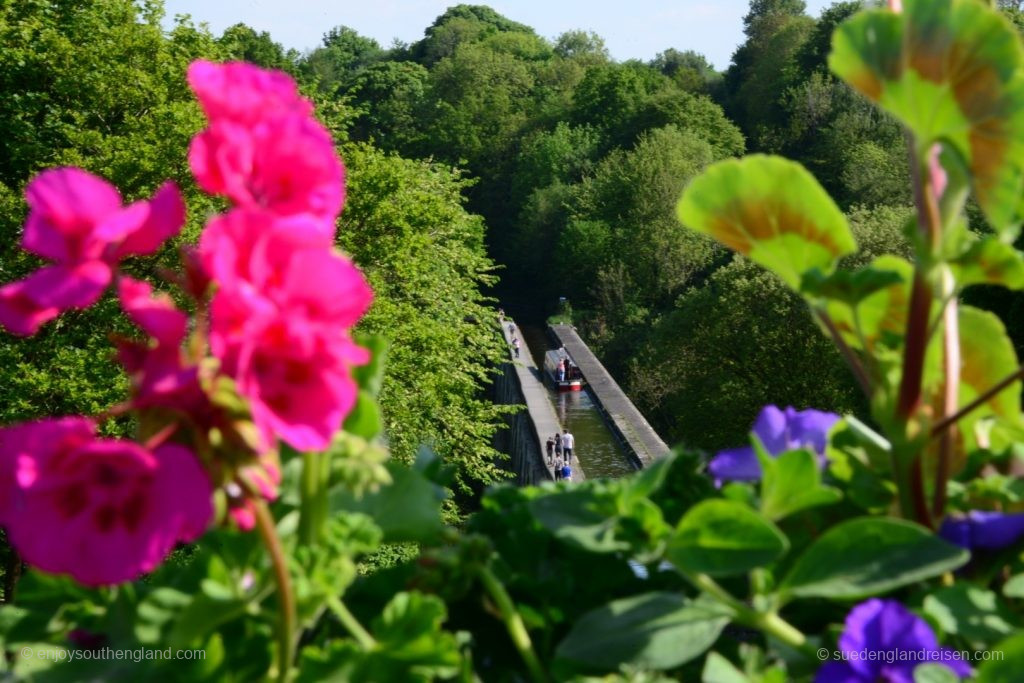
In the afternoon, we took a narrowboat trip to the Pontcysyllte Aqueduct – simply wonderful, gliding through the countryside at a leisurely 4 mph (approx. 6.5 km/h) and chatting with our skipper. The highlight was crossing the 40-meter-high aqueduct, built in 1805, with its cast-iron channel for canal boats. It’s a UNESCO World Heritage Site – also designed by Thomas Telford, by the way. Very close by, and equally impressive, is the Chirk Aqueduct, located right between England and Wales, with its ship tunnel, and then Chirk Castle.
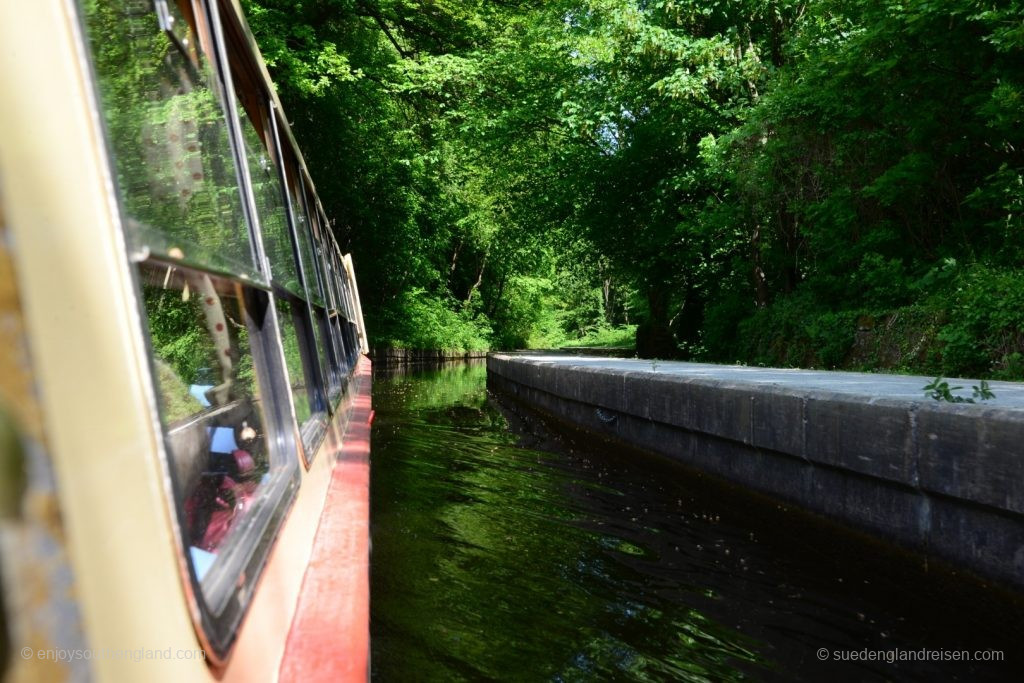
Boat trip on the Llangollen Canal to the Pontcysyllte Aqueduct
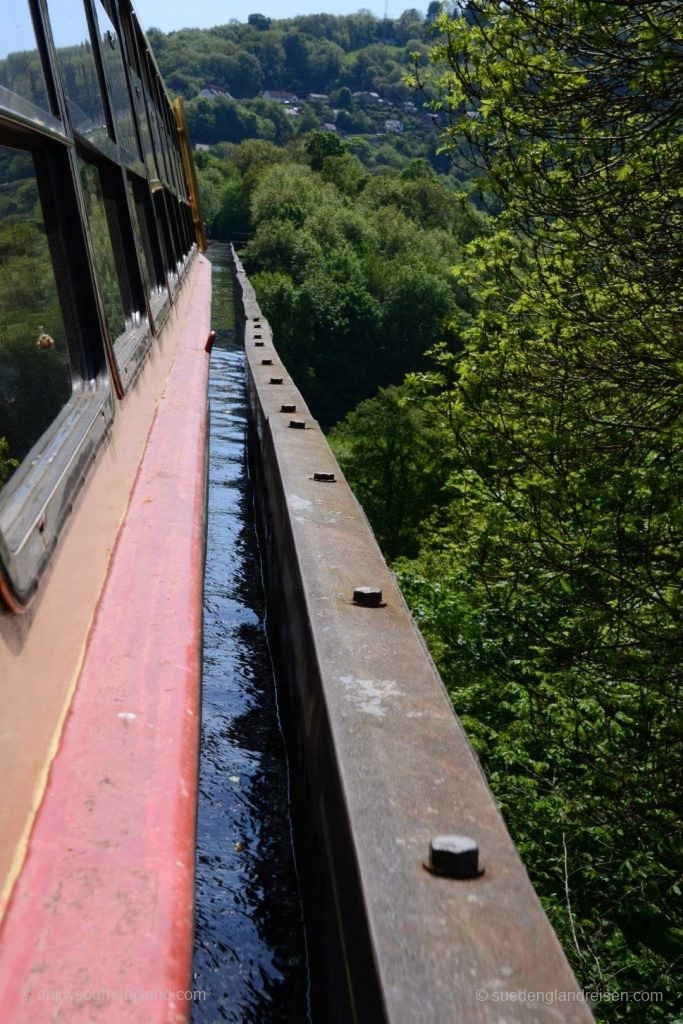
Boat trip on the Pontcycyllte Aqueduct
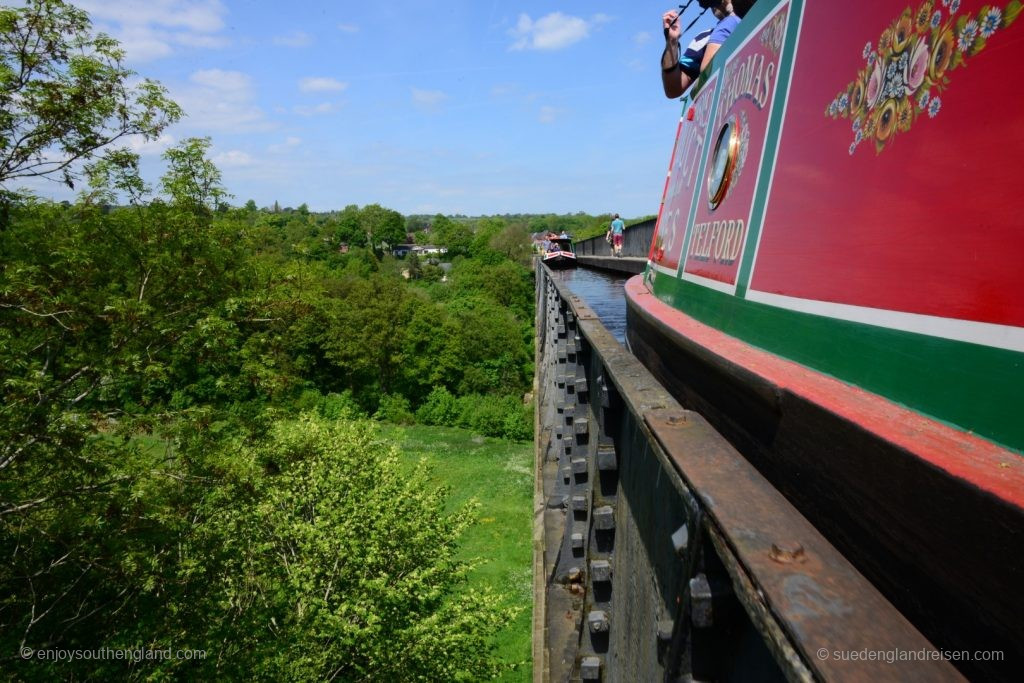
Boat trip on the Pontcycyllte Aqueduct
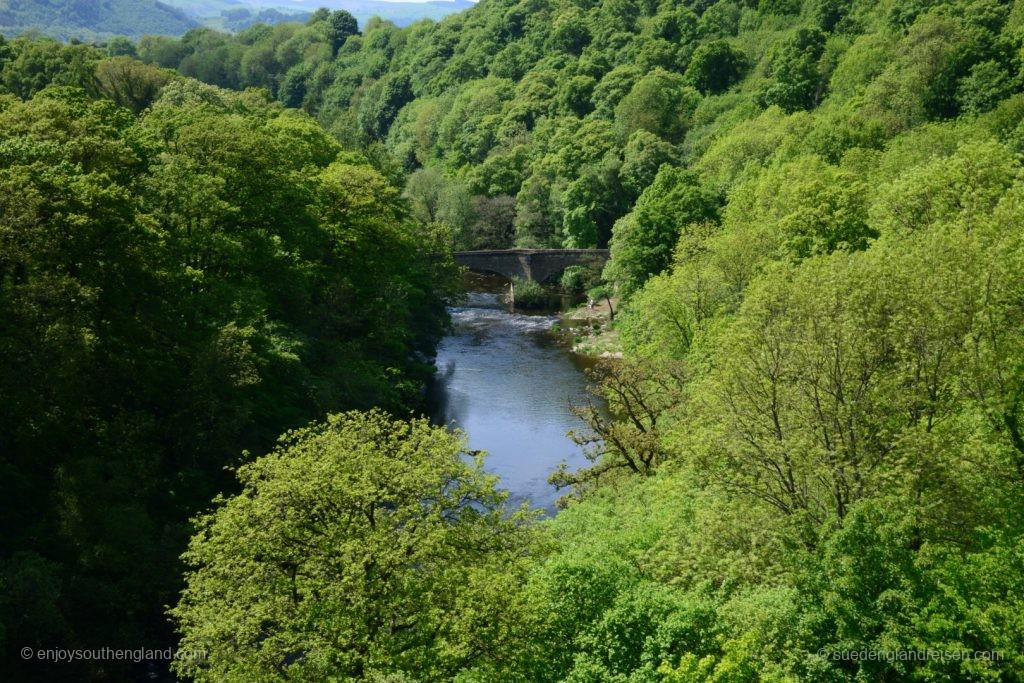
View from Pontcycyllte Aqueduct
Chirk Aquaeduct
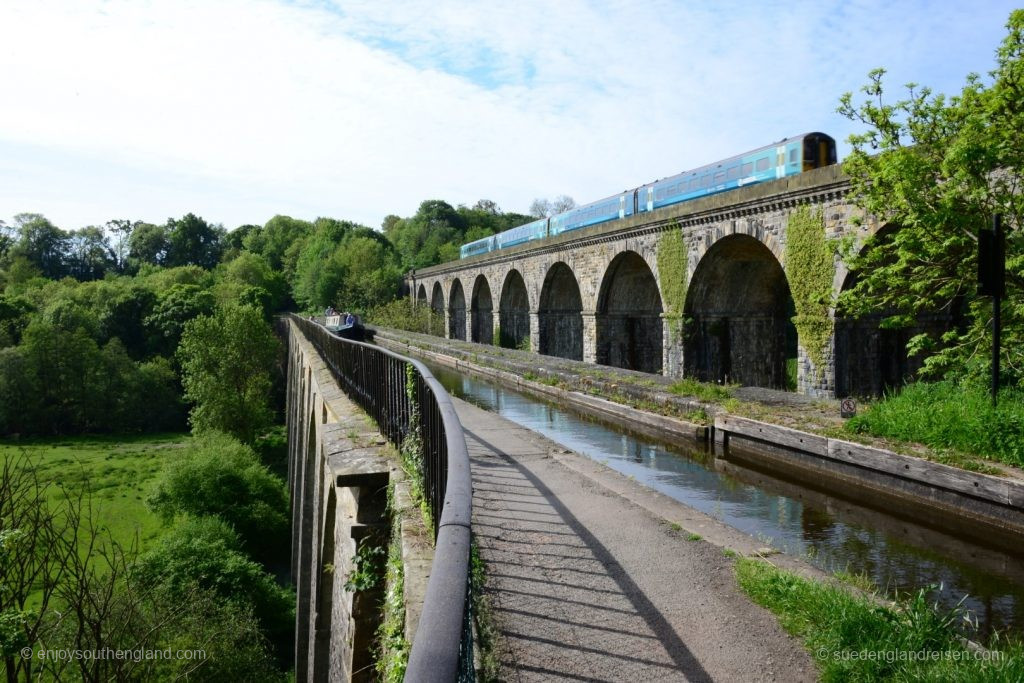
Chirk Aquaeduct & Viaduct with two classic modes of transport
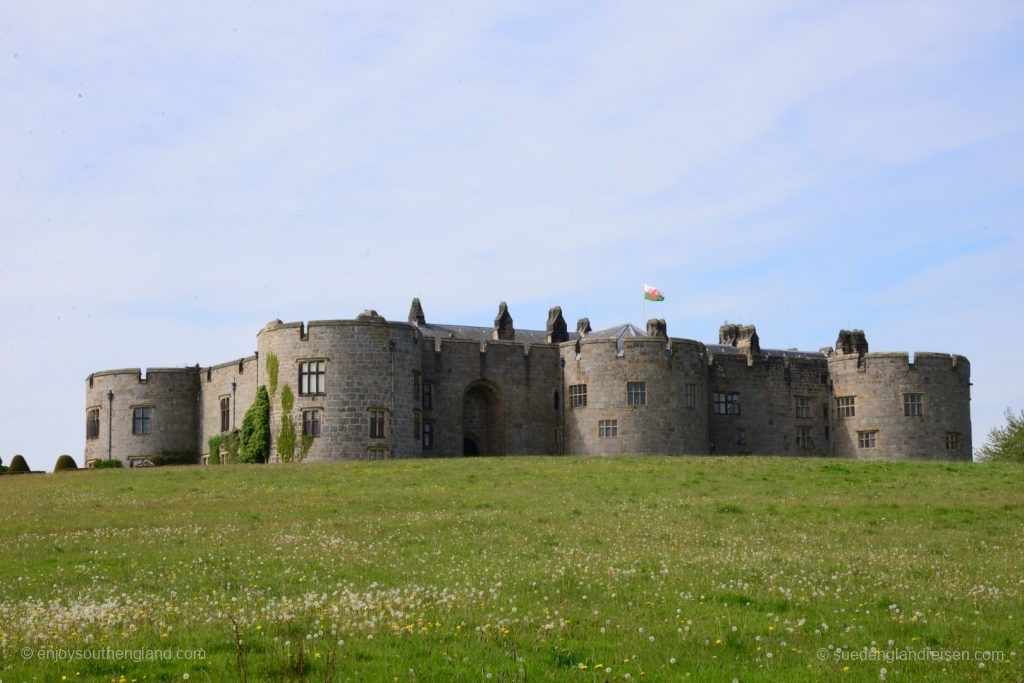
Chirk Castle looms imposingly.
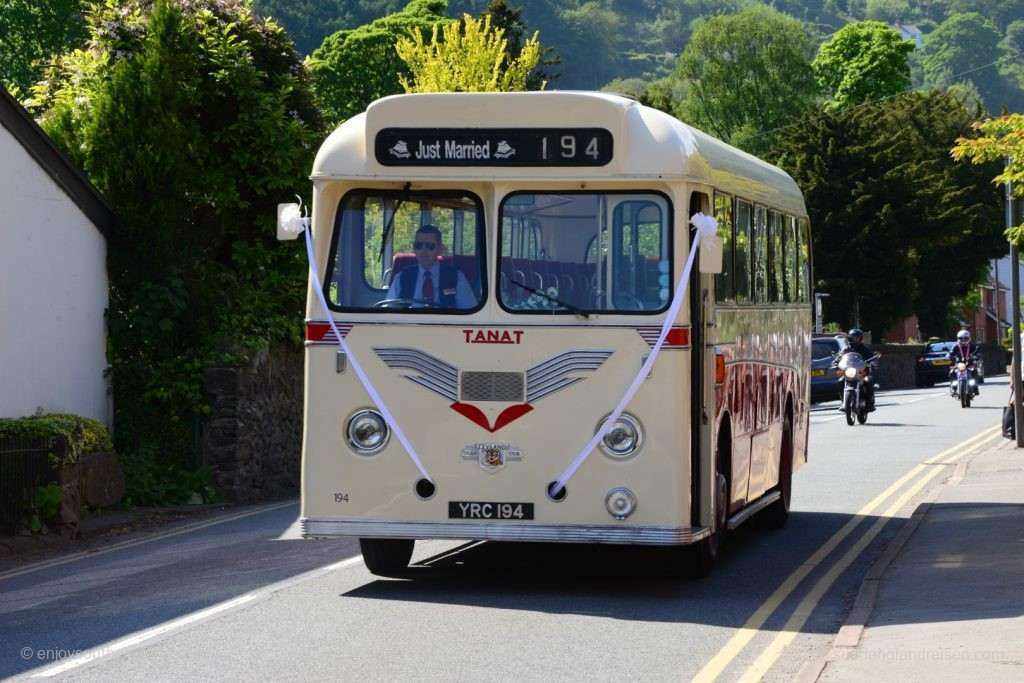
Vintage bus with style
Southwards to Welshpool
After all the hustle and bustle and early industrial history, we wanted something a bit more rural. So we sought out the sleepy Llanarmon Dyffryn Ceiriog, surrounded by beautiful countryside. The roads were often very rough minor roads. We continued on to Llanrhaeadr and then to the Pistyll Rhaeadr Waterfall. But the cars and crowds there, as well as the 4 GBP entrance fee, made us flee again, and we headed directly to Llanfair Caereinion to ride the Welshpool and Llanfair Light Railway, which we were eager to experience. Traveling in Hungarian carriages and those of the Austrian Zillertalbahn brought back a feeling of home. A pleasant, short journey through a beautiful, though not spectacular, landscape. Speaking of which, here’s a local tip: The Raven Inn in Welshpool, right next to the train station, with a lovely beer garden surrounded by greenery.
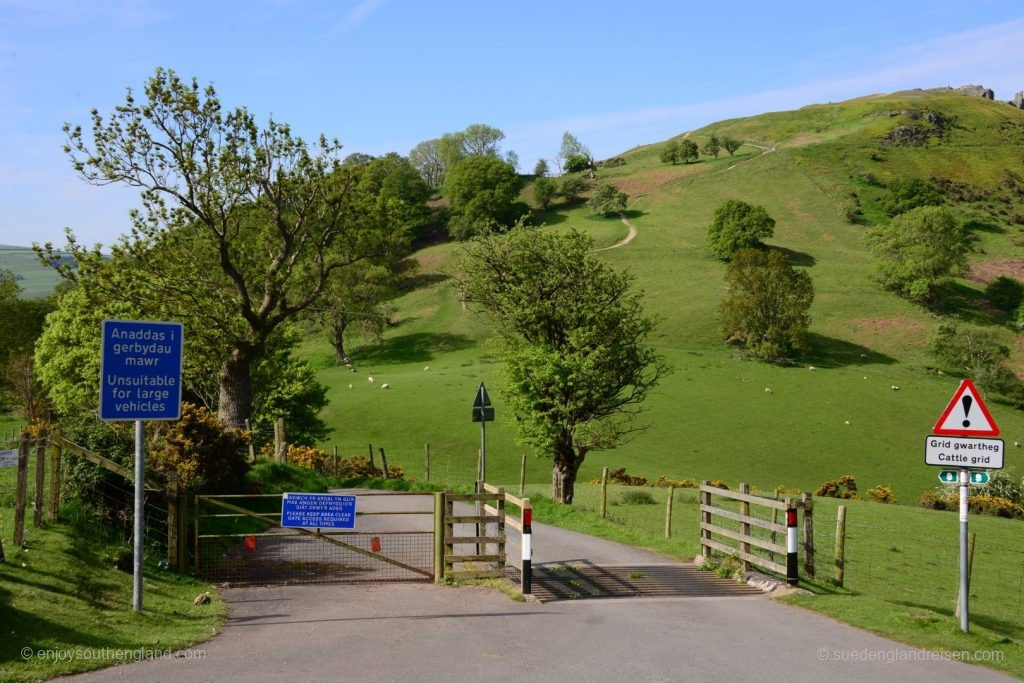
near Llangollen
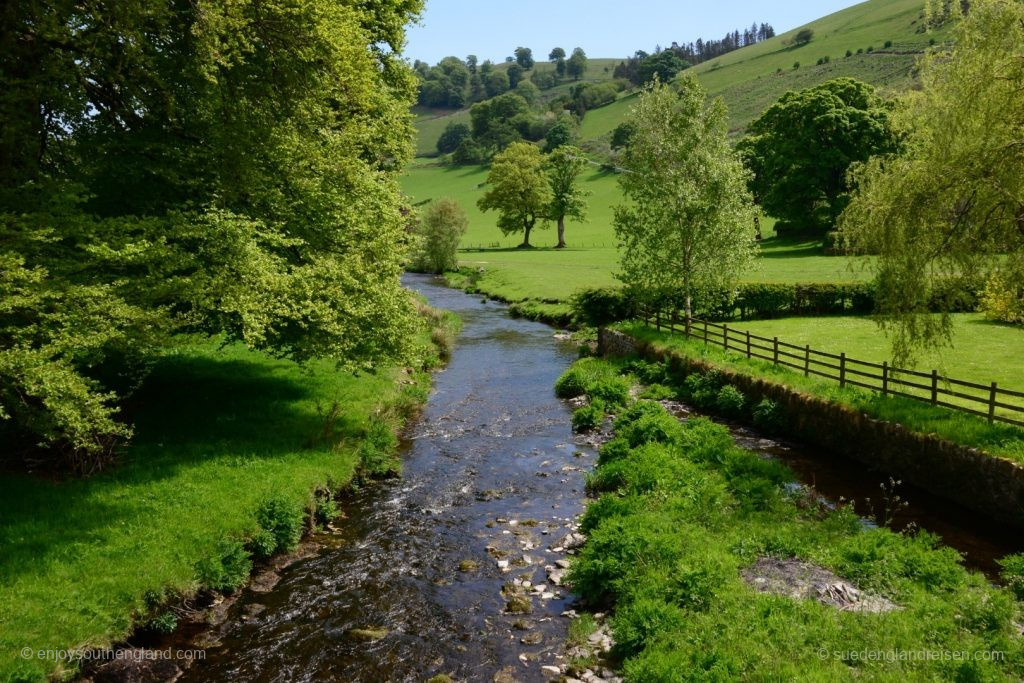
near Llanarmon Dyffryn Ceiriog

near Llanarmon Dyffryn Ceiriog
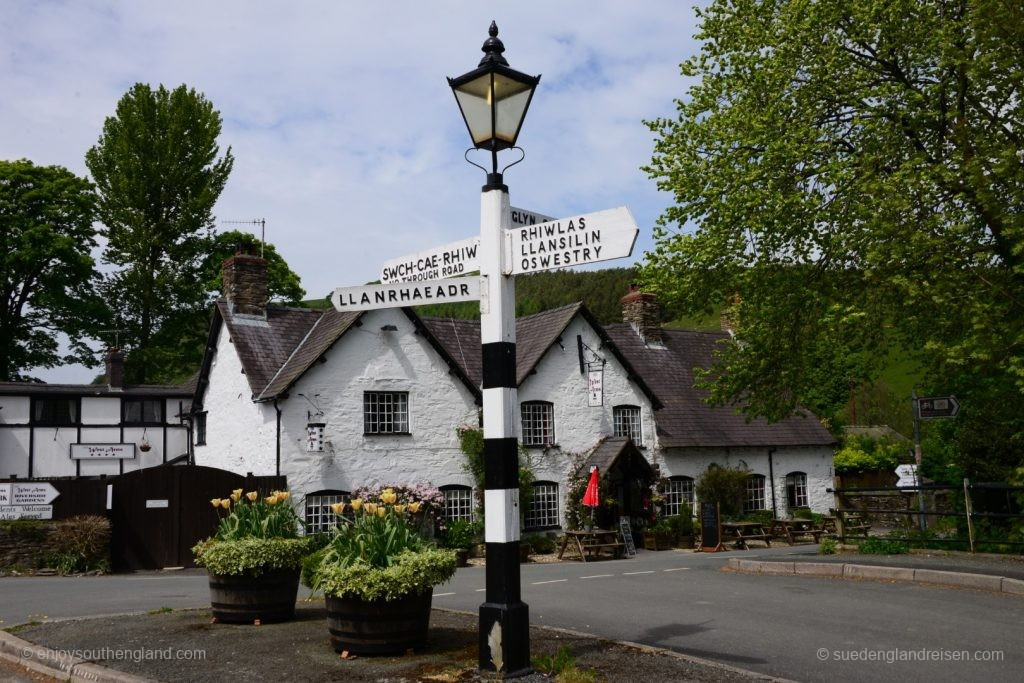
Llanarmon Dyffryn Ceiriog
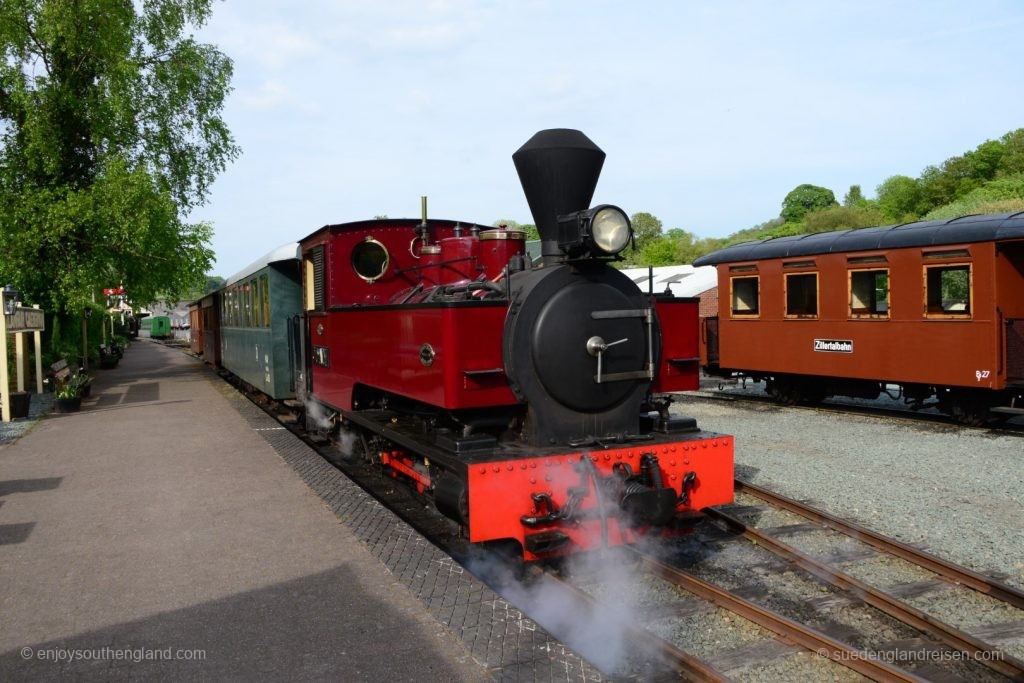
Welshpool and Llanfair Light Railway
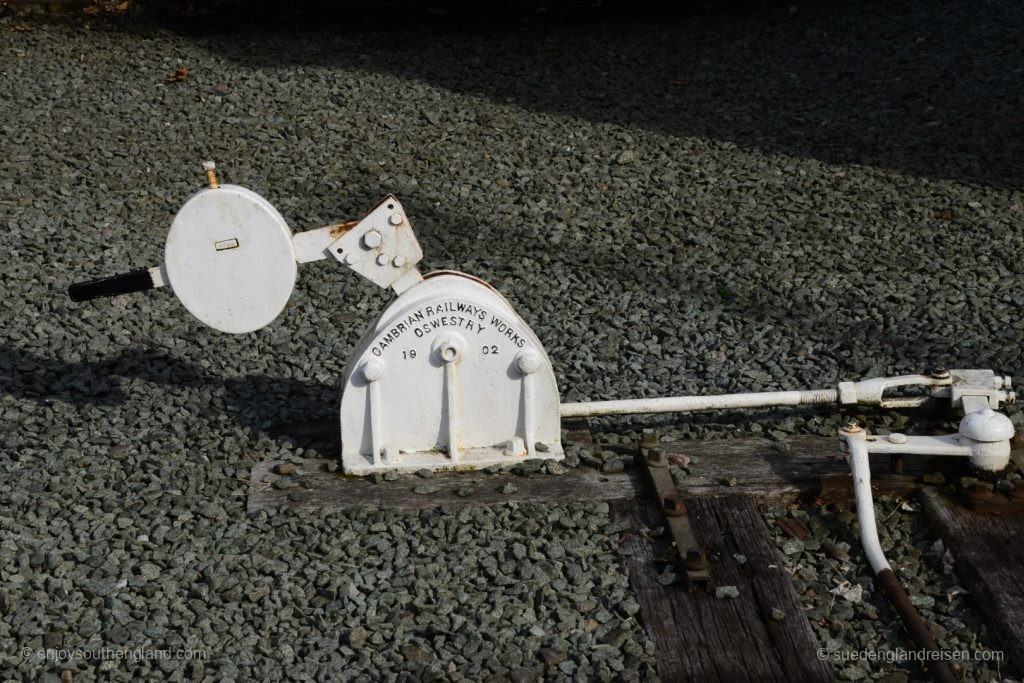
Detail an der Welshpool and Llanfair Light Railway
Back to England via Powis Castle
Powis Castle is our last stop in Wales, and then we head south to Hergest Croft Garden. The route there, via the A483, meanders through beautiful countryside. In the lovely garden, we enjoy cream tea and chocolate cake to fortify ourselves for the final leg of our journey to the Cotswolds in England. There, we’ll visit Stratford-upon-Avon, Shakespeare’s birthplace, and the Batsford Arboretum before heading back to Heathrow Airport and home.
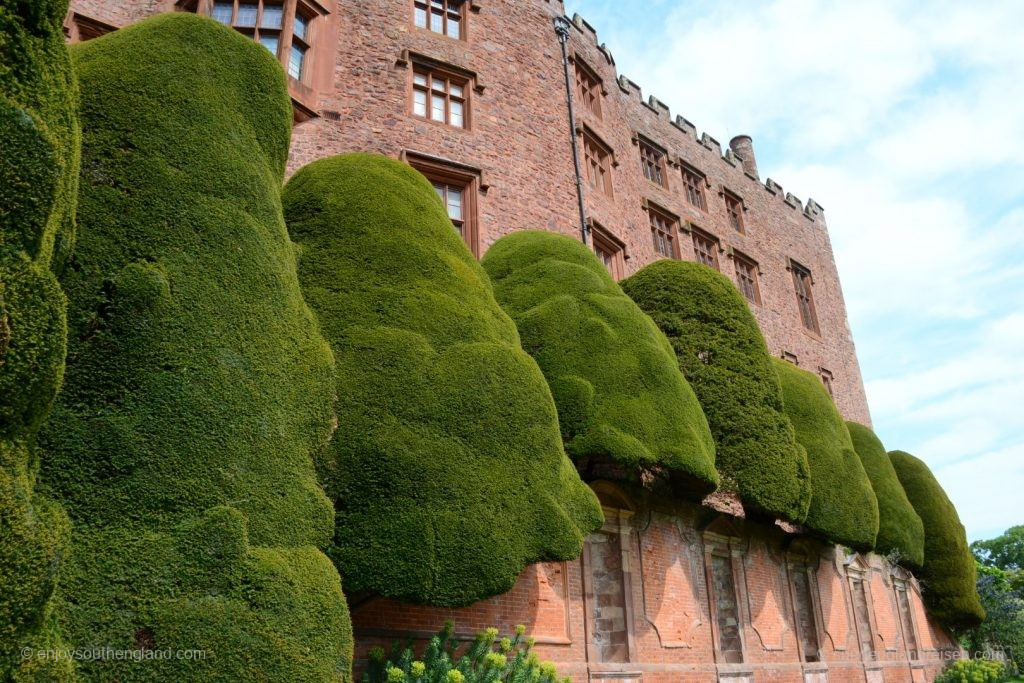
Powis Castle with its fantastic hedges
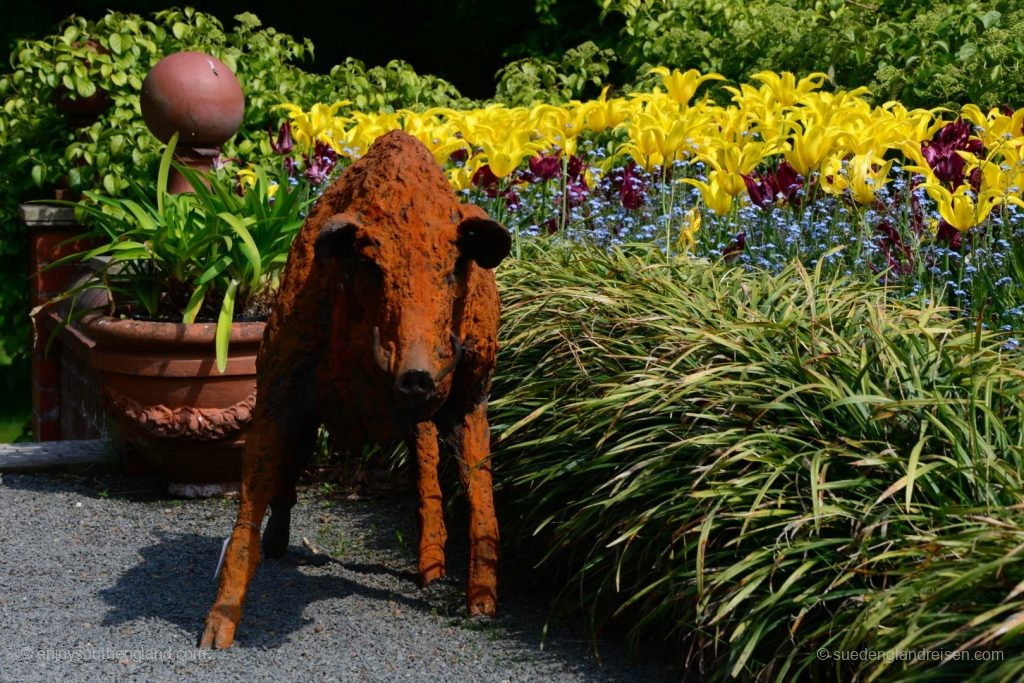
Hergest Croft Garden
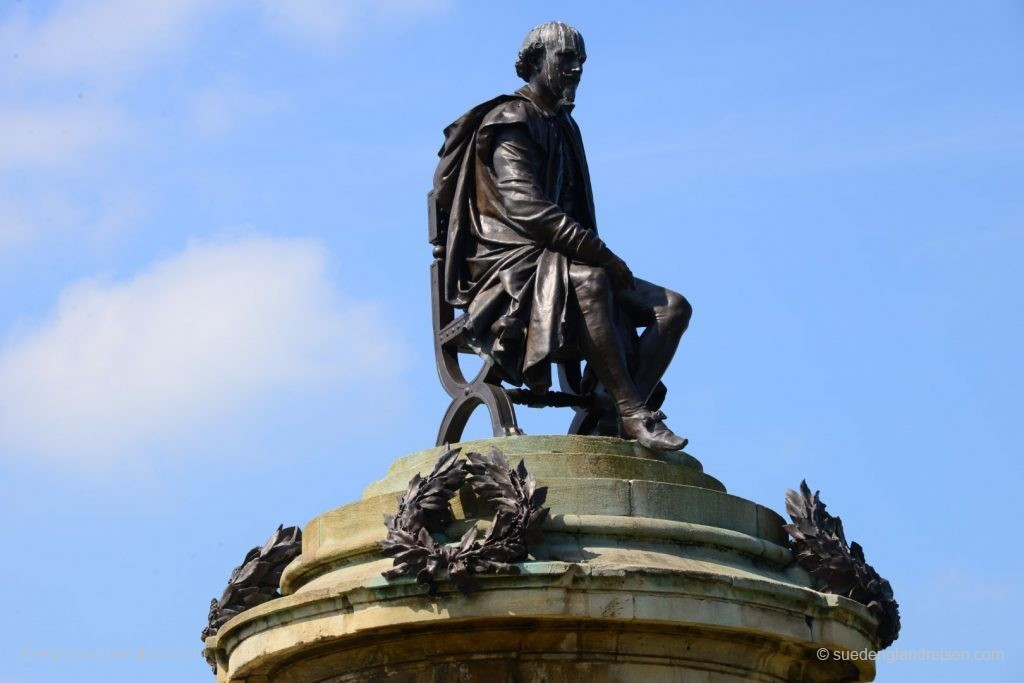
Shakespeare in Stratford-upon-Avon
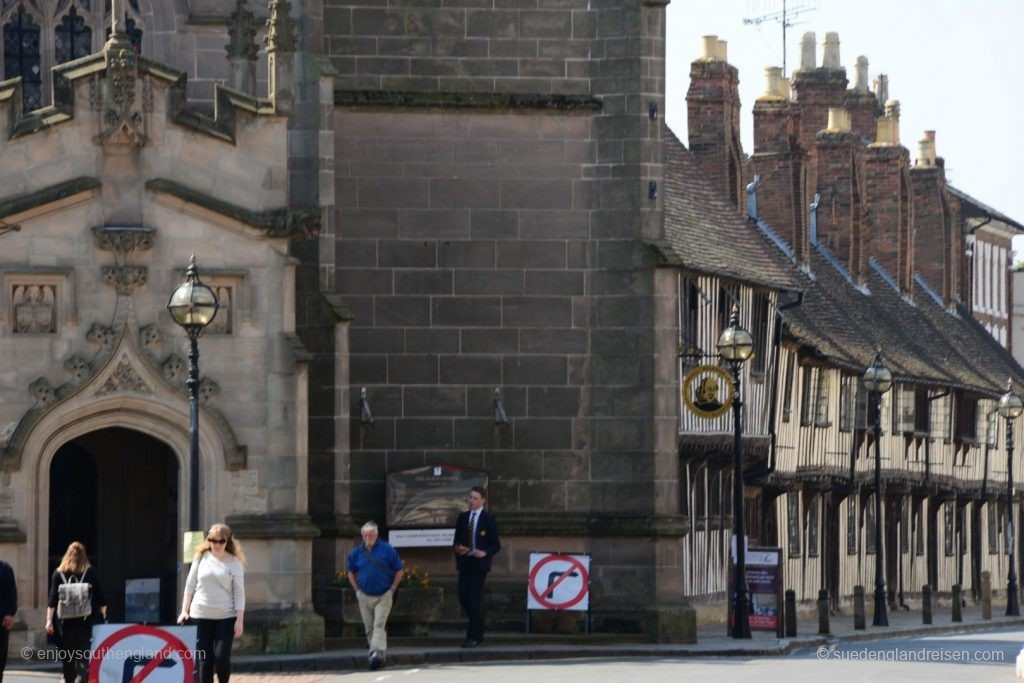
Stratford-upon-Avon
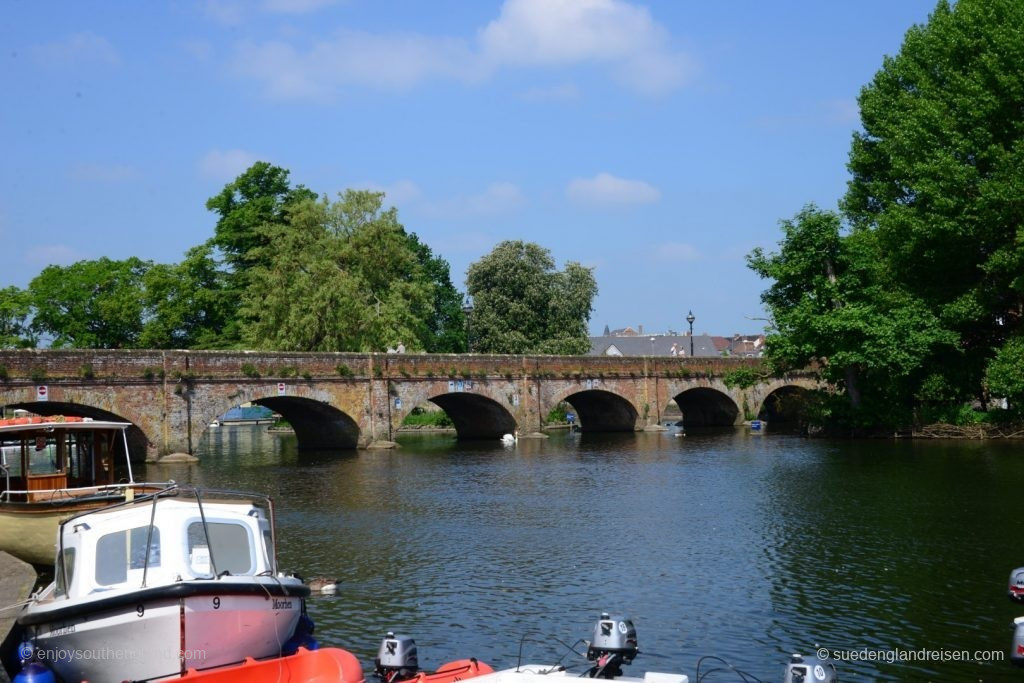
Stratford-upon-Avon
Our conclusion:
Wales is completely underrated! It offers the magnificent mountain scenery of Scotland on the one hand, and the charming landscapes of southern England on the other, complete with ancient pubs (so much rarer in Scotland), beautiful coastlines, and a wealth of history – all in a remarkably compact area. Add to that people who are incredibly proud of their Welsh heritage and generally relatively few foreign tourists. Therefore, Wales is a top travel tip, even for us lovers of southern England!